Garam Masala: What It Really Is (and How to Use It Properly)

Garam masala isn’t just another curry powder — and treating it like one is the fastest way to flatten its flavour.

At its core, garam masala is a warming spice blend, not a heat-driven one. Although the name literally translates to “hot spice”, in traditional Indian cooking that refers to warming the body, not burning the tongue. As a result, its role in a dish is very different from chilli-heavy spice mixes.

A Short History of Garam Masala

Long before garam masala was written down or sold in packets, it existed as something far more personal — a household language of spices, passed hand to hand rather than recipe to recipe.

In ancient India, cooking was inseparable from medicine. Influenced by Ayurvedic principles, ingredients were chosen not only for taste, but for how they were believed to affect the body. Food was meant to warm, cool, stimulate, or calm — depending on season, climate, and individual constitution.

Garam masala emerged from this way of thinking.
The word garam translates as “warm” or “heating,” while masala simply means a mixture of spices. But this warmth had nothing to do with chilli heat. Instead, it referred to spices thought to gently warm the body from within — supporting digestion, circulation, and vitality, particularly during colder months or in cooler regions.

Crucially, garam masala was never a fixed blend. There was no single recipe, no official version. Each region — and often each household — developed its own balance, shaped by what grew locally, what could be traded, and what flavours a family preferred. A mother’s blend might differ from her neighbour’s. A village’s version might shift subtly over generations.

In northern India, where winters were cooler, blends often leaned towards sweeter, aromatic spices like cinnamon, cardamom, and cloves. In warmer southern regions, pepper played a stronger role, creating sharper, more pungent profiles better suited to the climate. These differences weren’t culinary trends — they were practical responses to environment and tradition.

Traditionally, the spices were kept whole, toasted gently, and ground fresh as needed. Garam masala was then added at the end of cooking or sprinkled over finished dishes, preserving both aroma and the qualities the spices were believed to offer. It wasn’t meant to dominate a dish, but to complete it.

It wasn’t until much later — largely through colonial influence and globalisation — that garam masala became a standardised, commercially packaged product. While convenient, this shift stripped away much of its original flexibility and freshness, turning a living tradition into a fixed formula.

At its heart, garam masala remains what it always was:
a finishing blend shaped by place, season, and instinct — designed to bring warmth, balance, and harmony, rather than heat.

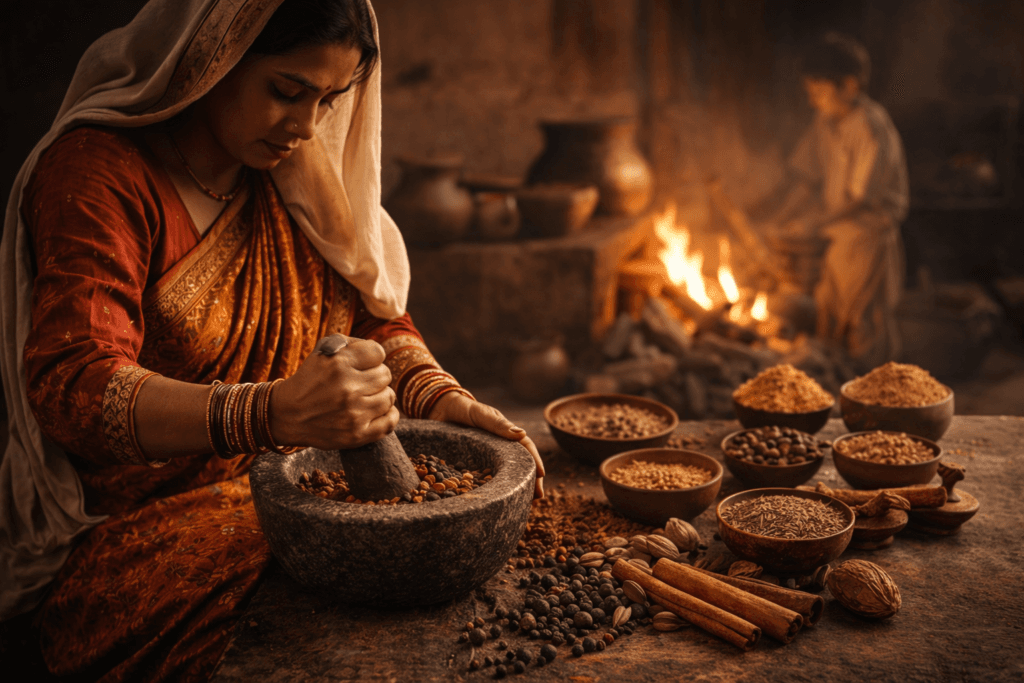
Traditional Indian kitchen scene showing hand-ground spices used to make garam masala over an open fire.

What’s in Garam Masala?

Infographic showing common spices used in garam masala, including coriander seed, cumin, cardamom, cinnamon, cloves, black pepper, and nutmeg or mace.

There’s no single fixed recipe — and that’s exactly the point.

Most garam masala blends include some combination of:

However, the balance varies by region, family, and even by dish. For example, northern blends tend to be warmer and sweeter, while southern versions often lean more peppery and sharp.

Garam Masala vs Curry Powder

This is where most people go wrong.

Curry powder is a colonial shortcut — pre-mixed for convenience and designed to cook with heat over time.
Garam masala, by contrast, is traditionally added towards the end of cooking, or even off the heat entirely.

The reason is simple: its aromatic spices lose complexity when cooked too long. In other words, early heat dulls what makes garam masala special.

Think of it less like salt — and more like a finishing oil.

When to Add Garam Masala (This Matters)

Timing makes a real difference with garam masala — more than with almost any other spice blend.

Because it’s built around aromatic, warming spices rather than heat-driven ones, garam masala is not designed to withstand long cooking. Used at the wrong moment, it doesn’t add depth — it loses it.

At the end of cooking:
This is the most common and most reliable approach. Adding garam masala in the final minutes allows its aroma and gentle warmth to stay intact, lifting the dish without overpowering it.

After the heat is off:
For creamy, subtle, or yoghurt-based dishes, this is often even better. Stirring garam masala through once the pan is off the heat prevents the spices from turning flat or bitter, while still allowing their flavour to bloom.

As a final sprinkle:
This traditional finishing method works particularly well with lentils, rice dishes, and yoghurt-based sauces. Sprinkled lightly just before serving, garam masala acts almost like a seasoning oil — rounding out flavour rather than dominating it.

If garam masala is added early and cooked hard, the opposite happens. The volatile oils that give it warmth and fragrance evaporate, leaving the dish tasting muted or oddly dusty. Instead of complexity, you’re left with a blunt, flattened spice note.

In short, treat garam masala as a finishing ingredient, not a base spice. Used sparingly and added late, it completes a dish. Used too early, it quietly disappears.

How Garam Masala Should Taste

A well-made garam masala doesn’t announce itself loudly. Instead, it settles into a dish quietly, bringing warmth and depth rather than heat.

A good garam masala should feel:

Warm, not fiery
The warmth comes from spices like cinnamon, cardamom, and cloves — a gentle, comforting heat that spreads rather than spikes. If it burns the tongue, something has gone wrong.

Rounded, not sharp
The flavour should feel cohesive and balanced, with no single spice shouting over the others. You shouldn’t be able to immediately point to one dominant note — it should taste whole, not fragmented.

Fragrant, not dusty
Aroma matters. Fresh garam masala smells sweet, woody, and slightly floral. If it tastes flat, stale, or powdery, the spices were likely old, over-toasted, or ground too far in advance.

If garam masala tastes bitter, harsh, or aggressive, the cause is usually simple: either too much was added, or it was cooked for too long. The delicate aromatic oils that give it character don’t survive prolonged heat.

When used correctly, garam masala doesn’t overpower a dish. It leaves you with a sense that something is complete — even if you can’t quite put your finger on why.

Where Garam Masala Shines (Beyond Curries)

Although often associated with Indian cooking, garam masala works beautifully far beyond curries when it’s used with care and intention. Its strength lies not in bold heat, but in warmth, aroma, and balance — qualities that translate well into many familiar dishes.

Portrait infographic titled “Where Garam Masala Shines (Beyond Curries)” showing illustrated foods including roasted squash and carrots, slow-cooked lamb or beef, chickpeas and lentils, tomato-based stews, and savoury pastries or gently spiced breads, with a note that garam masala should be used sparingly as a finishing spice.

Roasted squash or carrots
A light sprinkle at the end of roasting enhances natural sweetness and adds depth without masking the vegetable itself. Squash and carrots, in particular, respond well to garam masala’s gentle warmth.

Slow-cooked lamb or beef
Rich, long-cooked meats benefit from a final touch of aroma. Added just before serving, garam masala lifts heavy flavours and brings clarity to dishes that might otherwise feel dense.

Chickpeas and lentils
These neutral, absorbent ingredients are an ideal canvas. Finished with garam masala rather than cooked in it, they gain warmth and fragrance without turning muddy or over-spiced.

Tomato-based stews
Tomatoes love spice, but too much heat can overwhelm their acidity. A small amount of garam masala added late rounds out sharp edges and adds complexity without bitterness.

Savoury pastries and gently spiced breads
Used sparingly, garam masala can add subtle warmth to fillings, doughs, or toppings — especially where cinnamon or pepper might otherwise be used alone.

That said, restraint matters. A small pinch truly goes a long way. Garam masala is not a spice blend to heap in or cook aggressively. Think of it as a finishing note — something that completes a dish rather than defines it.

How to Make Your Own Garam Masala

Making garam masala at home isn’t complicated — but balance and handling matter more than precision. These quantities give you a classic, well-rounded blend that you can tweak over time.

Ingredients (Makes about 3–4 tablespoons)

  • 2 tablespoons coriander seeds
  • 1 tablespoon cumin seeds
  • 1 tablespoon black peppercorns
  • 10 green cardamom pods (lightly crushed to release the seeds)
  • 6 cloves
  • 1 small cinnamon stick (about 5 cm / 2 inches)
  • ½ teaspoon freshly grated nutmeg or 1 teaspoon mace blades

This produces a warming, aromatic blend rather than a sharp or fiery one.

Step 1: Toast Gently

Place all the whole spices (except nutmeg) into a dry frying pan over low to medium heat. Toast slowly, stirring or shaking the pan frequently.

You’re not aiming for colour — just aroma.
As soon as the spices smell warm, fragrant, and slightly sweet, remove them from the heat.

If they darken or smoke, they’ve gone too far and will taste bitter.

Step 2: Cool Completely

Tip the spices onto a plate and let them cool fully. Grinding them while warm traps moisture, which dulls flavour and shortens shelf life.

This step is easy to rush — and always worth waiting for.

Step 3: Grind

Once cool, grind the toasted spices in a spice grinder or mortar and pestle until finely ground. Add the grated nutmeg (or mace) at this stage and pulse briefly to combine.

Stop while the aroma is still bright and lively. Over-grinding can flatten the blend.

Step 4: Store

Transfer to an airtight jar and store away from heat and direct light.

For best flavour, use within 3–4 weeks. It won’t spoil after that — but the aromatics will gradually fade.

How to Use It

Homemade garam masala is stronger than shop-bought, so use it sparingly.

Add it:

  • At the end of cooking
  • Off the heat
  • Or as a final finishing sprinkle

It should lift the dish gently, not dominate it.

Once you’ve made this a few times, you’ll naturally start adjusting — a little more cardamom, less pepper, or a warmer cinnamon note. That’s exactly how garam masala has always been made.

Recipe: Garam Masala–Finished Chickpeas

This is one of the easiest ways to taste what garam masala actually does.
No curry paste. No long simmer. Just a simple base, finished properly.

Why this works

Chickpeas are neutral and absorb flavour well, which makes them the perfect canvas. Adding garam masala at the end lets its warmth and aroma stay intact instead of being cooked away.

Ingredients (Serves 2–3)

  • 2 tablespoons olive oil or butter
  • 1 small onion, finely chopped
  • 2 cloves garlic, minced
  • 1 x 400 g tin chickpeas, drained and rinsed
  • ½ teaspoon ground cumin
  • ½ teaspoon ground coriander
  • 1 teaspoon garam masala
  • Salt, to taste
  • Optional: a squeeze of lemon or a spoon of yoghurt to serve

Method

  1. Heat the oil or butter in a wide pan over medium heat.
  2. Add the onion and cook gently for 5–7 minutes until soft and lightly golden.
  3. Stir in the garlic, cumin, and coriander. Cook for 30 seconds, just until fragrant.
  4. Add the chickpeas and a good pinch of salt. Stir well and warm through for 3–4 minutes.
  5. Remove the pan from the heat, then sprinkle over the garam masala.
  6. Stir thoroughly and taste. Adjust seasoning if needed.

How to Serve

  • Spoon over rice or flatbreads
  • Serve alongside roasted vegetables
  • Finish with yoghurt or lemon for contrast

The garam masala should feel warm and rounded — present, but not loud.

If you added it earlier and cooked it longer, this dish would taste flatter.
Added at the end, it does exactly what it’s meant to do.

Want Better Flavour? Start with Whole Spices

If you really want to understand what garam masala is meant to taste like, the biggest upgrade isn’t a different brand — it’s using whole spices and grinding them yourself.

Whole spices keep their essential oils far longer than pre-ground blends. Once you grind them, those aromas fade quickly, which is why freshly ground garam masala tastes noticeably warmer and more rounded.

To do this at home, you only need two things:

1. Whole spices
Look for whole cumin, coriander seeds, cardamom pods, cloves, cinnamon sticks, and black peppercorns. These are inexpensive, keep well, and give you full control over balance.

👉 View mixed whole spices for garam masala on Amazon
https://www.amazon.co.uk/dp/XXXXXXXXXX/?tag=YOURAFFILIATEID-21

2. A small spice grinder
A basic electric spice grinder is more than enough. You’re not aiming for powder-fine perfection — just freshly cracked, aromatic spice.

👉 View a compact electric spice grinder on Amazon
https://www.amazon.co.uk/dp/YYYYYYYYYY/?tag=YOURAFFILIATEID-21

As an Amazon Associate, I earn from qualifying purchases. This doesn’t affect the price you pay.

Once you’ve tried freshly ground garam masala, even the better pre-mixed versions start to taste muted by comparison. You don’t need to do this every time — but it’s a worthwhile option when flavour really matters.

Treat Garam Masala Like an Ingredient, Not a Shortcut

Ultimately, the biggest mistake with garam masala is assuming it does all the work for you.

It doesn’t replace cumin, coriander, or chilli.
Instead, it finishes what’s already there.

When used with intention, garam masala adds depth, warmth, and a quiet sense of completeness — something that’s hard to describe, but immediately noticeable when it’s missing.

Sometimes flavour isn’t about adding more.
It’s about adding the right thing, at the right moment.