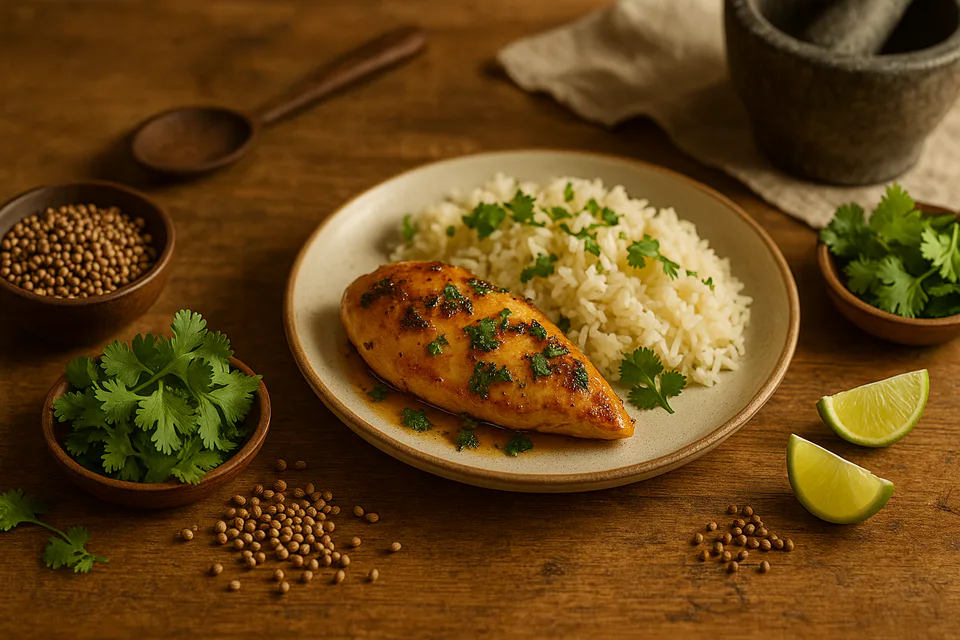
Fresh coriander leaves and dried coriander seeds come from the same plant, but they do different jobs. The leaves taste bright and citrus-like; the seeds are warmer, nuttier and more rounded.
In this guide
Fresh coriander leaves
Use fresh leaves at the end of cooking or as a garnish. Long cooking dulls their flavour. They work especially well with lime, chilli, yoghurt and coconut, as shown by dishes such as Satay Chicken.
Keep the stalks as well as the leaves. Finely chopped stalks can go into sauces and marinades while the leaves are reserved for finishing.
Coriander seeds
Toast whole seeds briefly in a dry pan, then grind them once fragrant. The flavour is softer and more rounded than the leaves and forms part of many blends, including Garam Masala.
Ground coriander loses aroma faster than whole seeds, so buy modest amounts and store them away from heat and light.
Useful flavour pairings
Coriander seeds pair naturally with Cumin, Turmeric and Fenugreek. The combination can be earthy and warm, so acidity from tomato, lemon or yoghurt often helps keep the finished dish lively.
Fresh coriander also works with garlic, ginger, chilli, avocado and beans.
When to add coriander
Add whole or ground seeds early enough to bloom in oil and season the sauce. Add fresh leaves near the end. Chicken Tikka Masala on a Budget is a useful example of building spice flavour before finishing the dish.
Taste before adding more. Ground coriander is mild, but too much can make a sauce dusty rather than aromatic.
Recipes to try
Use coriander seeds in Garam Masala or a curry base, and fresh leaves to finish Chicken Tikka Masala or Satay Chicken.
More practical meal ideas are collected in Easy Meals.