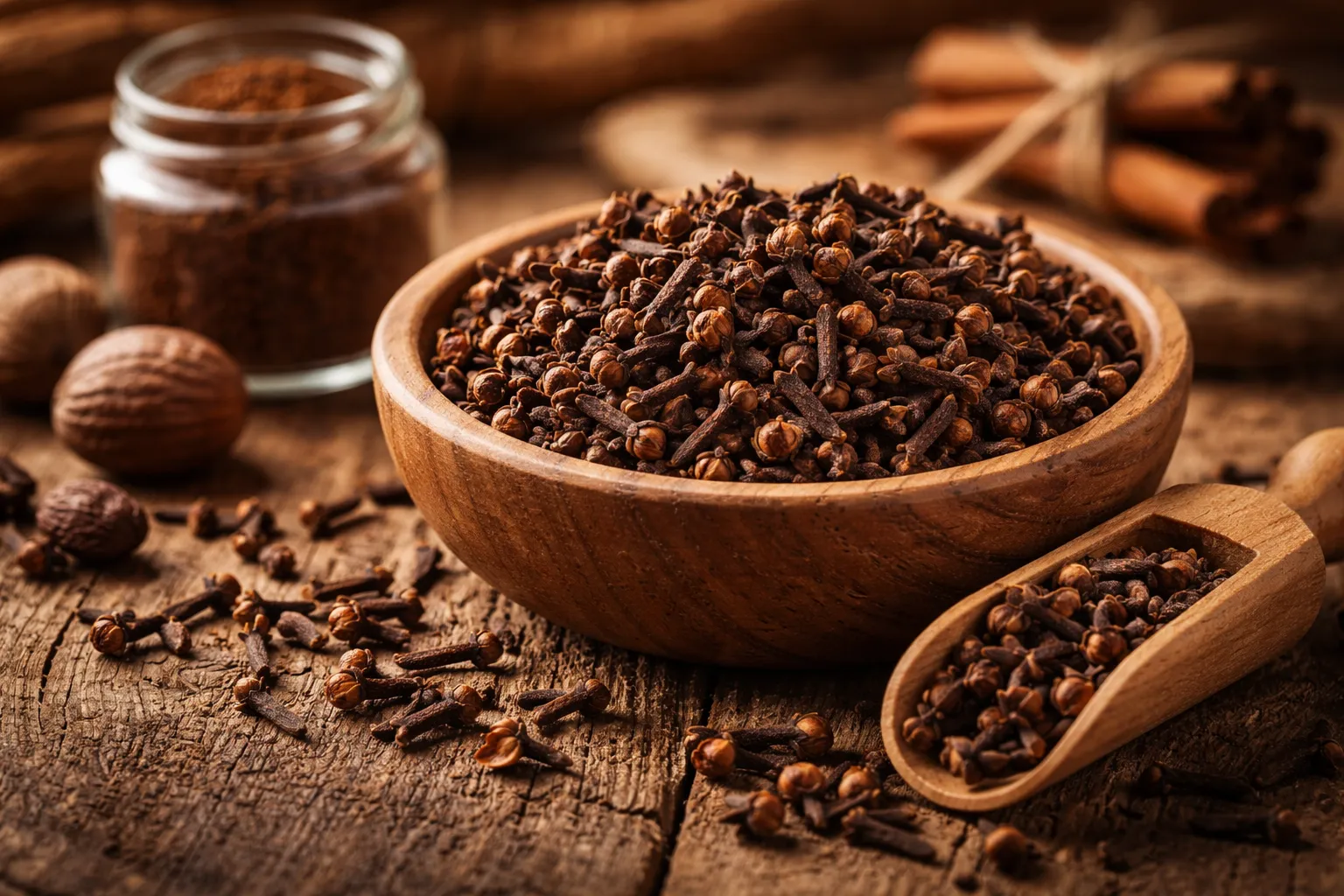
Cloves are tiny, dark and extremely assertive. Used carefully, they add deep aromatic warmth. Used carelessly, they can dominate an entire dish.
That makes them useful—but not forgiving.
What are cloves?
Cloves are the dried, unopened flower buds of Syzygium aromaticum, a tree native to the Maluku Islands of Indonesia.
Their familiar aroma comes largely from eugenol, one of the main compounds in clove oil. In the kitchen, that means even a small quantity can be obvious.
Whole cloves or ground cloves?
Whole cloves release flavour more gradually. They work well when they can be removed before serving, such as in a simmering sauce, stock, rice dish, poaching liquid or mulled drink.
Ground cloves disperse immediately and cannot be removed. Use them in very small quantities, particularly in cakes, biscuits, spice blends and slow-cooked dishes.
A whole clove hidden in food is unpleasant to bite, so count them in and count them out when practical.
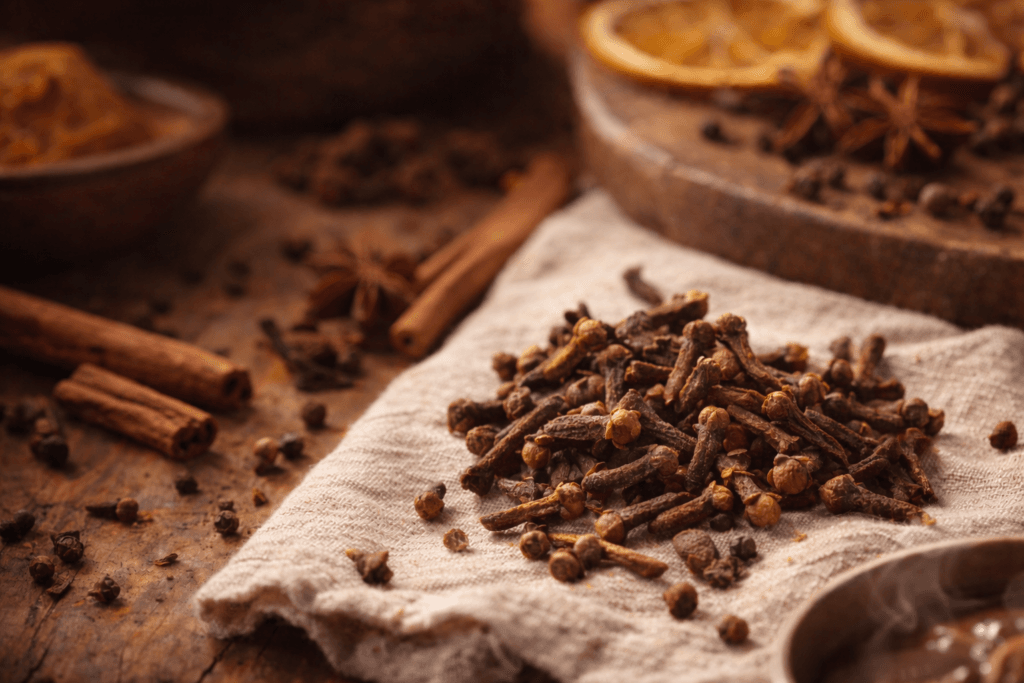
Where cloves work well
Cloves can support:
- apples, pears and plums;
- orange and other citrus;
- pumpkin and squash;
- rich meat stews;
- ham and braised pork;
- rice dishes and pilafs;
- chutneys and pickles;
- mulled drinks;
- gingerbread and dark fruit cakes;
- spice blends including some garam masalas.
They pair naturally with cinnamon, nutmeg, cardamom, ginger, black pepper and citrus peel.

How much should you use?
Start lower than you think.
For a family-sized pot, one or two whole cloves may be enough. In baking, ground cloves are usually measured in fractions of a teaspoon rather than full spoonfuls.
The correct amount depends on the dish, cooking time and other spices. Add cautiously because removing excess clove flavour is difficult.
Common mistakes
Leaving whole cloves in the finished food
Use a spice bag, stud them into an onion, or keep count so they can be removed.
Treating ground cloves like cinnamon
Cloves are normally much more forceful. A spoon-for-spoon substitution is likely to overwhelm the recipe.
Using stale cloves
Whole cloves should smell strongly aromatic when lightly crushed. Ground cloves fade faster and are better bought in modest quantities.
Storage
Store whole or ground cloves in an airtight container away from heat, moisture and direct light. Whole cloves generally keep their character longer because less surface area is exposed.
Why the béchamel is separate
The WordPress article included a clove-infused béchamel. It is being handled as separate recipe content so its ingredient quantities, method, yield, food-safety wording and storage guidance can be reviewed together.
Physical testing is useful evidence when it happens, but it is not a universal publication requirement. The ingredient guide can stand on its own while the recipe receives its structured editorial review.
Continue through the Cook hub.