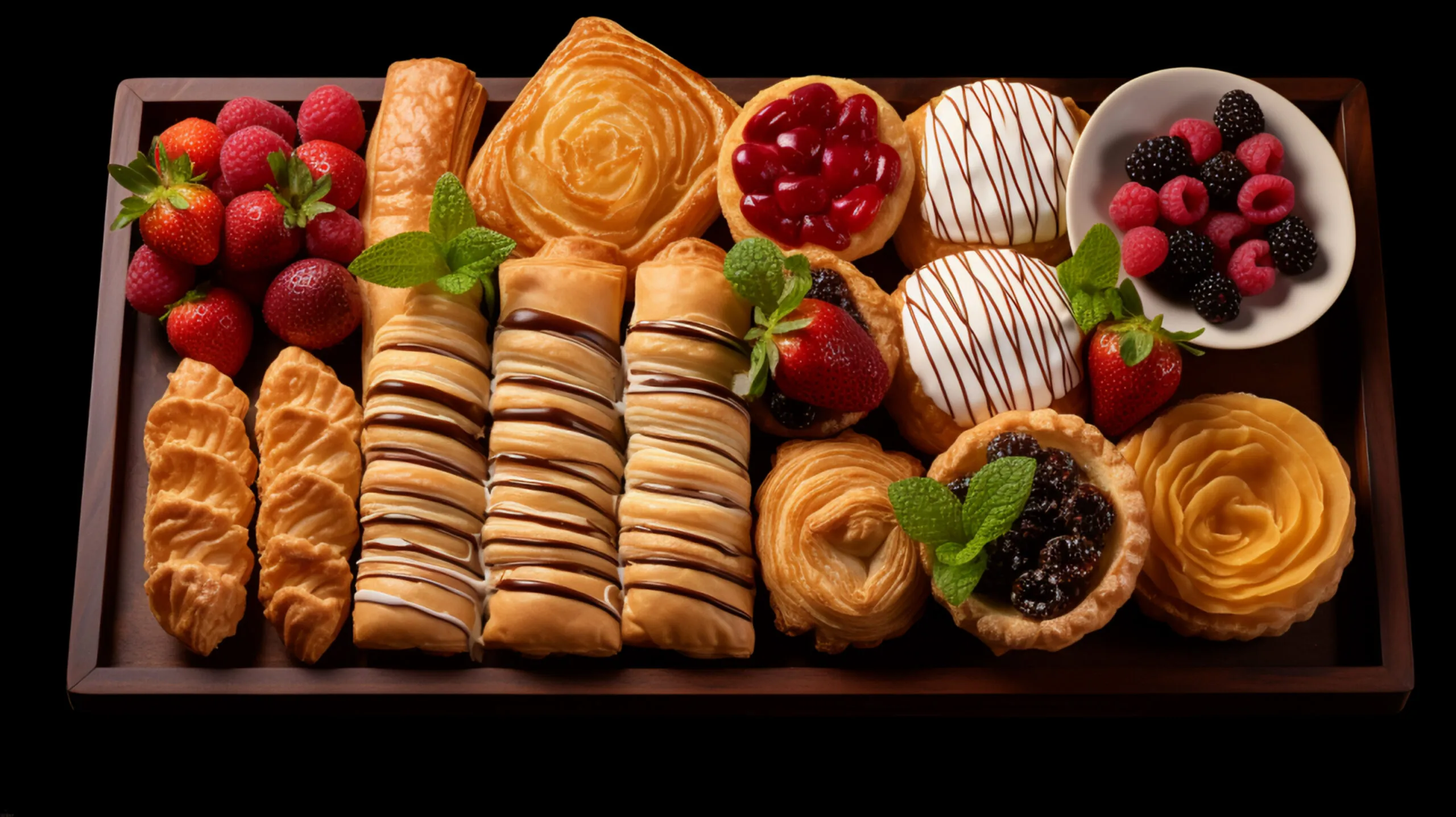
Pastry is not one dough used in different shapes. The way flour, fat, water and sometimes eggs are combined determines whether the result crumbles, flakes, puffs, bends or stands firmly around a filling.
Choosing the right type is therefore as important as choosing the filling.
1. Puff pastry
Puff pastry is a laminated dough: layers of dough and fat are folded and rolled repeatedly. In the oven, water turns to steam and separates those layers, creating height and flakes.
Best for: sausage rolls, turnovers, pie lids, vol-au-vents, mille-feuille and Wellingtons.
Main risk: warm dough. If the butter softens and merges into the dough before baking, the layers lose definition.
Practical tip: keep it cold, cut it cleanly and avoid crushing the exposed edges.
2. Shortcrust pastry
Shortcrust is designed to be tender rather than stretchy. Fat coats some of the flour, limiting gluten development and giving the baked pastry its “short”, crumbly texture.
Best for: pie bases, quiches, tarts, galettes and small savoury cases.
Main risk: overworking or adding too much liquid, both of which can make it tough.
Practical tip: bring the dough together with the minimum handling needed, then chill it before rolling.
3. Choux pastry
Choux starts as a cooked paste made on the hob. Eggs are beaten into it before the mixture is piped and baked. Its high water content produces steam, which creates a hollow centre.
Best for: éclairs, profiteroles, cream puffs, gougères and Paris-Brest.
Main risk: an under-dried paste or under-baked shell, which can collapse or remain damp inside.
Practical tip: judge the final egg addition by the texture of the paste rather than assuming every batch needs exactly the same amount.
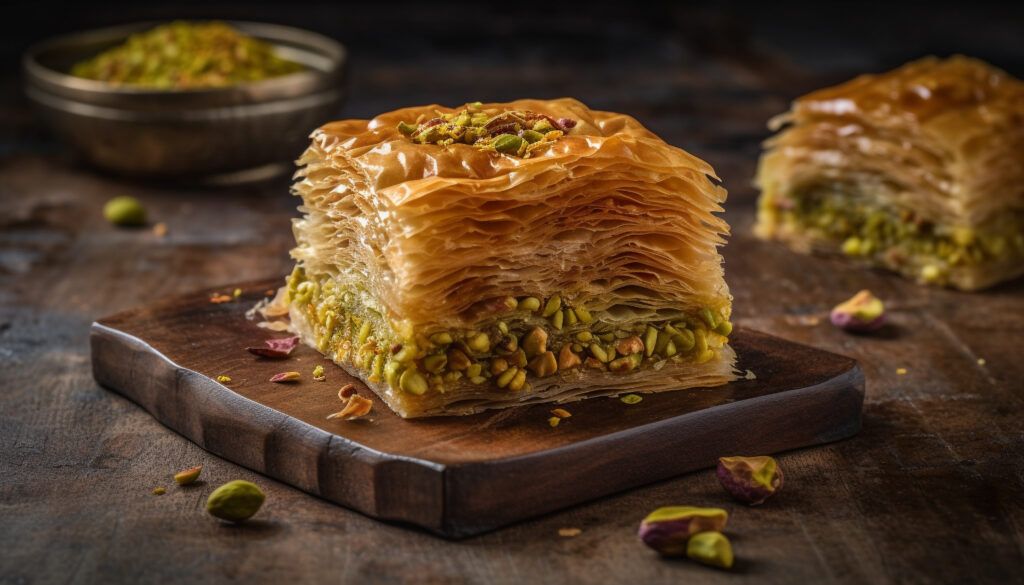
4. Filo pastry
Filo is made in extremely thin sheets. It contains little fat in the dough itself, so the sheets are normally layered with butter or oil between them.
Best for: baklava, spanakopita, parcels, pie toppings and crisp tart cases.
Main risk: drying and tearing while the pack is open.
Practical tip: work with a few sheets at a time and keep the rest covered according to the pack instructions.
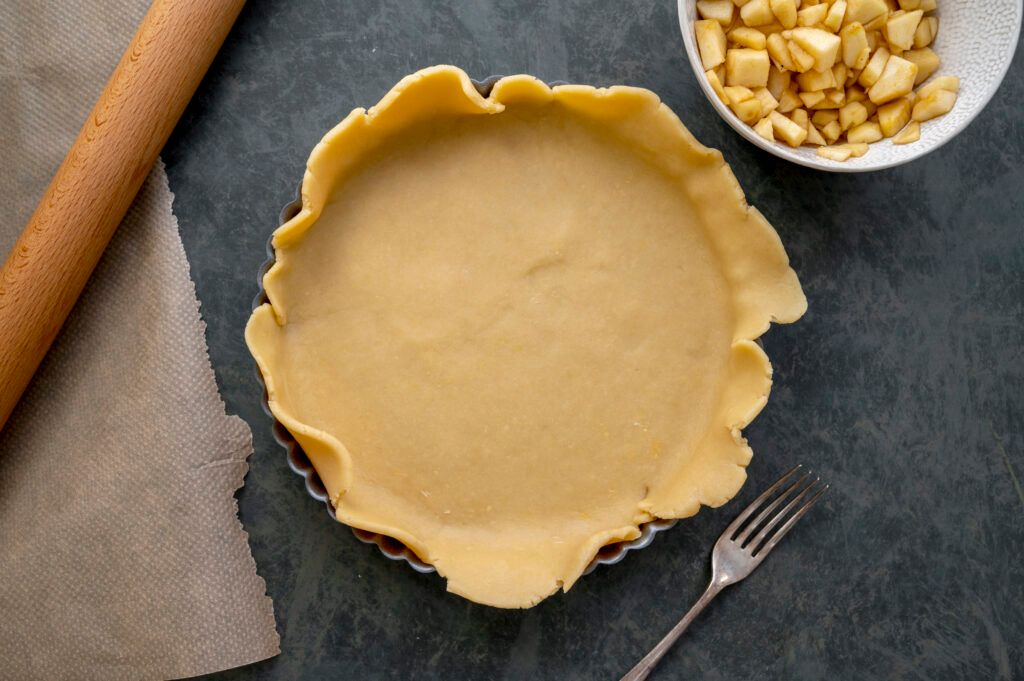
5. Sweet shortcrust pastry
Sweet pastry is not a completely separate pastry family; it is an enriched form of shortcrust. Sugar, and often egg, changes the texture and makes it suitable for dessert cases.
Depending on the recipe, it may be called sweet shortcrust, pâte sucrée or pâte sablée. Those names are related, but the methods and textures are not identical.
Best for: fruit tarts, lemon tarts, custard tarts and small biscuits or tartlets.
Main risk: cracking when cold or becoming greasy when warm.
Practical tip: let chilled pastry soften only enough to roll, then return the lined case to the fridge before baking.
6. Hot-water crust pastry
Hot-water crust is made by heating water and fat before mixing them into flour. The warm dough is mouldable and strong, which makes it useful for raised pies that must support a heavy filling.
Best for: pork pies, game pies and other hand-raised savoury pies.
Main risk: waiting too long. The pastry becomes harder to shape as it cools.
Practical tip: organise the tin, filling and tools before mixing the dough so it can be shaped while still pliable.
Which pastry should you choose?
Use the result you want as the guide:
- choose puff for lift and visible layers;
- choose shortcrust for a tender, dependable base;
- choose choux for a hollow shell that can be filled;
- choose filo for thin crisp layers;
- choose sweet shortcrust for a neat dessert case;
- choose hot-water crust when the pastry must hold its own shape.
Ready-made pastry is not a failure. Puff and filo in particular can be practical ingredients. The skill is knowing what each product does and handling it in a way that lets it do that job well.
Continue exploring the food side of CCC from Start Here.