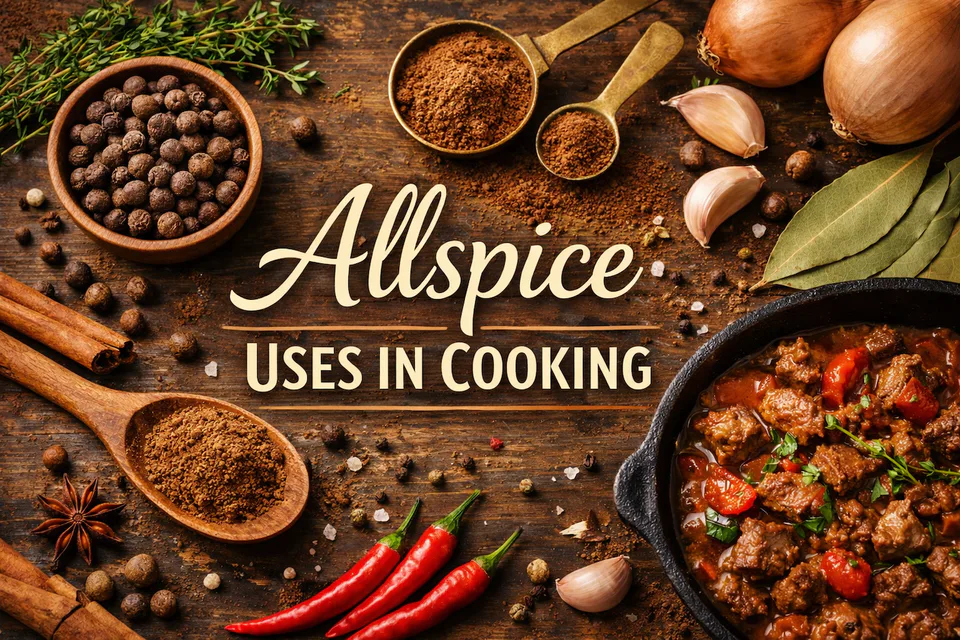
Allspice is one of those spices that sounds like it should be a mix of things.
It isn’t.
Despite the name, allspice comes from a single dried berry of the Pimenta dioica tree. The flavour just happens to remind people of cloves, cinnamon, nutmeg, and a hint of pepper — hence the very confusing name.
It’s warm, gently sweet, and quietly complex. Used well, it adds depth without shouting. Used badly, it can flatten a dish into something oddly Christmassy when you weren’t aiming for that at all.
So let’s talk about how allspice actually behaves, where it shines, and how not to overdo it.
What Allspice Should Taste Like
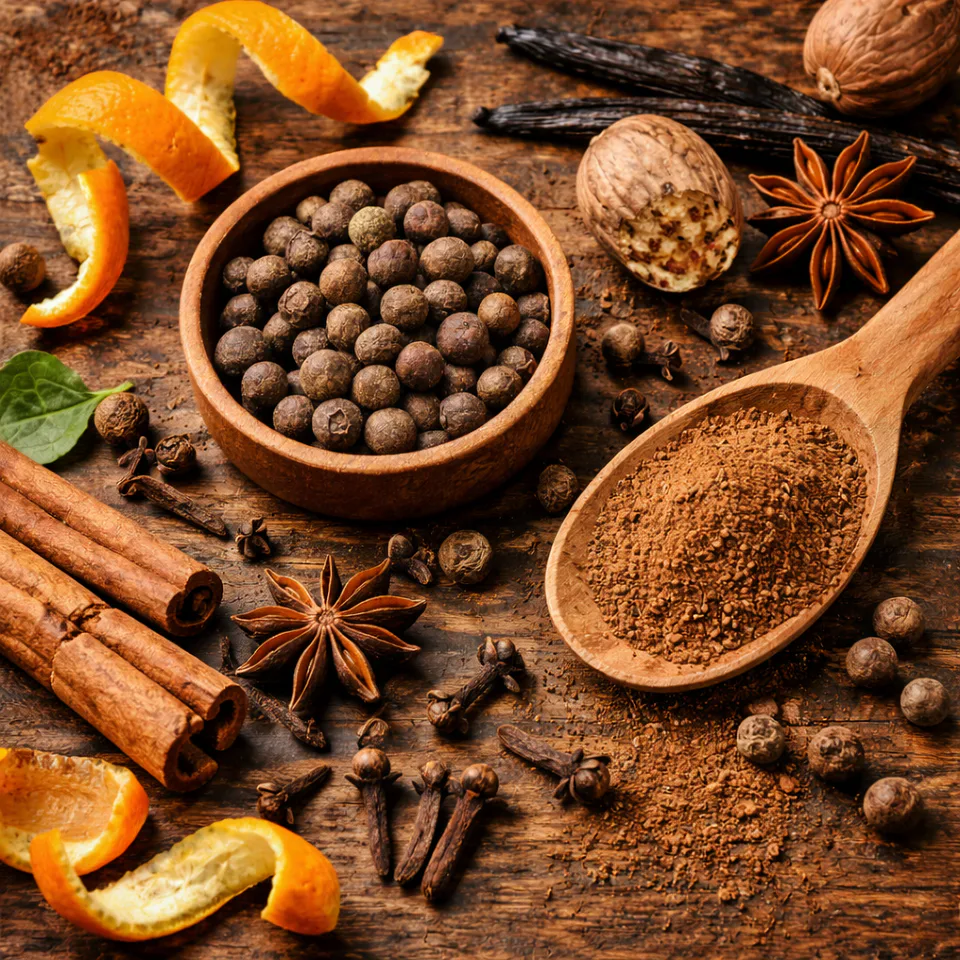
A good allspice flavour is:
- Warm and rounded
- Slightly sweet, but not sugary
- Gently peppery at the back
- Aromatic rather than spicy-hot
If it tastes sharp, dusty, or overwhelmingly clove-heavy, it’s either old or you’ve used too much.
Allspice works best as a background note. Think of it as the bassline, not the melody.
A Brief History of Allspice

Allspice is native to the Caribbean, Central America, and parts of southern Mexico, where it has been used for centuries by Indigenous cultures long before European contact.
When Christopher Columbus encountered the spice in the late 15th century, he mistook it for pepper — which is why it was originally traded under names like Jamaica pepper. Its familiar warmth made it immediately popular in Europe, especially at a time when spices were both valuable and symbolic of status.
By the 17th and 18th centuries, allspice had become a staple in British and European kitchens, used in everything from preserved meats and pickles to puddings and spiced drinks. Unlike many spices, it travelled well and retained its flavour, making it especially prized for long storage.
Today, allspice remains central to Caribbean cooking — particularly Jamaican cuisine — while also holding a quiet place in traditional British baking and savoury dishes.
It’s a spice with deep roots and a wide reach, even if it tends to stay politely in the background.
Whole vs Ground Allspice (It Matters)
Whole allspice berries
- Best for slow cooking, pickling, mulled drinks, and stocks
- Give a cleaner, subtler flavour
- Easy to remove before serving
Whole allspice berries are best for slow cooking, pickling, mulled drinks, and stocks…
Ground allspice
- More intense and immediate
- Better for baking, spice rubs, and quick sauces
- Goes stale faster — buy little and replace often
If you’re unsure, start with half the amount you think you need. You can always add more. You can’t take it out.
Where Allspice Really Works (Beyond Baking)
Allspice often gets boxed into cakes and puddings, but it’s far more versatile than that.
It’s excellent in:
- Slow-cooked beef, lamb, or goat
- Caribbean-style dishes (especially with thyme, garlic, and chilli)
- Tomato-based stews and sauces
- Pickled vegetables and chutneys
- Savoury mince dishes and meatballs
A tiny pinch in a rich savoury dish won’t announce itself — it just makes everything taste rounder and more complete.
When to Add Allspice
Timing makes a big difference:
- Early in cooking: softer, blended warmth
- Mid-cook: noticeable but balanced depth
- Right at the end: sharper, more aromatic (use sparingly)
For slow dishes, early is usually best. For baking, it belongs with the dry ingredients so it disperses evenly.
Common Allspice Mistakes
Let’s save you some disappointment.
- Treating it like cinnamon (it’s stronger)
- Using it alone without supporting flavours
- Overusing ground allspice in savoury food
- Letting an old jar linger at the back of the cupboard
Allspice is a supporting spice. Pair it with onion, garlic, bay, thyme, pepper, or nutmeg rather than expecting it to carry a dish solo.
The Quiet Power of Allspice
Allspice doesn’t demand attention.
It doesn’t sparkle or punch or dominate. What it does is connect flavours, smooth edges, and make dishes feel finished — especially slow, comforting food.
It’s the kind of spice you miss only when it’s gone.
And once you learn how lightly to use it, you’ll start reaching for it far more often than you expect.