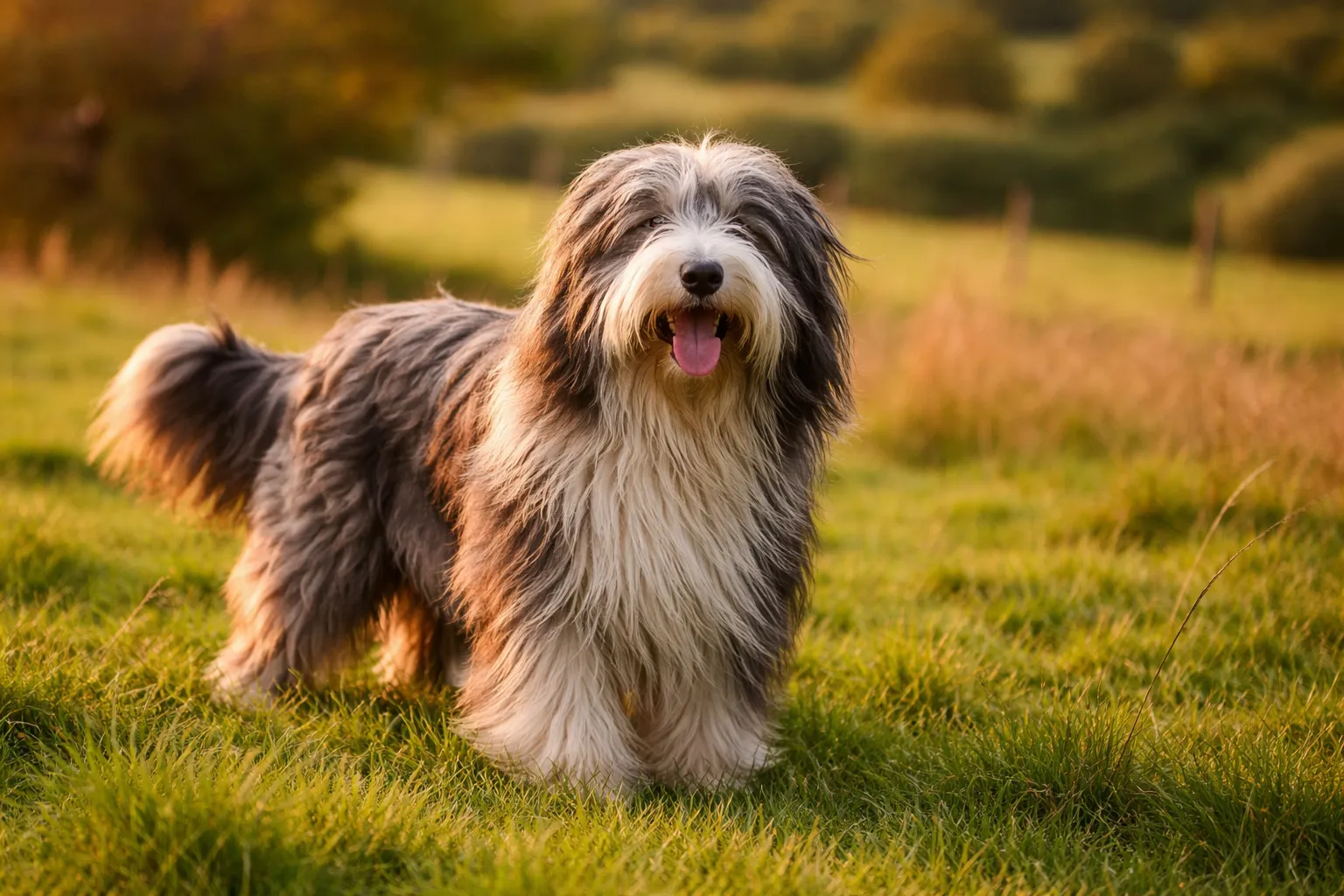
The Bearded Collie is a medium-sized Scottish herding breed with an active mind, an abundant coat and a reputation for lively movement.
The shaggy appearance can make the breed look like a cheerful soft toy. It is more useful to remember the working dog underneath.
What was the breed built to do?
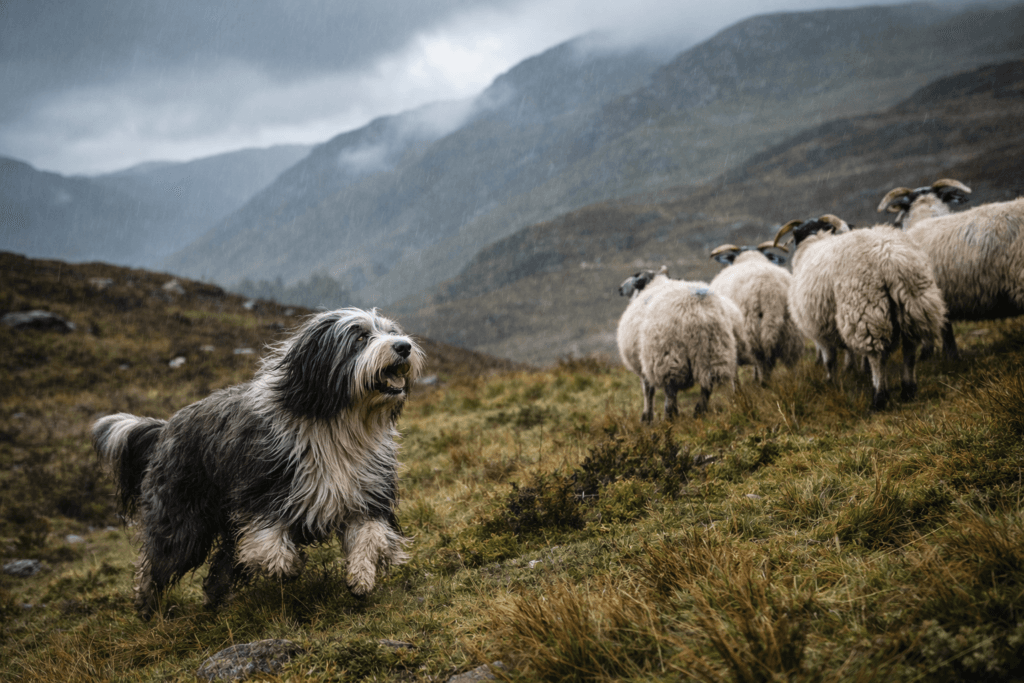
Bearded Collies were used for herding cattle and sheep in Scotland. The Royal Kennel Club describes the breed as alert, lively, self-confident, active and intelligent.
That heritage can show up in modern life as:
- quick learning;
- sensitivity to movement and activity;
- enthusiasm;
- independent decision-making;
- a need for useful engagement rather than exercise alone.
Breed tendencies are not guarantees. Early experience, breeding, training, health and the individual dog all matter.
Exercise is only part of the job
The Royal Kennel Club lists up to about an hour of exercise a day as a broad breed characteristic.
A Beardie still needs more than a timed walk. Training, sniffing, play, problem-solving and calm settling skills help provide a balanced day.
Constant high-intensity activity can simply create a fitter dog that still has not learned how to switch off.
Training
The breed’s intelligence is an advantage when training is clear and worthwhile. Repetition without purpose may be less successful than short, varied sessions.
Useful foundations include:
- recall around movement and distractions;
- loose-lead walking;
- settling while family life continues;
- calm greetings;
- comfortable grooming and handling;
- leaving wildlife, livestock and moving objects;
- confidence in new surfaces, sounds and places.
Use reward-based methods and avoid interpreting confusion, excitement or stress as stubbornness.
The coat is a daily commitment
The Royal Kennel Club lists daily grooming for the breed. The long double coat can collect dirt and form tangles, particularly around friction points such as behind the ears, under the legs and around collars or harnesses.
Daily grooming is not only cosmetic. It is also a chance to check:
- skin;
- feet and pads;
- ears;
- eyes;
- lumps, soreness or debris;
- whether equipment is rubbing.
A puppy should learn gradually that grooming predicts calm handling and rewards.
Home fit
The Royal Kennel Club describes the breed as better suited to a large house. More important than a room count is whether the household can offer:
- daily coat care;
- regular training;
- suitable exercise;
- enough company and involvement;
- calm rest away from constant stimulation;
- secure management around livestock or traffic where relevant.
A beautiful coat and bouncy personality are not enough reason to choose the breed.
Health questions for a breeder
The current Royal Kennel Club guidance highlights genetic diversity and lists:
- DNA testing for collie eye anomaly/choroidal hypoplasia;
- elbow screening;
- hip screening.
Ask a breeder to explain the actual results for both parents, not merely say that the dogs are “health tested”.
Also ask how they select for stable temperament, raise puppies, introduce grooming and support owners after collection.
A vulnerable native breed
The Bearded Collie is currently listed among the UK’s vulnerable native breeds because registration numbers are low.
That does not mean someone should buy one out of sympathy. It makes careful, health-conscious breeding and realistic owner selection even more important.
Who might suit a Bearded Collie?
The breed may suit someone who:
- enjoys training an active, thinking dog;
- genuinely accepts daily grooming;
- can provide exercise and mental engagement;
- values an involved companion rather than a low-maintenance pet;
- is prepared to research breeders and health results carefully.
Someone who dislikes brushing, mud, shedding or sustained training should take the warning seriously.
Continue through the Dog Life hub.