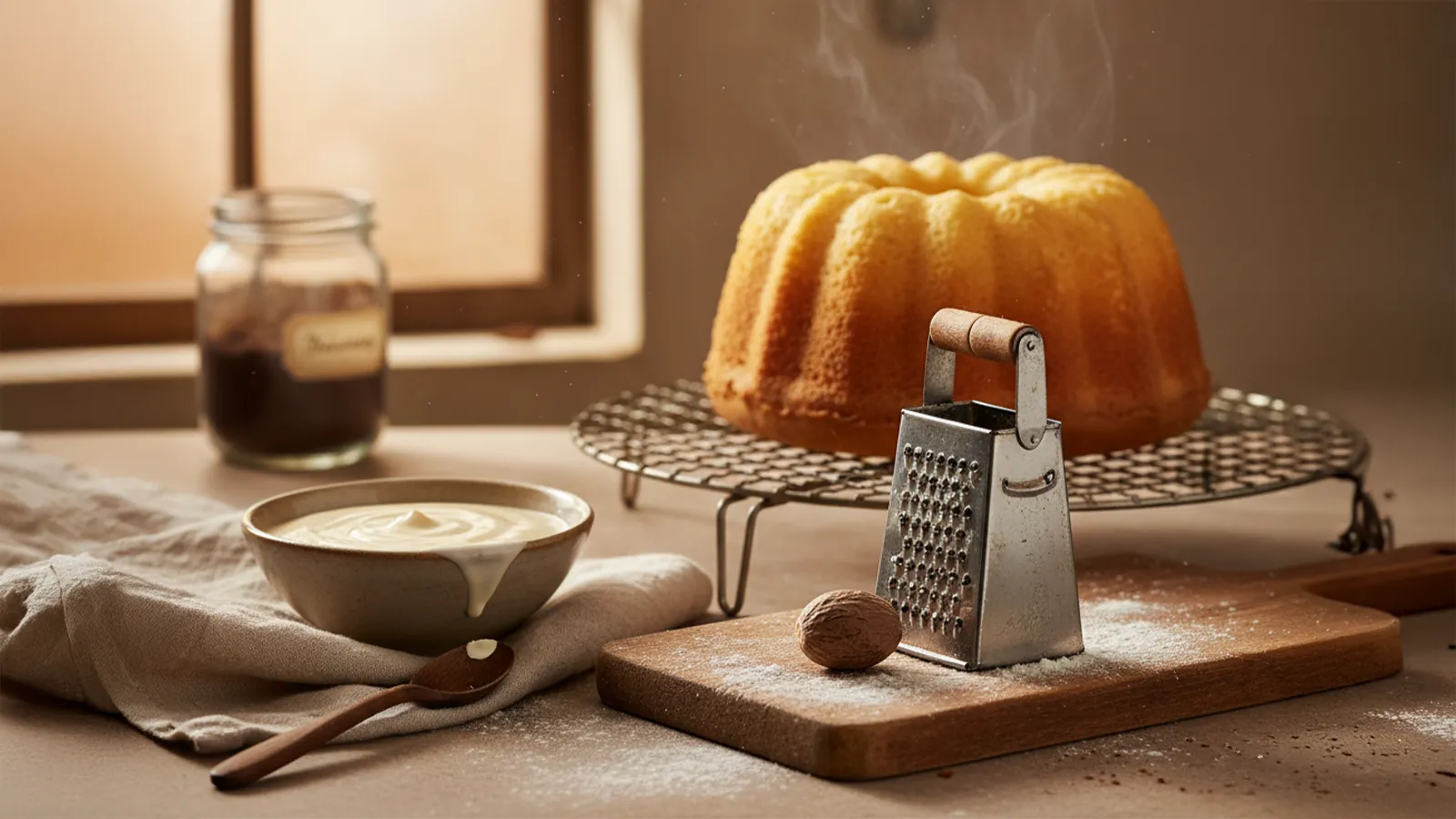
Nutmeg is one of those ingredients people often associate only with Christmas baking. In reality, a small grating can work just as well in a white sauce, mashed potato or spinach as it does in custard, cake or rice pudding.
The important word is small. Nutmeg should make a dish feel warmer and rounder without announcing itself before every other flavour.
What nutmeg actually is
Culinary nutmeg comes from the seed of Myristica fragrans. The lacy red covering around the seed is dried separately to make mace, a related spice with its own flavour.
The tree is native to the Maluku Islands of Indonesia, including the Banda Islands. Nutmeg became extraordinarily valuable in European trade, and control of its production was bound up with colonial violence and monopoly.
That history is more complicated than the romantic “spice route” version often repeated in food writing, so it is worth keeping the story brief and factual.

Whole nutmeg or pre-ground?
Whole nutmeg is easy to grate with a fine grater and usually gives a fresher aroma. A whole seed also lasts well because only a small surface is exposed each time it is used.
Pre-ground nutmeg is convenient and perfectly usable, particularly in a measured recipe. Check its aroma before relying on it: if the jar smells faint or dusty, the finished food will too.
Savoury places where nutmeg works
A restrained amount of nutmeg suits creamy or buttery foods particularly well:
- béchamel and cheese sauces;
- mashed potato and potato gratin;
- cauliflower cheese;
- cooked spinach and other dark greens;
- creamy pasta fillings and sauces;
- squash and pumpkin dishes.
Add a little, stir, taste and stop. Nutmeg can move from background warmth to medicinal bitterness surprisingly quickly.
Sweet places where nutmeg works
Nutmeg pairs naturally with milk, eggs, butter, vanilla and brown sugar. Try it in:
- custards and rice pudding;
- bread-and-butter pudding;
- fruit cakes and spice cakes;
- doughnuts and sweet buns;
- apple, pear or pumpkin desserts;
- hot chocolate or milky coffee.
It also works alongside cinnamon, ginger, cloves and cardamom, but combining several warm spices does not mean each one needs a full teaspoon.

When to add it
Freshly grated nutmeg can be added near the end of a sauce so its aroma remains noticeable. In baking, mix a measured amount evenly through the dry ingredients or custard base.
For an unfamiliar recipe, begin with a pinch or a light grating. The exact amount should come from a complete, editorially reviewed recipe rather than a universal rule.
The practical rule
Nutmeg does not need to dominate. Used lightly, it connects sweet, creamy and savoury ingredients and gives them a warm finish that can be difficult to identify but easy to miss.
Continue exploring the food side of CCC from Start Here.