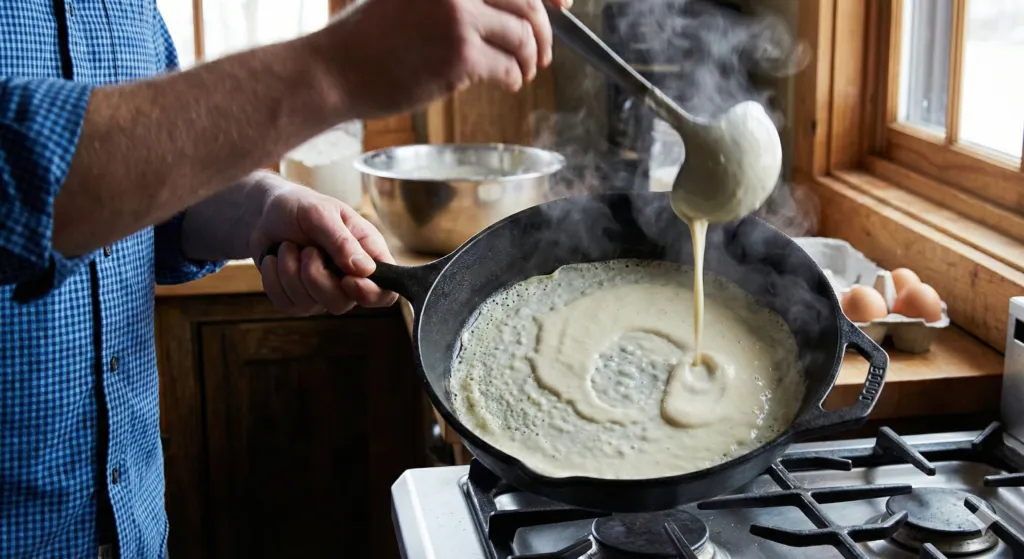
Pancakes feel simple because the basic idea is simple: a batter cooked on a hot surface. Versions appear in many food cultures, using different grains, thicknesses, fillings and toppings.
In Britain, however, pancakes are especially tied to one day of the year.
Why Shrove Tuesday became Pancake Day
Shrove Tuesday is the day before Ash Wednesday and the beginning of Lent in the Christian calendar. Pancakes became a practical way to use richer ingredients such as eggs, milk and fat before the traditional period of fasting.
That usefulness helped the custom survive. It turned ingredients that needed using into a meal that felt celebratory rather than dutiful.
The Olney pancake-race story
Olney in Buckinghamshire is associated with Britain’s best-known pancake race. Tradition dates it to 1445 and tells of a woman who heard the church bell while cooking, then ran to church carrying her frying pan and pancake.
It is a good story, but it should be labelled as tradition rather than documented certainty. The modern race is real; the exact origin story belongs to folklore.
Thin and fluffy pancakes solve different problems
British-style pancakes are thin and flexible. Their batter contains little or no raising agent, so the cook spreads it across the pan and serves the pancake rolled or folded.
American-style pancakes use a thicker batter and chemical raising agents. The result is smaller, softer and more suited to stacking.
Neither is the “correct” pancake. They are different styles, and the techniques that improve one can spoil the other.
The useful technique behind both
Heat control matters more than theatrical flipping.
For thin pancakes, the batter must spread before it sets. A short rest helps the flour hydrate and can make the batter easier to swirl.
For fluffy pancakes, vigorous mixing develops too much gluten and knocks out the texture the raising agents are trying to create. A few small lumps are normally preferable to a perfectly smooth, overworked batter.
Choose your pancake
The rebuilt CCC recipes now live on their own structured pages:
- Classic British Thin Pancakes — thin, flexible and made for lemon and sugar;
- Fluffy American-Style Pancakes — thicker, raised and built for stacking.
Both are labelled Editorially reviewed. That means their quantities, method, timings, yield and practical notes have been checked for internal consistency. It does not claim that Gary personally cooked these exact published versions.