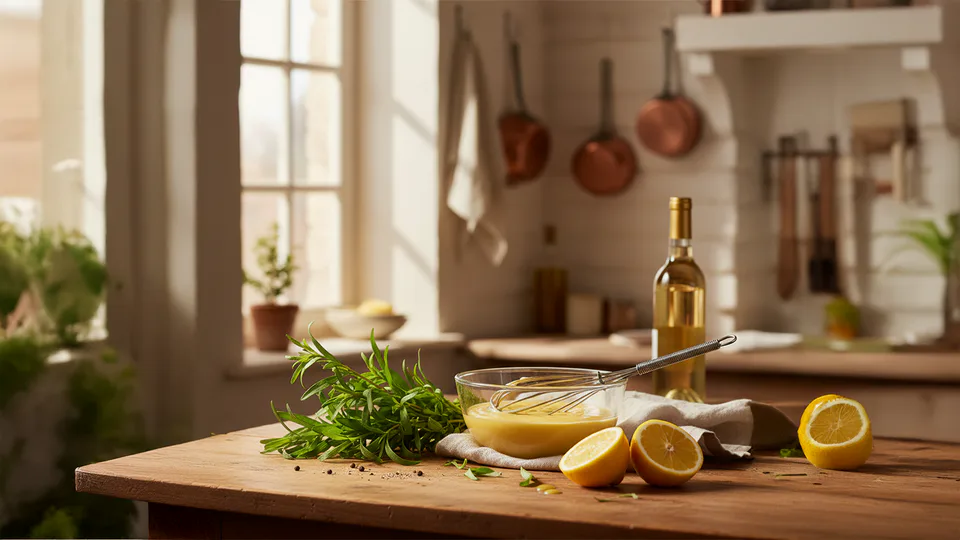
There are herbs that shout, and then there’s tarragon — the one that whispers. With its delicate fragrance and distinctive hint of anise, tarragon brings a quiet sophistication to the kitchen. It’s the sort of herb that doesn’t demand attention but rewards those who pay it. In the world of tarragon in French cooking, elegance lies in restraint.
🇫🇷 A Touch of French Sophistication
Tarragon (Artemisia dracunculus) is native to the steppes of Central Asia and Siberia but found its true home in France. The French variety, with its tender leaves and gentle sweetness, became a staple of classic cuisine — one of the famed fines herbes alongside parsley, chervil, and chives.
Its flavour profile is subtle but layered: a soft anise aroma, hints of vanilla and pepper, and a faint herbal warmth that lingers just long enough to leave you curious. Too much, and it can overwhelm; just enough, and it transforms a dish from good to unforgettable.
It’s a herb that pairs particularly well with chicken, fish, eggs, and creamy sauces — in short, the very foundations of French home cooking.
🍋 Hollandaise, Béarnaise, and Tarragon in French Cooking
If tarragon had a claim to culinary fame, it would be through Béarnaise sauce, the sophisticated cousin of the classic Hollandaise. Both are buttery emulsions of egg yolks and clarified butter, but Béarnaise takes things one graceful step further.
In a small saucepan, tarragon leaves are steeped with shallots, white wine vinegar, and a touch of peppercorn — creating a reduction that adds perfume and balance to the rich sauce. The result is Béarnaise: silky, tangy, and beautifully aromatic, perfect over steak, salmon, or asparagus. If you’ve ever tasted Béarnaise, you’ve experienced the magic of tarragon in French cooking.
Where Hollandaise is golden comfort, Béarnaise is elegance on a plate — a sauce that wears its French heritage with pride.
And the secret to that transformation?
Just a few sprigs of fresh tarragon.
🌱 Growing and Using Tarragon in French Cooking
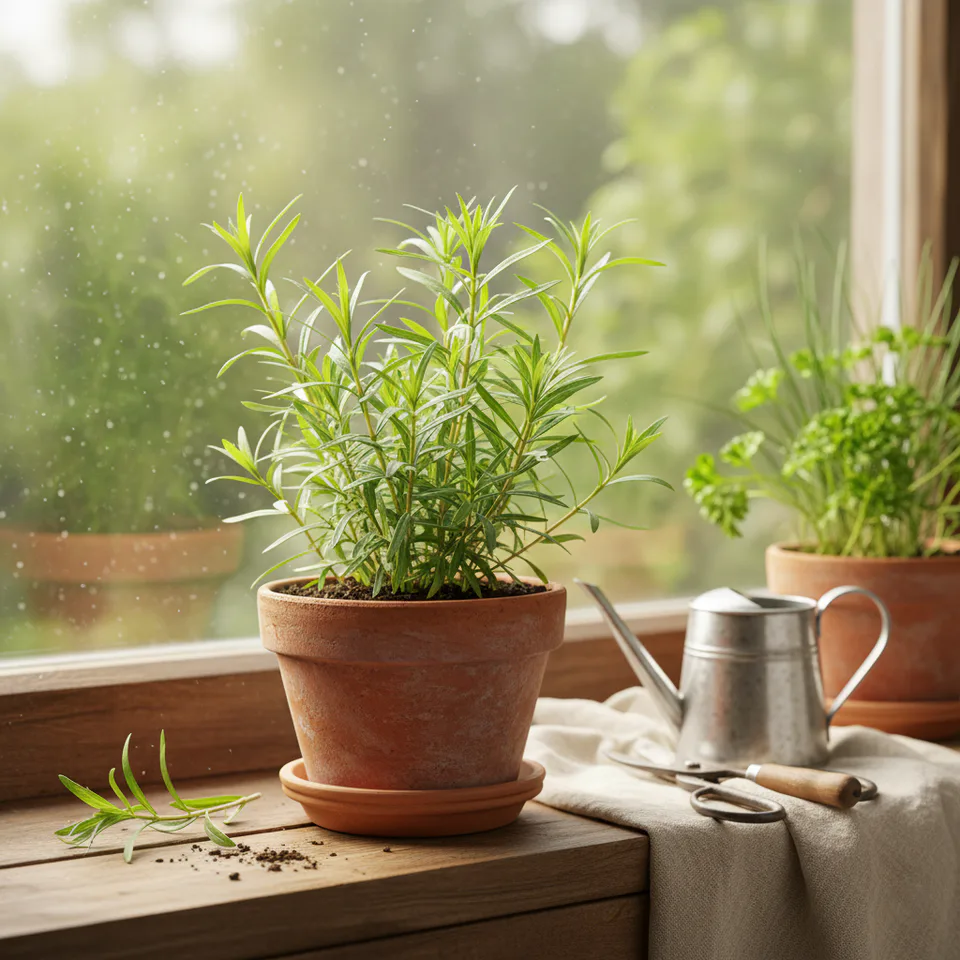
French tarragon can be a bit temperamental — it prefers well-drained soil, sunlight, and a mild touch. It’s best propagated by cuttings rather than seed, as the seeds are famously sterile. Once established, though, it’s hardy, resilient, and wonderfully rewarding.
In your kitchen:
- Stir chopped tarragon into scrambled eggs or omelettes for a breakfast twist.
- Infuse white wine vinegar with tarragon leaves for a fragrant base to dressings or sauces.
- Whisk into cream, butter, or mayonnaise for a subtle herbal lift.
- Toss fresh leaves into chicken salads, roast vegetables, or creamy pasta dishes.
Tip: Always add tarragon towards the end of cooking — heat can dull its delicate notes.
🐾 Dog-Safety Note: Keep It Out of the Bowl
As much as Dexter might be curious about those fragrant green leaves, tarragon isn’t safe for dogs. It contains certain compounds (like estragole) that can cause digestive upset or, in larger amounts, liver irritation.
So while you whisk your Béarnaise or drizzle tarragon butter over roasted potatoes, keep the herb for the humans. Your pup can still enjoy a sniff — and maybe a carrot from the prep bowl instead!
📸 Photography Tip
To capture tarragon’s elegance, focus on simplicity and light. Photograph fresh sprigs on a neutral background — think linen cloth, marble countertop, or a warm wooden board. A small jar of Béarnaise or Hollandaise sauce beside a few scattered leaves tells a complete story: flavour, finesse, and that distinctly French charm.
Late afternoon light works best; it highlights the soft green tones without washing them out. A drizzle of sauce on a spoon, a curl of steam in the background, and you’ve got an image that feels as graceful as the herb itself.
💡 Final Thought
Tarragon is a reminder that elegance doesn’t have to be loud. It’s the subtle accent that turns everyday ingredients into something extraordinary — a herb that adds character without shouting for attention.
From Hollandaise to Béarnaise, and from garden to plate, tarragon in French cooking remains a quiet symbol of refinement. — and proof that even the smallest leaves can hold centuries of culinary wisdom.