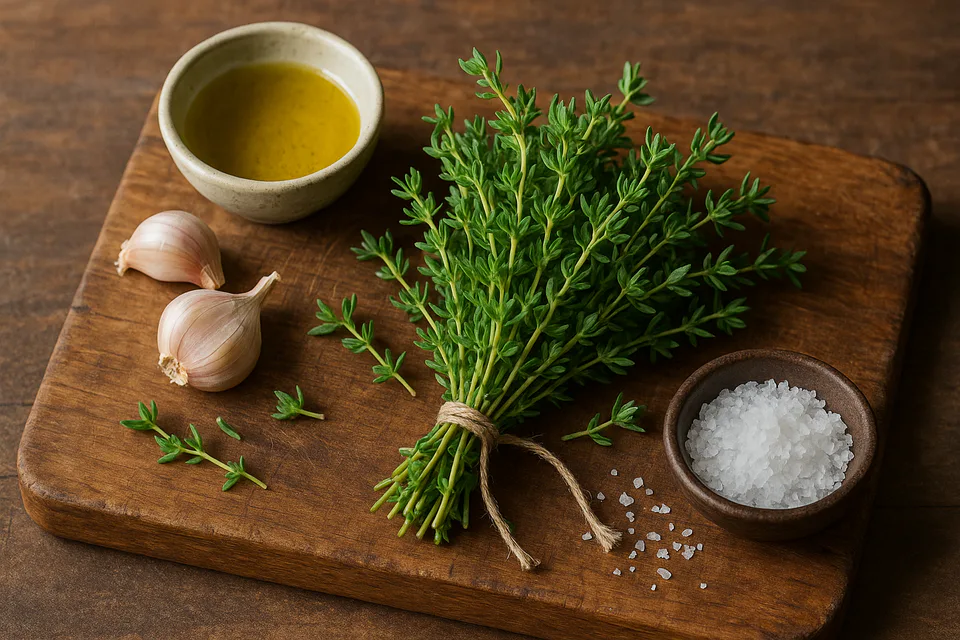
The Thyme herb has been seasoning our tables — and healing our ailments — for more than 3,000 years. The ancient Egyptians used it for embalming, the Greeks burned it in temples for courage, and medieval knights carried sprigs as tokens of bravery. Today, it’s a kitchen staple known for its earthy, slightly floral aroma that instantly transforms a simple dish into something memorable.
🌿 A Brief History of the Thyme Herb
Thyme’s journey is as rich as its fragrance. The Romans spread it across Europe, using it to purify rooms and flavour cheese and liqueurs. In the Middle Ages, it symbolised courage and strength — women would embroider thyme sprigs onto scarves and give them to knights heading to battle.
It wasn’t until the Renaissance that thyme began to shine in culinary use, flavouring roasts, stews, and herbal remedies alike. Even today, herbalists value it for its antibacterial and antioxidant properties, making it as practical as it is flavourful.
🌱 Varieties of Thyme Worth Knowing
There are over 300 varieties of thyme, but only a handful make regular appearances in the kitchen or garden:
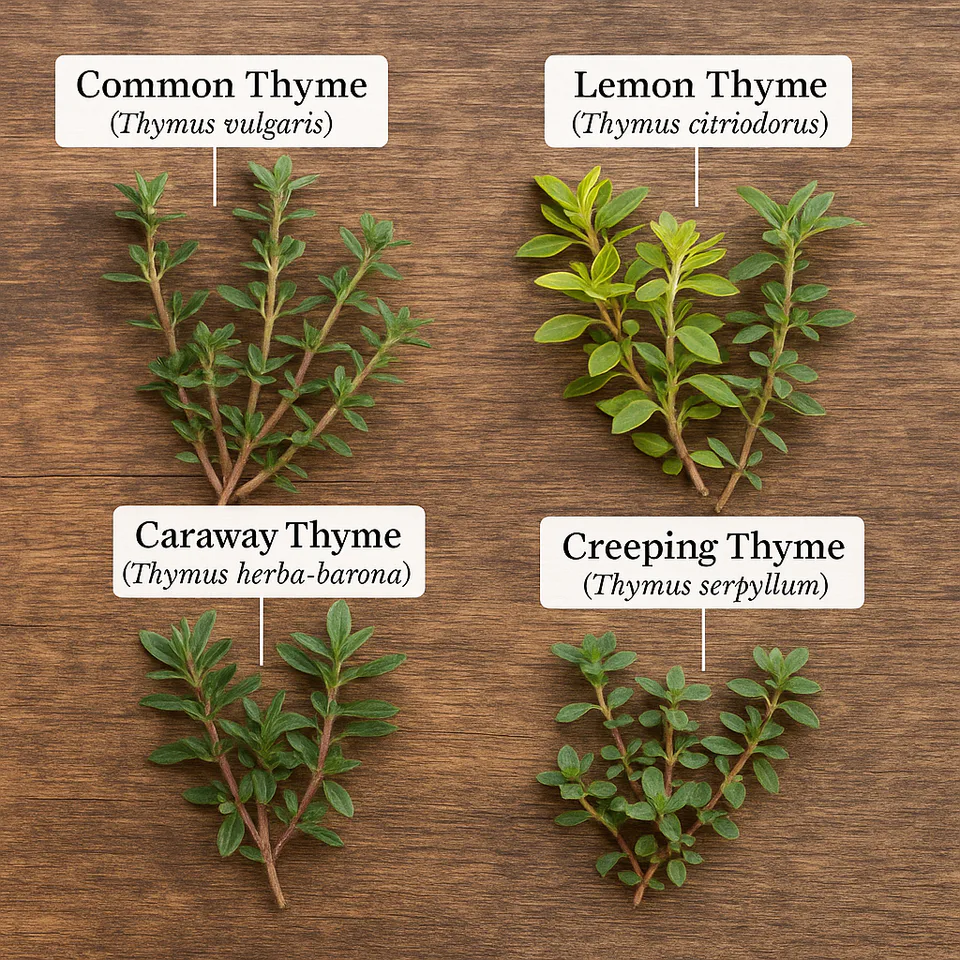
- Common Thyme (Thymus vulgaris): The go-to culinary variety with that classic savoury flavour.
- Lemon Thyme (Thymus citriodorus): Bright, citrusy notes that pair beautifully with fish, chicken, or roasted vegetables.
- Caraway Thyme: Slightly sweeter, with undertones that work wonders in bread or pork dishes.
- Creeping Thyme: A fragrant ground cover that doubles as a bee magnet and a handy garnish.
Each has its own subtle twist — try growing two or three varieties to see how they differ.
🌤️ How to Grow Thyme at Home
Thyme is one of the easiest herbs to grow, whether in a pot on the windowsill or a sunny corner of the garden.
It thrives on neglect and sunlight — perfect for anyone who forgets to water their plants now and then.
Growing Tips:
- Light: Full sun is best — thyme loves warmth.
- Soil: Well-drained, even slightly sandy. It dislikes soggy roots.
- Water: Infrequent but deep watering.
- Pruning: Trim after flowering to keep it bushy and prevent it from going woody.
A single plant can last for years if you harvest regularly and avoid over-watering. If you live somewhere damp, plant thyme in raised beds or terracotta pots to help it breathe.
🍳 Cooking with the Thyme Herb
Thyme is a quietly confident herb — it doesn’t shout, it balances. Its subtle peppery edge brings depth to food without overwhelming other flavours.
Best Uses:

- Roasts, soups, and stews — it stands up beautifully to long cooking times.
- Vegetables like mushrooms, courgettes, and tomatoes.
- Marinades for chicken, lamb, or fish.
- Compound butters, herby oils, and even cocktails (try a thyme-infused gin or lemonade).
A small pinch can lift the whole dish. If you’ve ever wondered why a roast chicken tastes “complete” when seasoned properly, thyme’s probably part of that secret.
🧂 Perfect Pairings
Thyme plays well with almost everything, but some combinations are culinary gold:
| Ingredient | Why It Works |
|---|---|
| Garlic | Complements thyme’s earthy warmth for deep, comforting flavour. |
| Lemon | Balances the savoury tones with freshness — ideal for poultry and fish. |
| Honey | Brings out thyme’s floral side in glazes or roasted carrots. |
| Mushrooms | Enhances their umami depth; great in creamy sauces or risotto. |
| Butter | Thyme butter melts perfectly over steak, veg, or fresh bread. |
🧺 Drying and Storing the Thyme Herb
To preserve thyme’s flavour:
- Hang small bunches upside down in a dry, airy space.
- Once crisp, strip the leaves from the stems and store them in an airtight jar away from sunlight. This black glass jar from Ozchin with its UV protection is ideal
- Dried thyme keeps for up to a year — but if you can, refresh your stock each summer for the best aroma.
If you’re short on time, you can dry thyme in a low oven (50°C) or an air fryer on the lowest setting for about 30 minutes. Cool completely before sealing in jars.
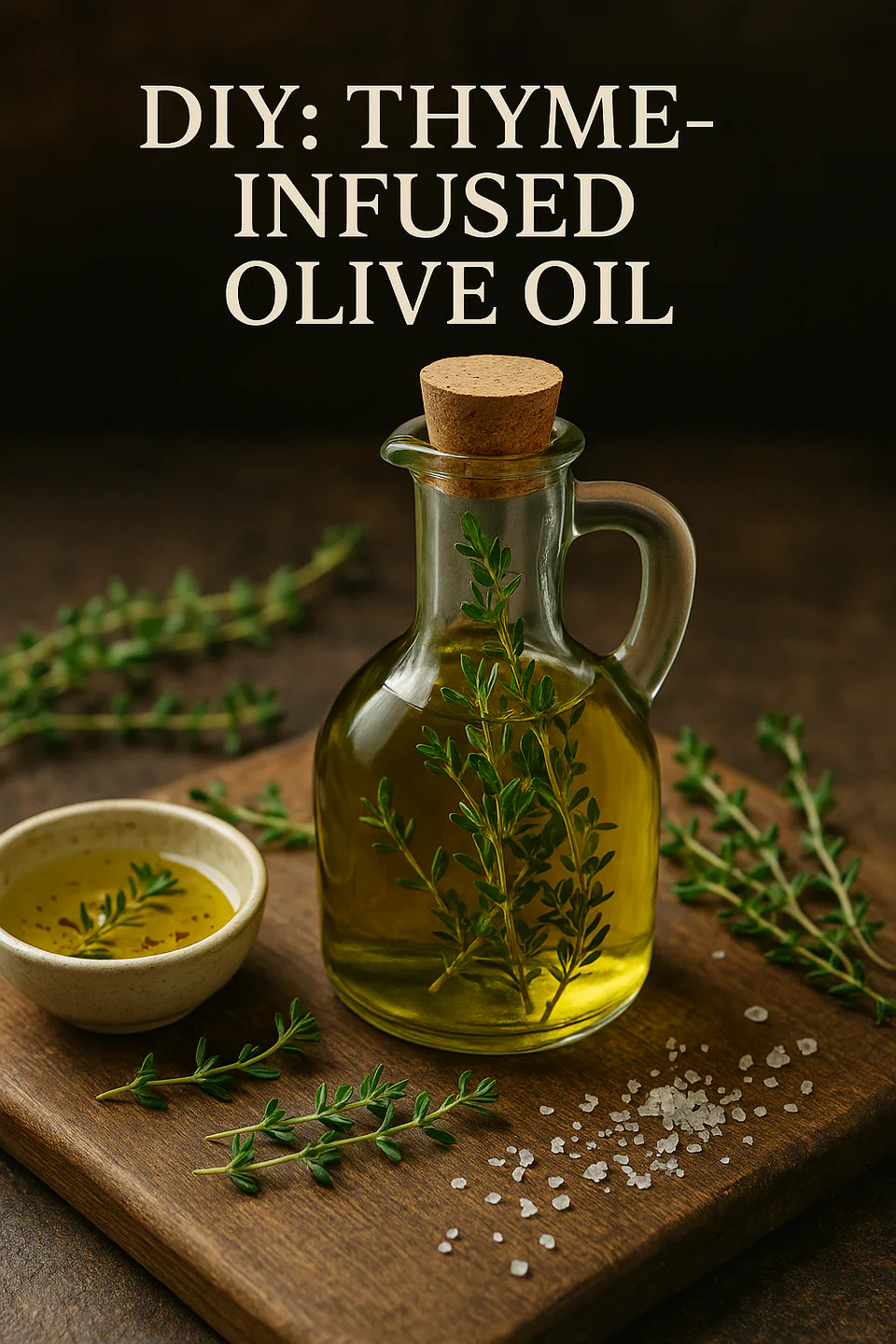
🌿 DIY: Thyme-Infused Olive Oil
Make your own herbal oil that’s perfect for drizzling, dipping, or roasting:
Ingredients:
- 250 ml extra virgin olive oil
- 4–5 fresh thyme sprigs
- Optional: a clove of garlic or strip of lemon peel
Method:
- Gently warm the oil in a small pan (don’t boil).
- Add thyme (and garlic/lemon if using) and steep on very low heat for 10–15 minutes.
- Remove from heat, let cool completely, strain, and pour into a clean bottle.
Store in the fridge and use within a month. It’s fantastic on roasted veg, pasta, or even fresh bread.
💡 Expert Tip
When adding thyme to recipes, add early if it’s dried (so it has time to release flavour) and add near the end if it’s fresh (to keep its brightness intact).
A mix of both can give your dish a beautiful depth and balance.
🐶 Dog-Friendly Note: Can Dogs Have Thyme?
Good news — thyme is generally safe for dogs in small amounts and can even have some health benefits. It’s packed with antioxidants and mild antibacterial properties that can help support your dog’s immune system and digestion.
How to use it safely:
- Sprinkle a tiny pinch of dried thyme or a small leaf of fresh thyme over your dog’s food occasionally.
- Mix it into homemade dog treats for a natural flavour boost.
- Avoid using thyme essential oil — it’s far too concentrated and not safe for pets.
As with any herb, moderation is key. If your dog has a sensitive stomach or specific health conditions, check with your vet before adding new herbs to their diet.
Try this: add a little dried thyme to a batch of homemade dog biscuits with oat flour, egg, and mashed banana — Dexter-approved and kitchen-tested!
🐾 Final Thoughts
Thyme isn’t just a herb — it’s a reminder that the smallest things can make the biggest difference. Whether it’s adding depth to dinner, scent to your garden, or calm to a busy kitchen, thyme has earned its place as one of the true culinary essentials.