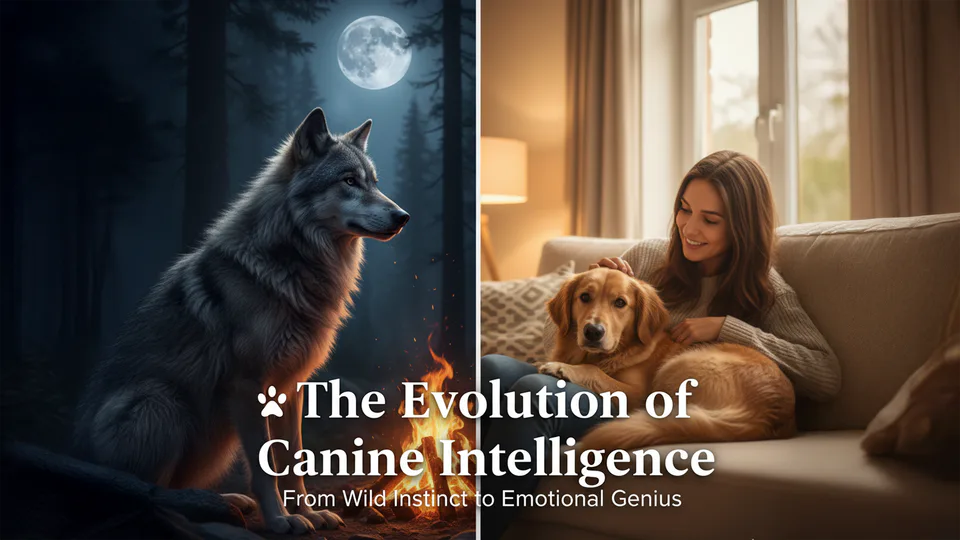
Dogs weren’t always the sofa-loving companions we know today. Thousands of years ago, their ancestors were wild, wary, and fiercely independent — creatures who survived by wit, not obedience.
So how did the wolf become the world’s most beloved species? The story of canine intelligence is really a story about domestication, trust, and co-evolution.
🔥 From Campfires to Companions
The earliest bond between humans and wolves wasn’t built on affection — it was survival.
Archaeological evidence suggests wolves began scavenging near human camps over 15,000–30,000 years ago. The tamer ones — less fearful, more curious — got access to food scraps. In return, they offered protection and early warning against predators.
Over generations, those wolves evolved into proto-dogs — genetically distinct from their wild cousins. What began as mutual convenience slowly transformed into emotional partnership.
🧠 How Domestication Rewired the Canine Brain
Studies using MRI and behavioural testing show that domestication didn’t just soften dogs’ appearances — it rewired their cognition.
- Less fear, more focus: Domestication reduced stress responses to human proximity, freeing dogs to learn from us.
- Facial recognition: Dogs now read human faces and expressions better than almost any non-human species.
- Social learning: Dogs imitate our behaviour, anticipating routines, tone, and even emotional cues.
- Language sensitivity: Some breeds can learn hundreds of human words — not just commands, but names and object labels.
This wasn’t “intelligence” in the academic sense — it was relational evolution. Dogs got better at understanding us, not math problems.
🐾 Selective Breeding: The Intelligence Shaper
As humans developed new lifestyles, we began to sculpt canine intelligence deliberately.
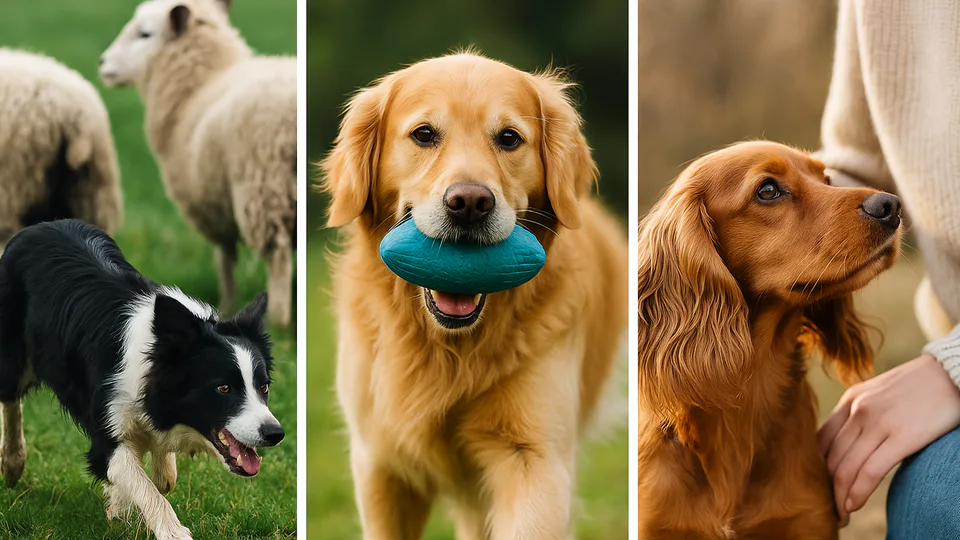
- Herders like Border Collies were bred for problem-solving and precision.
- Retrievers excelled at reading subtle gestures and working cooperatively.
- Companion breeds such as Spaniels (hi, Dexter 👋) were selected for empathy, patience, and emotional attunement.
Each role reinforced a unique type of intelligence — practical, social, or emotional — creating the vast mental diversity we see today.
💬 Emotional Intelligence: The Unsung Superpower
What truly sets modern dogs apart isn’t logic — it’s empathy.
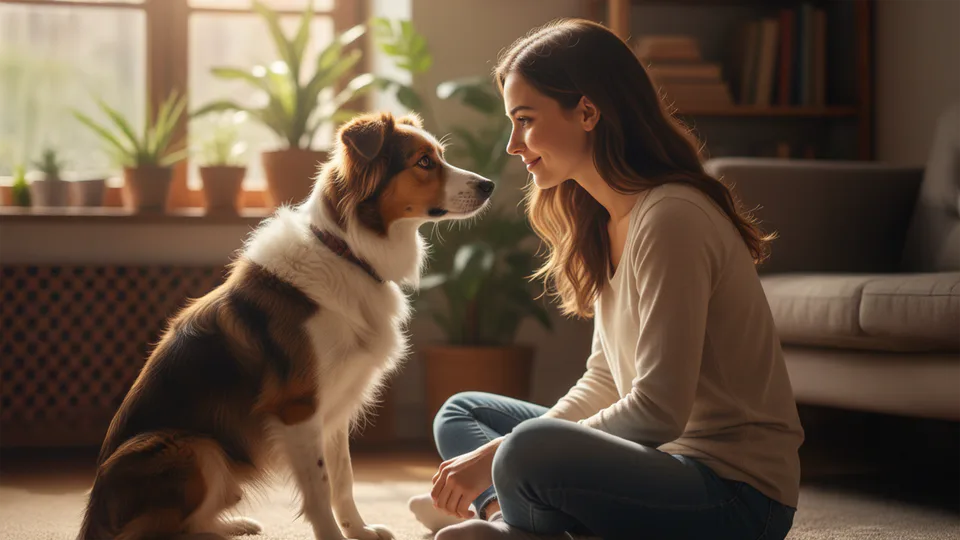
A well-socialised dog can read a sigh, a pause, or even your posture and adjust its behaviour. Some scientists now refer to dogs as “emotional mirrors.”
In many ways, they’ve become fluent in the language of human feeling — a skill evolution didn’t gift wolves, but domestication did.
🌍 Co-Evolution: We Got Smarter Too
Here’s the twist: as dogs evolved to understand us, we evolved to understand them.
Human oxytocin (the “bonding hormone”) spikes when we gaze into a dog’s eyes — and the dog’s does too.
Our species literally rewired each other’s emotional circuitry. Domestication didn’t just make dogs smarter — it made us better communicators, carers, and companions.
🧩 Final Thought
So, are dogs evolving greater intelligence?
Not in the way we define human genius — but in a way that’s far more beautiful.
Through thousands of years of shared life, dogs have perfected the art of understanding hearts instead of solving puzzles.
Their intelligence lies not in their brains alone, but in the invisible thread of empathy that binds us together.
🐶 Coming Next:
Part 3 – “The Future of Canine Intelligence: How AI, Enrichment, and Modern Life Are Changing Our Dogs’ Minds.”
We’ll explore whether new technology, smart toys, and training methods are making the next generation of dogs the cleverest yet.