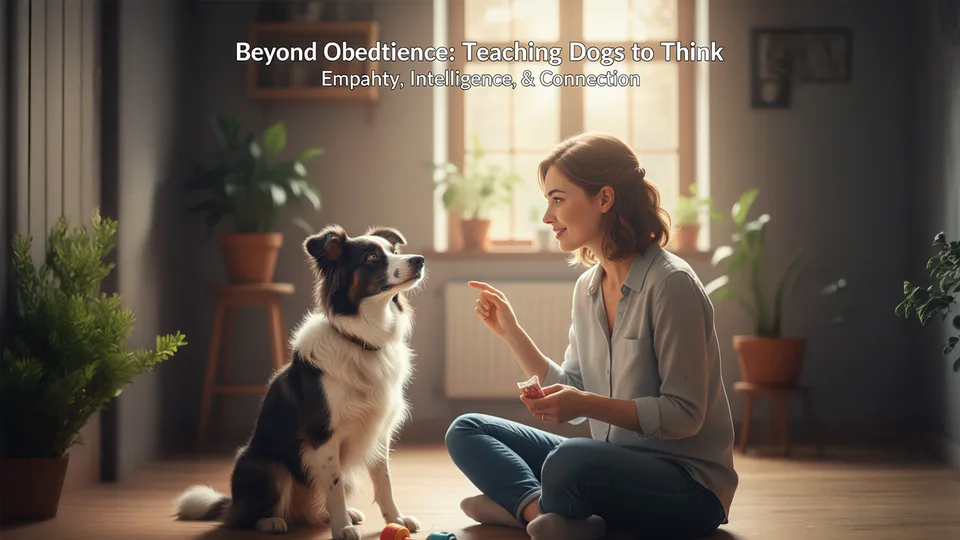
For decades, dog training meant one thing: obedience. Sit, stay, heel — the reliable repertoire of a ‘well-behaved’ dog. But as science digs deeper into canine intelligence and cognition, we’re discovering something extraordinary: dogs don’t just follow commands; they think about them.
We’re entering an age of cognitive training, where the goal isn’t control — it’s collaboration.
🧠 From Commands to Communication
Traditional training shaped behaviour through repetition and reward. It works — but it limits. Modern trainers are now asking a different question: what if we stopped telling dogs what to do, and started asking them to solve problems with us?
Cognitive games — from choice-based cues to scent puzzles — encourage dogs to reason, not just respond.
When you say “find it” and your dog scans, sniffs, and deduces, you’re watching abstract thought in motion. That’s not obedience; that’s cognition.
These sessions build neural flexibility — helping dogs become calmer, more adaptable, and less frustrated by the unpredictable human world.
🎯 The Power of Agency
A thinking dog is a confident dog.
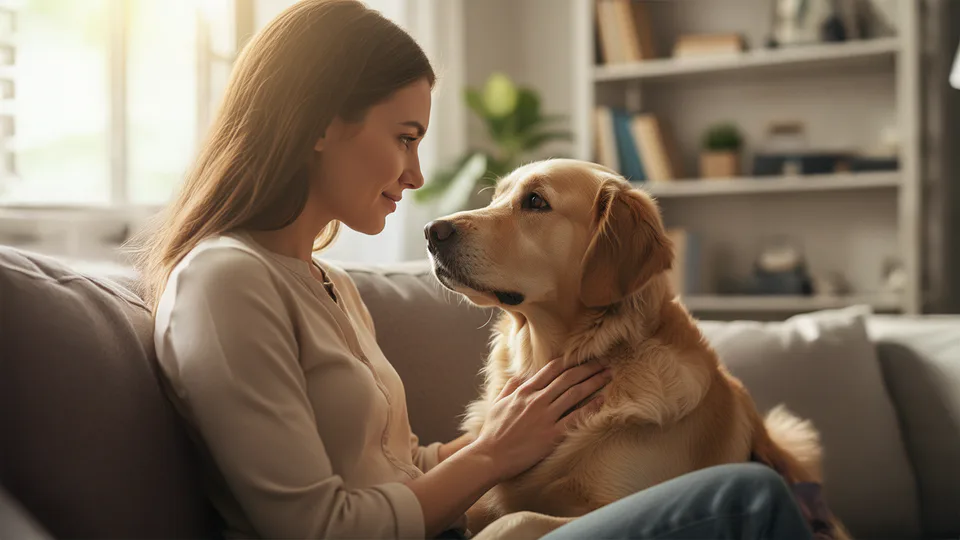
Agency — the ability to make choices that matter — is one of the most powerful welfare tools we have. When a dog chooses how to complete a task or when to engage, training shifts from control to trust.
Small choices, like selecting a toy, choosing a scent path, or opting out of a session, reduce stress hormones and strengthen resilience. It’s the psychological equivalent of enrichment for the brain.
💬 Language Learning and Emotional Literacy
Studies show dogs can learn the meanings of dozens — sometimes hundreds — of human words, but that’s just the start. Emotional literacy — the ability to interpret tone, tension, and intent — may be their greatest skill.
Teaching “calm,” “slow,” or even “yes/no” through structured play helps dogs label emotions and reactions. In turn, we learn to read them better, creating a fluent two-way dialogue. This deepens the human-dog bond.
It’s less trainer and trainee and more partners in translation.
🔍 Tools for a Thinking Dog
You don’t need fancy tech (though it helps). Start simple:
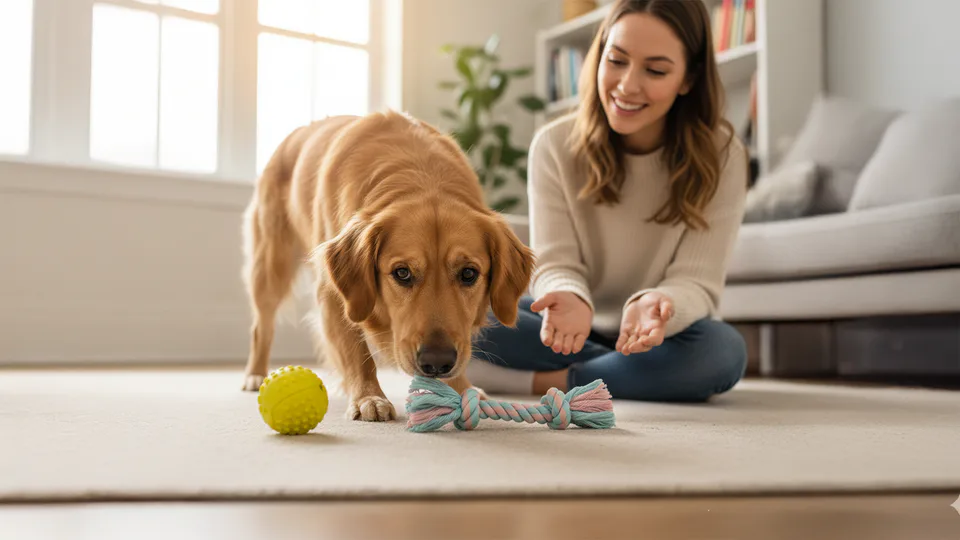
- Choice-based cues: Offer two toys, then label the one your dog chooses.
- Problem-solving games: Scatter treats under cups — let them figure it out.
- Predictive routines: Give verbal hints before predictable events (“walk,” “car,” “quiet”). Over time, your dog starts anticipating and reasoning contextually.
- Reflective pauses: Before repeating a cue, give a few seconds. Dogs often process and correct themselves — if we give them time.
The goal isn’t perfection. It’s engagement.
💡 Thinking Together: The Human Shift
Cognitive training challenges us as much as our dogs.
It asks for patience instead of power, curiosity instead of command.
And in return, we gain something obedience never gave us — genuine insight into how dogs perceive the world.
When we stop seeing training as compliance and start seeing it as communication, the relationship transforms.
🧭 Final Thought
The future of dog training won’t be about faster sits or longer stays.
It’ll be about raising dogs who can think, feel, and choose — partners who share their minds as freely as they share their hearts.
So next time your dog hesitates before a command, don’t rush them. That pause might just be the sound of thinking. Pausing lets them process and meet their needs in their own way
🐶 Coming Next:
“The Empathy Code: How Dogs Understand Us Better Than We Understand Them.”
We’ll explore the neuroscience of canine empathy, the power of eye contact, and why your dog really does know when you’ve had a rough day.