
Dogs have shared our lives for tens of thousands of years — from loyal hunting partners to pampered companions. But as our bond deepens, a fascinating question emerges: have dogs actually become more intelligent over time, or are we simply better at noticing how clever they are?
🐾 What Does “Smart” Even Mean for a Dog?
When we talk about intelligence in dogs, we’re really talking about three overlapping types:
- Adaptive intelligence — how well a dog learns from experience.
- Working intelligence — how quickly and accurately they follow commands.
- Social intelligence — how well they understand humans and other animals.
Unlike humans, dogs haven’t evolved to solve abstract puzzles or perform complex reasoning. Their intelligence is relational — built around cooperation, observation, and empathy.
📜 A Century of Change: From Fields to Living Rooms
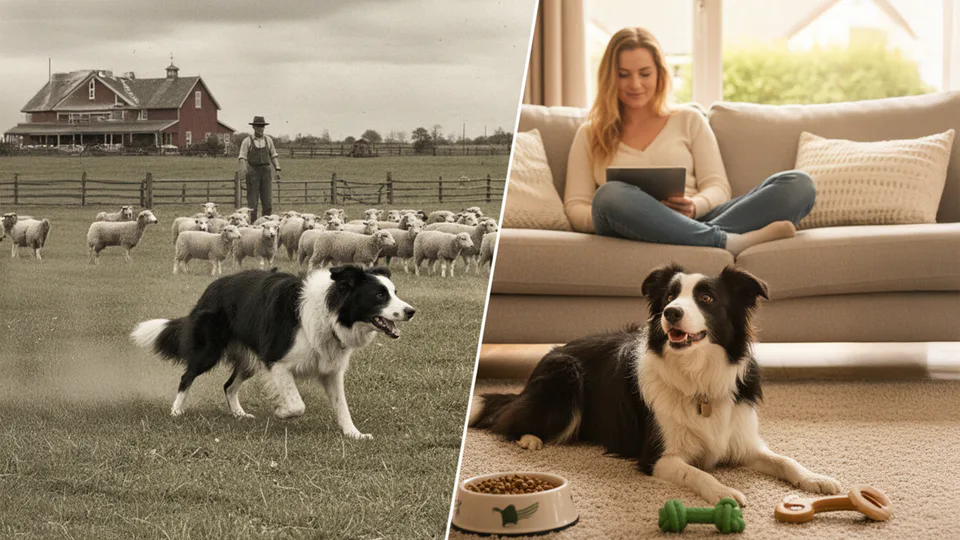
A hundred years ago, most dogs had jobs. They guarded livestock, retrieved game, or pulled sleds. Their intelligence was measured in survival skills and obedience.
Today, our dogs live in homes, not fields. Their “work” is emotional — comforting, connecting, and communicating with us.
That shift has likely boosted social and emotional intelligence, even if problem-solving skills have stayed about the same. A modern Labrador might not herd sheep, but it can read your tone, mood, and gestures with astonishing precision.
🧬 Nature, Nurture, or Both?
Genetic research shows that selective breeding for temperament and companionship has subtly shaped dogs’ cognitive abilities. Breeds like Border Collies still dominate obedience tests, but even toy breeds show remarkable communication awareness.
The real story, though, might be nurture.
Dogs today are raised in stimulating environments filled with toys, enrichment games, and training — mental workouts previous generations rarely had. The result? Sharper memory, faster learning, and deeper emotional attunement.
💡 Smarter Dogs or Smarter Humans?
Here’s the twist: we may not be creating smarter dogs — we’re just better humans for them. Modern science, better training methods, and positive reinforcement help dogs thrive. We’ve learned their language.

🐕🧠 The Verdict
Dogs may not have evolved “higher IQs,” but they’ve become experts at what truly matters in their world: understanding us. Their genius isn’t about solving equations — it’s about empathy, adaptability, and connection.
“Intelligence in dogs isn’t measured by how much they think like us — but how perfectly they’ve learned to live with us.”
Next up: Part 2 – “The Evolution of Canine Intelligence: How Domestication Shaped the Modern Dog.”