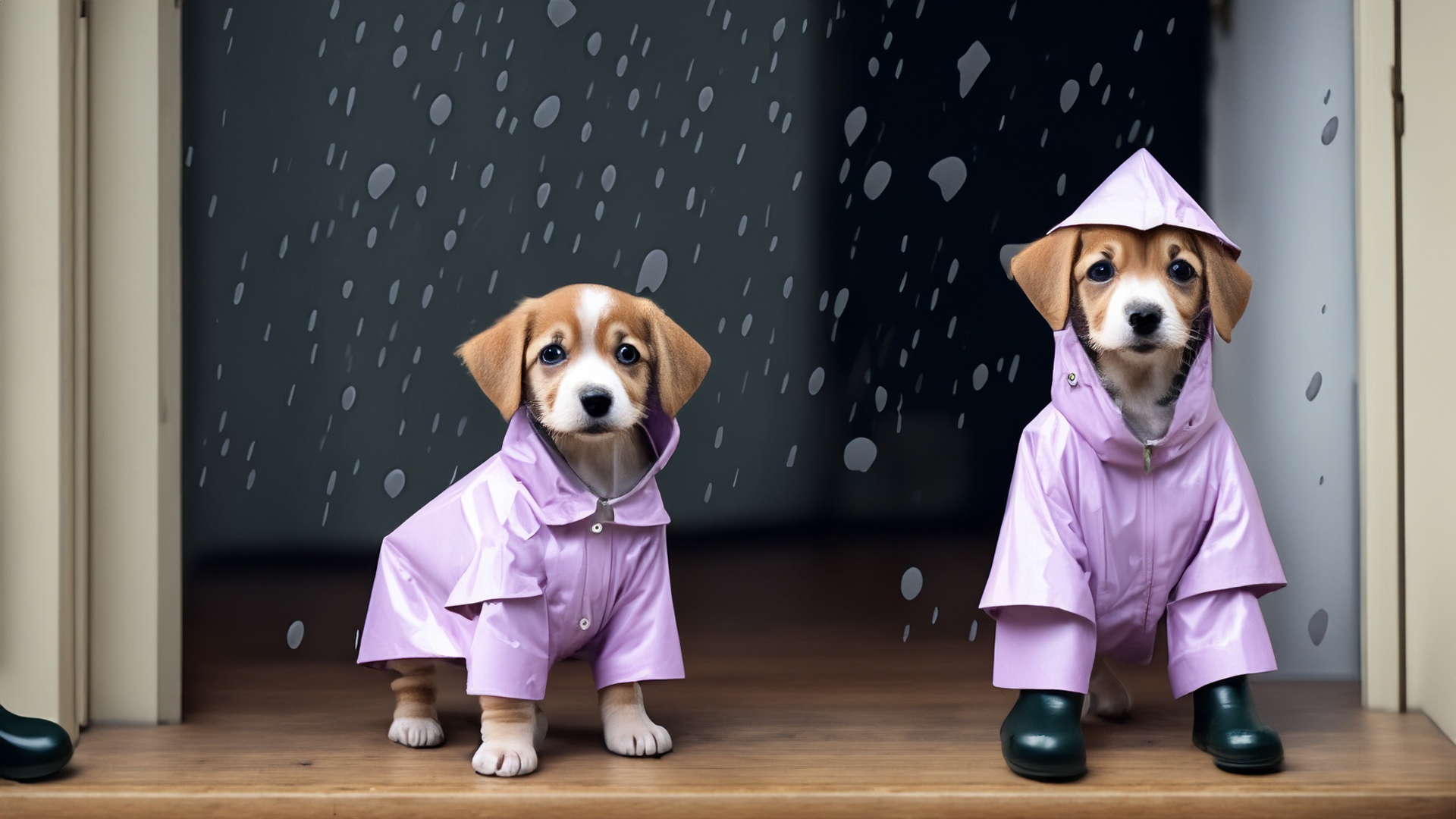
Welcoming a puppy into your home is an exciting time! But it’s important to remember that your furry friend needs guidance, especially when it comes to house training. Don’t worry, with a bit of patience and consistency, you can teach your pup proper bathroom habits in no time. Here’s how:
The Essentials of Puppy House Training
1. Establish a Routine:
Young puppies have little bladder control. To avoid accidents, establish a routine of taking them outside:
- First thing in the morning: As soon as your puppy wakes up, head straight outside. Remember, those tiny bladders have been holding on all night!
- After meals or drinking water: Food and water stimulate a puppy’s digestive system. Take them out about 15-20 minutes after eating or drinking for a potty break.
- After playtime or naps: Play and activity rev up a puppy’s metabolism, including their need to eliminate. A quick trip outside after a nap or play session helps prevent indoor accidents.
- Before bedtime: A final outing right before bed reduces the chance of overnight accidents and helps your pup (and you!) sleep better.
Additional Tips
- Age Matters: Very young puppies may need to go outside as often as every hour. As they age, you can gradually lengthen the time between potty breaks.
- Set an Alarm: In the early stages, a phone alarm can be helpful to remind you of potty breaks. This keeps the schedule consistent.
- Watch for Signals: Learn your puppy’s cues for needing to go: restlessness, sniffing, circling, or heading for the door.
2. The Designated Spot:
Choose a specific area in your yard as their “bathroom.” Taking them to the same spot creates a scent association.
- Choosing the Right Spot: Consider these factors when picking your puppy’s potty zone:
- Accessibility: It should be easily accessible, especially in bad weather or at night.
- Privacy: Some pups prefer a bit of privacy, so a sheltered corner may be ideal.
- Surface: Grass or mulch can be comfortable for pups. Avoid thorny areas or anything they might eat.
- Consistency is Key: Once you’ve chosen the spot, stick with it. Taking your pup to the same place helps them associate the scent with potty time.
- Making It Official:
- Bring a Scent Cue: Take a bit of their soiled bedding or a paper towel with urine on it and place it in the designated spot. This reinforces the correct location.
- Use a Command: Develop a verbal cue like “go potty” that you say exclusively when you take them to their spot.
- If Your Pup Chooses: Sometimes, pups will pick their own bathroom spot before you do! If it’s a practical location, simply clean it up and start using that as their designated area.
Remember, with a clearly established “bathroom” and your guidance, your puppy will quickly get the hang of it!
3. Supervision is Key:
Keep a close eye on your pup indoors. Look for signs they need to go: sniffing, circling, whining, or heading towards the door. Immediately take them outside.
- Why Supervise? Puppy bladders are tiny, and they often don’t recognise the urge to go until the last minute. Constant supervision lets you prevent accidents before they happen.
- Common Signs Your Pup Needs to Go:
- Sniffing: Intensely sniffing the floor usually means they’re searching for a spot to eliminate.
- Circling: Circling behavior is a classic “I gotta go!” sign.
- Whining or Barking: Sudden vocalisation, especially near the door, can indicate an urge.
- Restlessness or Change in Activity: A pup who suddenly stops playing or seems distracted may need a potty break.
- Heading Towards the Door: This one’s obvious, but worth noting!
- How to Supervise:
- Tethering: Attach a leash to yourself or a piece of furniture to keep your pup within eyesight.
- Confined Play Area: Use baby gates or a playpen to limit their space when you can’t give full attention.
- Crate When Unsupervised: When you can’t directly watch your pup, keep them safe and cozy in their crate (for short periods).
- The Golden Rule: If in doubt, take them out! It’s better to have a few extra trips outside than an accident indoors.
4. Positive Reinforcement:
Lavish your pup with praise and treats when they eliminate in the right spot. This creates a positive association with going outside.
- The Power of Praise: When your pup eliminates outdoors, shower them with enthusiastic praise! Use a happy voice, say things like “good potty!” or “excellent!” Positive verbal reinforcement is a powerful tool for shaping behaviour.
- Treat Time!: Pair praise with a tasty treat for an extra positive association. Keep the treats small and high-value – something truly exciting for your pup. This creates a reward system that motivates them to “go” in the right spot.
- Timing is Everything: For the strongest association, deliver the praise and treat immediately after your pup eliminates outdoors. This creates a clear connection between the act and the reward.
- Keep it Fun!: Make potty breaks a happy and engaging experience for your pup. Play a short game of fetch or toss their favourite toy after they do their business. This turns outside time into something they look forward to.
- Beyond Treats: Not all dogs are super food-motivated. For some pups, belly rubs, ear scratches, or a quick game of tug-of-war can be equally rewarding. Find what motivates your furry friend!
- Consistency is Key: Just like with routines and designated spots, consistency is crucial with positive reinforcement. Be generous with praise and treats every single time your pup eliminates outdoors.
- Remember: Positive reinforcement builds confidence and a strong bond between you and your pup. It makes puppy house training a positive experience for everyone involved!
5. Crate Training:
A crate can be a valuable tool for housebreaking. Dogs instinctively avoid soiling their den-like space. Keep the crate cozy and never use it as punishment.
- Why Crate Training Helps with Housebreaking:
- Capitalising on Instinct: Dogs generally don’t want to mess where they sleep. A properly sized crate taps into this instinct, encouraging them to hold their bladder and bowels until they can go outside.
- Accident Prevention: A crate provides a safe, confined space when you can’t supervise your pup directly. This reduces the opportunities for indoor accidents.
- Creating a Routine: Crate time can be easily integrated into your puppy’s potty break schedule, further establishing routine and predictability.
- Crate Training Basics
- Choosing the Right Crate: The crate should be just big enough for your pup to stand up, turn around, and lie down comfortably.
- Make it Cozy: Add a comfy bed or blanket, and some safe chew toys.
- Positive Introduction: Introduce the crate gradually with treats and praise. Make it a happy and welcoming place.
- Never Use for Punishment: The crate should be a positive safe haven, never a place they associate with fear or punishment.
- Using the Crate for Puppy House Training:
- Short Periods: Start with short crating times, gradually increasing as your puppy gains bladder control.
- After Potty Breaks: Take your pup directly outside to potty after each crate session.
- Be Responsive: If your puppy whines in the crate, it could mean they need to go. Take them out immediately, but avoid playing or giving extensive attention.
Additional Notes:
- Seek guidance from a reputable trainer or a veterinarian on how to crate train your pup effectively and with positive methods.
- Crate training is not a substitute for regular potty breaks and supervision. It’s one tool to help facilitate puppy house training success.
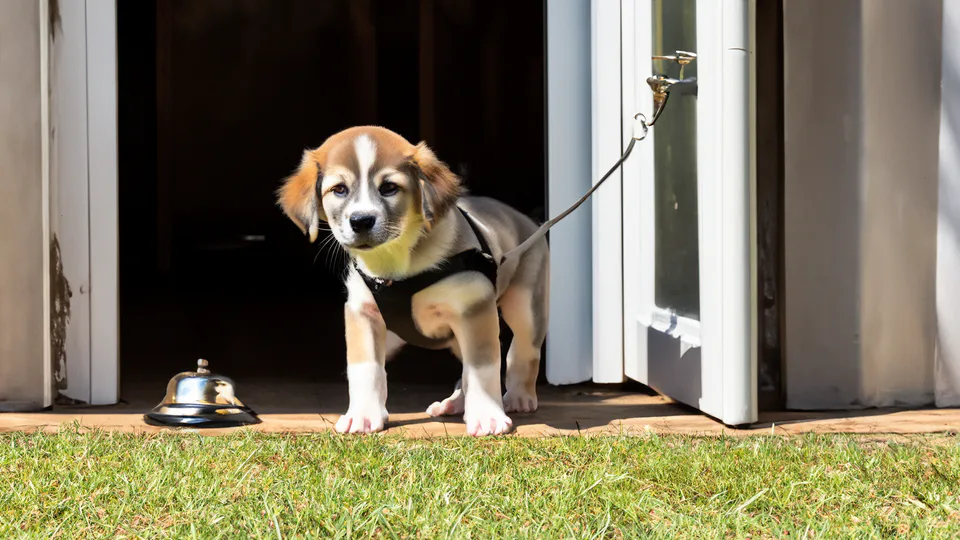
When Accidents Happen (and they will!)
Accepting that accidents are inevitable will go a long way in keeping your sanity during puppy house training! Remember, your puppy is learning, and mistakes are part of the process. Here’s how to handle those inevitable slip-ups:
- Don’t Punish: Accidents are normal. Scolding will confuse your pup and can make them afraid to eliminate in front of you. Fear leads to hiding accidents, which makes housebreaking that much harder. Focus on positive, proactive training rather than scolding after the fact.
- Clean Thoroughly: Remove any scent with an enzymatic cleaner designed for pet messes. Lingering smells may tempt your pup to use that spot again. Regular cleaning products won’t fully neutralize the enzymes in urine, which is why a specific cleaner is important. You can purchase one from Amazon using this link [https://amzn.to/3T87kKE] (and yes I will get a small commission if you do, Thank you)
- Back to Basics: If accidents keep happening in a specific area, restrict your pup’s access and try revisiting the training routine.
- Refocus on Supervision: Has your puppy had more freedom than they can handle right now? Increase supervision or use management tools like tethering or playpens to limit accidents.
- More Frequent Potty Breaks: Does your pup need to go more often? Adjust the schedule temporarily.
- Check the Designated Spot: Is there something about the potty spot your puppy dislikes? Consider another area.
Additional Tips:
- Interrupt Calmly: If you catch your puppy in the act of an indoor accident, a calm “whoops!” or a clap can interrupt them. Immediately scoop them up and take them outside to finish their business.
- Patience is Everything: House training takes time. Be patient with your pup, clean calmly, and adjust your approach as needed. They’ll get there!
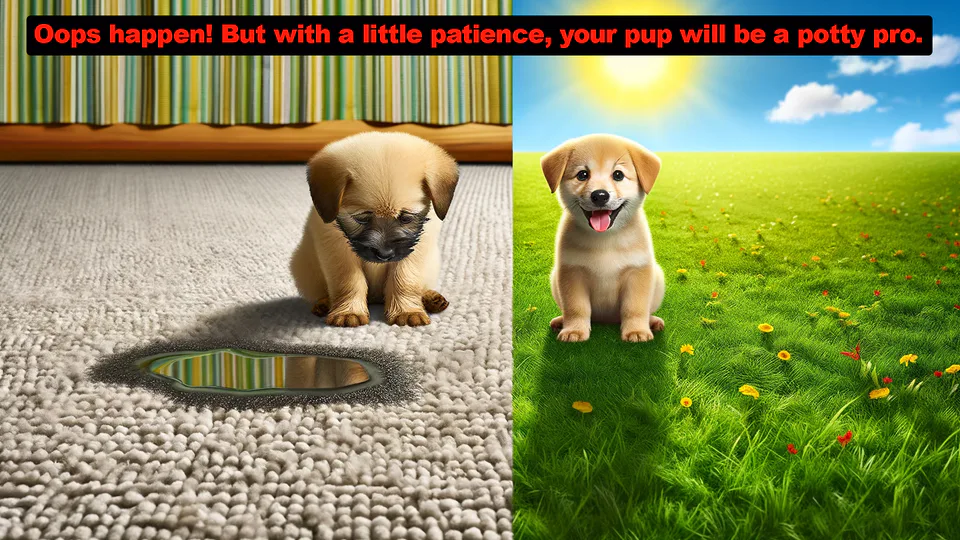
Additional Tips
- Understand Your Puppy’s Limits: A rule of thumb – a puppy can usually hold their bladder for one hour per month of age. Adjust your expectations. Young puppies have tiny bladders and limited control. Don’t expect them to hold it for hours on end, and adjust your potty break schedule accordingly.
- Limit Water Before Bed: Reduce water intake a couple of hours before bedtime to minimise overnight accidents. While you never want to deny your pup water, minimising their intake in the evening sets them up for a drier night.
- Seek Professional Help: If house training feels overwhelming or you’re unsure of the best approach, consult a certified dog trainer or behaviourist. Expert trainers can pinpoint potential issues, personalise a plan for your puppy, and support you throughout the process.
- Remember: Patience, consistency, and positive reinforcement are crucial for house training success. Celebrate each milestone, and soon your pup will be ringing the bell to go outside like a pro! House training requires dedication. Stay patient, keep the routine predictable, and celebrate even the smallest wins. Your pup is learning, and with your guidance, they’ll master it!
More Tips to Consider:
- Veterinary Checkup: Rule out any underlying medical conditions that could contribute to potty accidents.
- Diet Matters: A high-quality, consistent puppy food promotes proper digestion and regular elimination patterns.
Do you have any other puppy house training tips to share? Leave them in the comments!