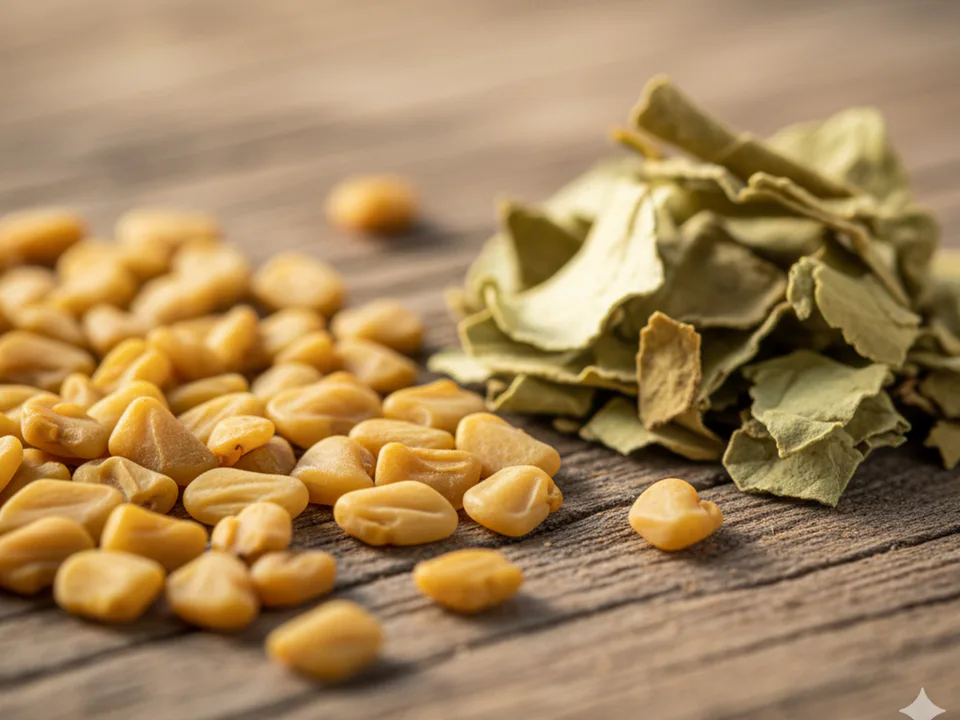
Fenugreek is available as hard golden seeds and as dried leaves, often sold as kasuri methi. Both are strongly flavoured, but they are not direct substitutes for one another.
In this guide
Fenugreek seeds
Whole seeds are hard and naturally bitter. Toast them lightly or fry them briefly with other whole spices, then use a small amount. They are often part of blends related to Garam Masala and curry seasoning.
Do not let the seeds turn very dark, because burnt fenugreek can dominate the entire dish.
Dried fenugreek leaves
Dried leaves are softer and more aromatic than the seeds. Rub them between your fingers and add them near the end of cooking. They work particularly well in creamy or tomato-based sauces such as Chicken Tikka Masala.
A pinch is often enough for a family-sized pan.
How to avoid bitterness
Use less than you think you need, especially with seeds. Balance fenugreek with tomato, yoghurt, cream, onion or a little acidity. A warm bread such as Naan is useful alongside strongly spiced sauces.
Taste after the dish has simmered, because the flavour develops as it cooks.
Useful spice pairings
Fenugreek commonly appears with Cumin, Coriander and Turmeric. Each spice contributes something different, so avoid increasing all of them together without tasting.
Fresh ginger, garlic and chilli can provide brightness around the deeper fenugreek flavour.
Recipes to try
Use dried fenugreek leaves to finish Chicken Tikka Masala or add a restrained amount to a homemade Garam Masala blend.
Browse Easy Meals for dishes where a strongly flavoured sauce is supported by rice, bread or vegetables.