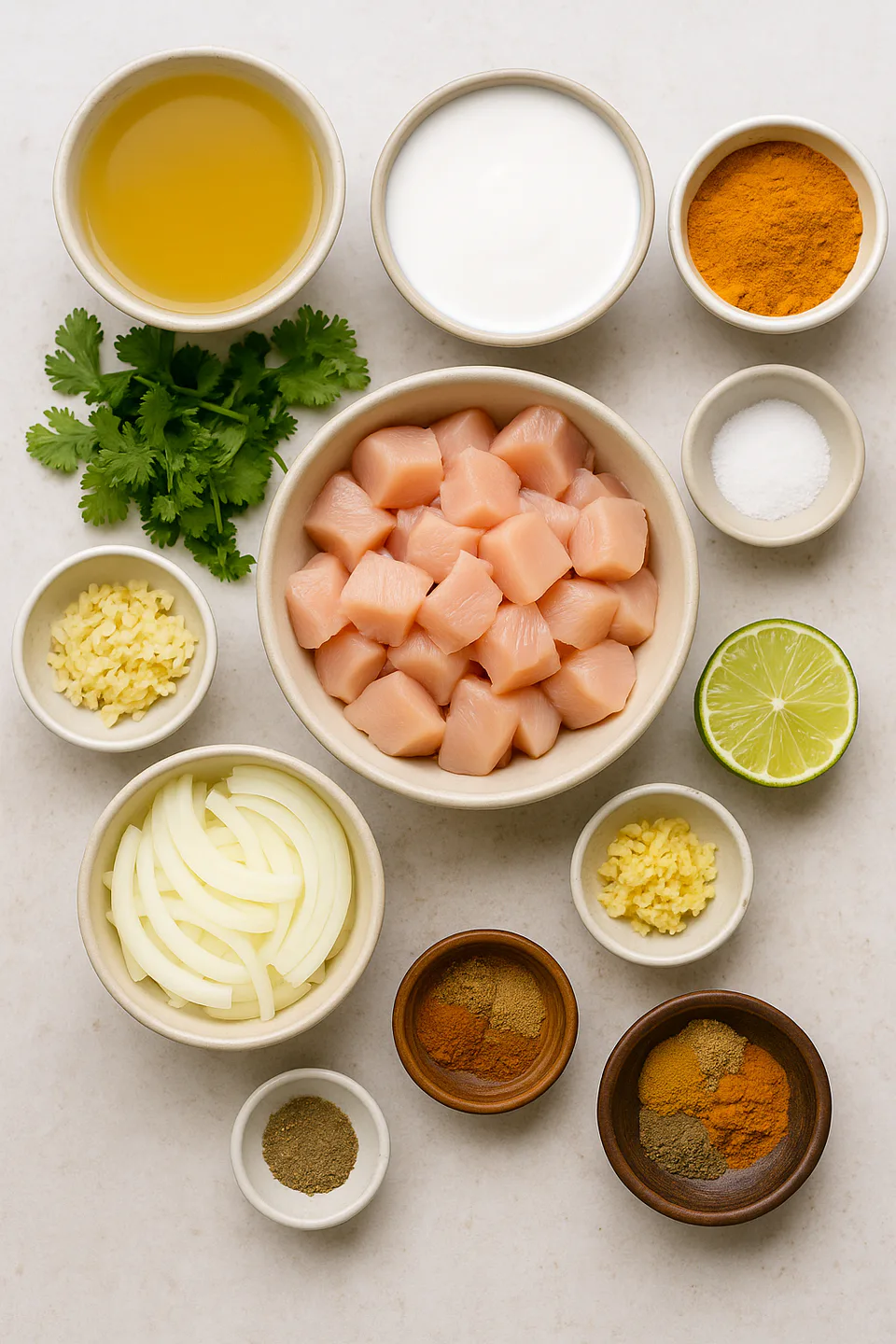
Turmeric is valued in cooking for its intense yellow colour and earthy, slightly bitter flavour. A small amount can colour a whole pan, but too much can make food taste dry or medicinal.
In this guide
- How turmeric tastes
- Blooming turmeric in oil
- Where turmeric works well
- Spices that pair with turmeric
- Practical handling
- Recipes to try
How turmeric tastes
Turmeric is earthy and mildly bitter rather than hot. It supports dishes such as Chicken Tikka Masala on a Budget but rarely needs to be the strongest flavour.
Start with a modest quantity and let the dish cook before deciding whether it needs more.
Blooming turmeric in oil
Ground turmeric benefits from brief contact with warm oil alongside onion, garlic or other spices. The method used for Garam Masala and curry bases shows how spices can be warmed without being burnt.
Keep the heat moderate. Burnt turmeric becomes harsh very quickly.
Where turmeric works well
Use turmeric in curries, rice, lentils, soups and vegetable dishes. It can add colour to a sauce without adding chilli heat. Easy Meals contains practical dishes where rice, pasta or vegetables carry strongly flavoured sauces.
It also works in restrained amounts in spice rubs and savoury breads.
Spices that pair with turmeric
Pair turmeric with Cumin, Coriander and Fenugreek. Ginger, garlic, black pepper and chilli can provide warmth and brightness around it.
Acid from tomato, lemon or yoghurt helps keep the finished dish lively.
Practical handling
Turmeric stains wooden spoons, plastic containers and pale worktops. Wipe spills promptly and use a non-porous board where possible. The Cook hub gathers more ingredient and technique guides.
Store ground turmeric in a sealed jar away from steam, direct light and the heat of the hob.
Recipes to try
Use turmeric in Chicken Tikka Masala or as part of Garam Masala. It also pairs well with the fresh finish described in the Coriander guide.
Browse the recipe library for more savoury dishes that can carry warm spices.