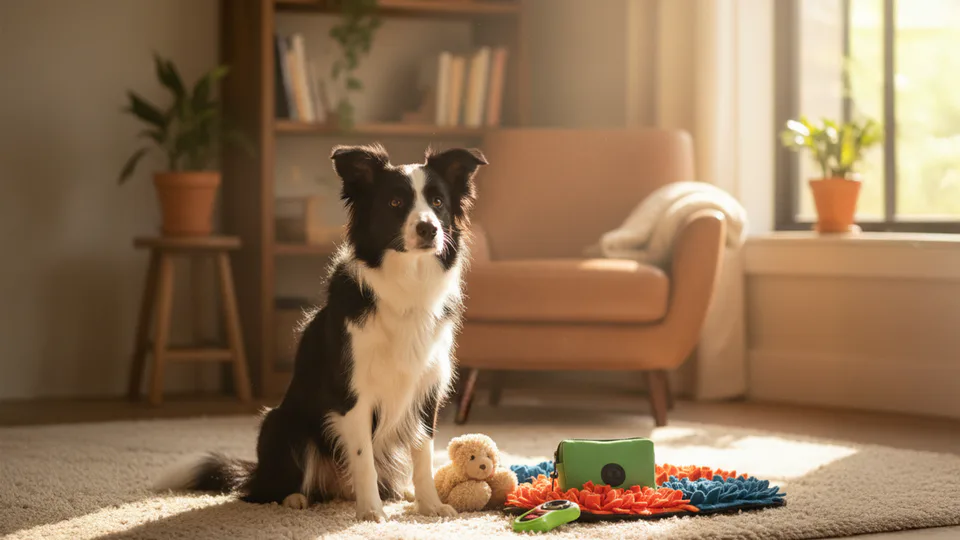
Modern dog ownership isn’t just about good food, comfy beds, and daily walks — it’s about giving our dogs the mental and emotional stimulation they need to thrive. Just as physical exercise keeps their bodies healthy, mental enrichment keeps their minds sharp, resilient, and happy.
🧠 Why Cognitive Health Matters as Much as Physical
We often think of enrichment as playtime or obedience work, but it’s so much more than that.
Cognitive health is the foundation for confidence, adaptability, and emotional balance. Dogs who use their brains regularly are less likely to suffer from boredom, anxiety, or destructive habits.
When a dog is mentally stimulated, you’ll notice subtle but powerful changes:
- A calmer energy at home.
- Faster recovery from stress or excitement.
- Better problem-solving and focus.
As our dogs age, mental activity even supports canine cognitive resilience — the dog-world equivalent of keeping human brains young and active.
🎾 Enrichment: More Than Toys
Enrichment isn’t about having a box of expensive puzzle feeders (though those help). It’s about creating daily moments of curiosity.
Try mixing these into your routine:
- Scent games: Hide treats around the house or garden and let your dog “hunt” for them.
- Textured walks: Change routes often — let your dog sniff, explore, and choose the pace.
- Foraging boxes: Fill cardboard boxes or safe containers with treats and paper layers to dig through.
- Interactive feeding: Use slow feeders, scatter feeding, or hand-dispensed treats during training.
- Mini problem-solving tasks: Ask for new ways to interact with objects — pushing, nudging, rolling, or retrieving.
Each of these taps into different areas of your dog’s brain — memory, scent processing, decision-making — giving them a full mental workout.

🎯 Training That Teaches Thinking
Traditional obedience tells dogs what to do.
Cognitive training asks them to think about what they’re doing — and why.
Teach your dog to make small choices:
- Offer two cues (“sit” or “spin”) and reward the one they choose.
- Create “pause moments” in fetch or tug — teaching self-control through fun.
- Use shaping (rewarding steps toward a goal) instead of waiting for the final behaviour.
This kind of training builds confidence and autonomy — dogs learn that their choices matter, deepening trust and engagement.
🌍 Varied Experiences Grow the Brain
Novelty is fuel for intelligence. Every time your dog experiences something new — a different texture underfoot, a new sound, a new friend — neural pathways spark and strengthen.
Simple ways to keep life varied:
- Rotate toys instead of leaving them all out.
- Take micro-adventures: a short car ride, a new trail, or even a different time of day for your walk.
- Let them watch the world from a café or park bench — observation itself is stimulation.
- In multi-dog homes, rotate one-on-one time for fresh dynamics and focused connection.
💡 Dexter’s Moment
Dexter’s enrichment days aren’t fancy — they’re thoughtful.
One day it’s a cardboard box scavenger hunt; another, a walk by the river where the scents change with every breeze. Watching him problem-solve, choose his own path, and settle after a “thinking” session is a reminder that mental fulfilment is just as beautiful as physical play.
❤️ The Takeaway
Dogs need more than exercise — they need exploration, learning, and the joy of discovery.
When you enrich your dog’s world, you’re not just burning energy; you’re building their mind, nurturing their curiosity, and deepening the bond that makes them truly thrive.
“Train the mind as gently as the body — and you’ll raise a dog who’s not only obedient, but truly alive.”