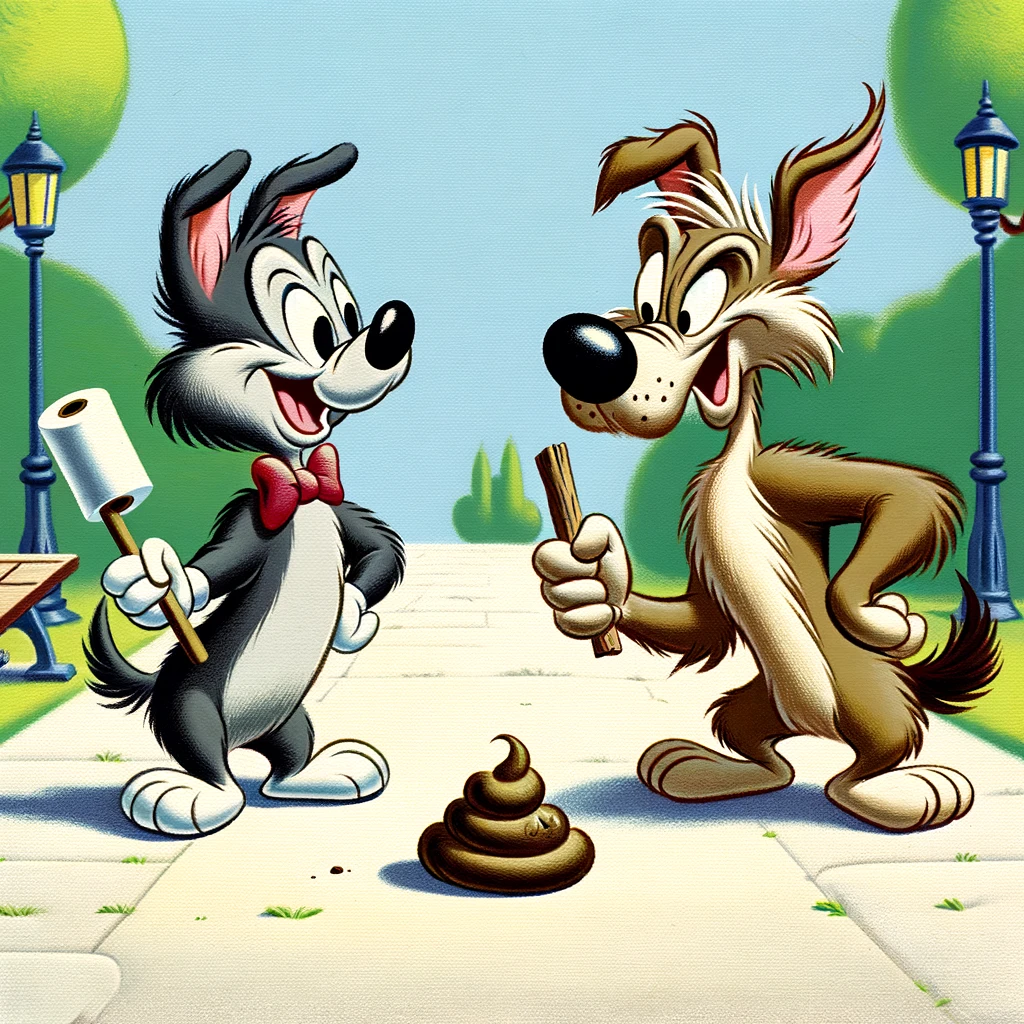
No dog owner escapes it – the dreaded dog poop duty. But whether you should pick up or flick your dog’s poop is a surprisingly controversial debate. Should you always stick to the responsible “bag and bin” method? Or is the old-school “stick and flick” sometimes justifiable? Let’s dive into this heated dog poop debate “Dog poop pick up or flick”
Team “Bag and Bin”: Why Picking Up Is Paramount
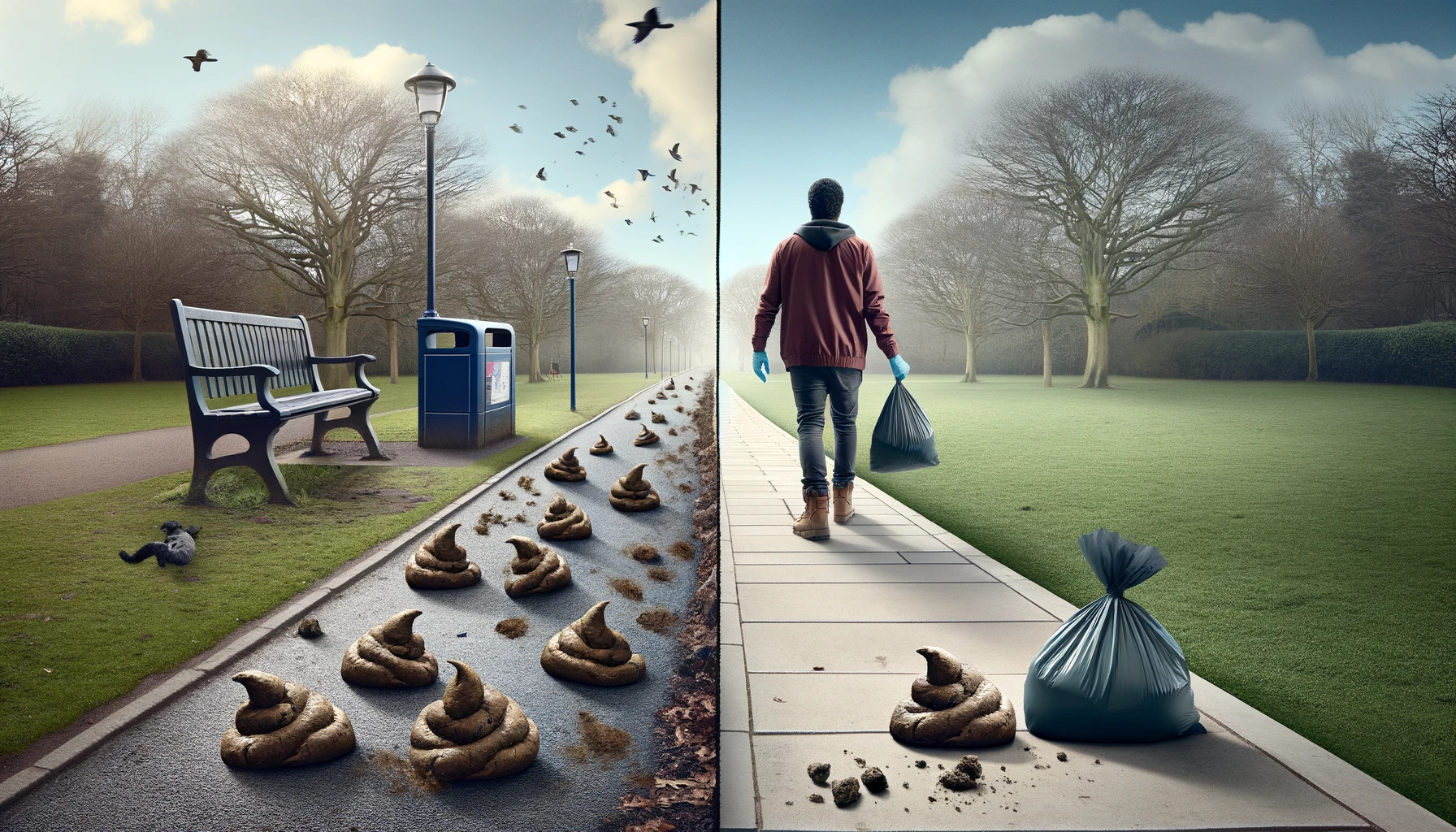
- Hygiene first: Okay, stepping in dog poop is the absolute worst. But did you know it goes way beyond just being an unpleasant surprise? Dog poop can be a sneaky home for all sorts of nasty parasites and bacteria. We’re talking things that can mess with our stomachs and even make our furry friends sick. Picking it up isn’t just about keeping those sneakers clean; it’s like being a superhero for everyone who enjoys the park!
- Respecting the environment: Dog poop might seem to disappear on its own, but that doesn’t mean it’s good for the planet. It can overload the ground with way too many nutrients, harming plants and messing with the whole ecosystem. Bagging it might not be glamorous, but it’s the eco-friendly way to show a little love for the great outdoors (and all the critters who live there!).
- It’s just good manners: Imagine the squishy feeling, the pungent smell… stepping in dog poop is the absolute worst way to start your day. Picking up after your furry friend isn’t just about courtesy; it’s about preventing a mini-disaster for unsuspecting shoe soles everywhere.pen_spark
Team “Stick and Flick”: Arguments for Flicking
- Respect for the environment: Dog poop is an organic material, and unlike plastic bags, it will eventually decompose when left in a natural setting. When done carefully, a responsibly flung poop minimizes the visual impact for others and contributes to the natural nutrient cycle.
- When bins are scarce: Let’s face it, sometimes nature calls for your pup in the most inconvenient places. On remote trails far from any bins, the “stick and flick” method becomes a practical solution. It allows you to deal with the mess discreetly without leaving a trace of your dog’s business on the main path.
- The Lesser Evil: Stick and Flick vs. Hanging Waste: While the most responsible option is always to pack out your dog’s waste, the reality is that sometimes remote trails leave us without bins or spare bags. In these situations, a carefully executed “stick and flick” can be a more considerate choice than hanging a bag on a tree. Unlike a hanging bag that remains visible and encased in plastic, a responsibly flung poop can decompose more naturally, minimising the visual and environmental impact. It’s important to always check local regulations and prioritise “leave no trace” principles, but when the ideal isn’t possible, a conscientious “flick” may be the less disruptive alternative to a forgotten bag.
Beyond “Pick Up or Flick”: Being a Responsible Owner
Leash Control: It Starts with Prevention
- Leash control: Keeping your dog on a leash in designated areas isn’t just about safety. It allows you to anticipate and control where your dog does their business, making responsible cleanup much easier. It also prevents them from wandering into sensitive habitats or disturbing wildlife.
- Respect the rules: Leash regulations are there for a reason. Responsible ownership means understanding and adhering to them, protecting both your dog and the environment they explore.
Always Carry Bags: Preparedness is Key
- Always carry bags: Even the most dedicated “bag and bin” advocate occasionally runs out of supplies. Carrying a few spares ensures you’re never caught without a way to clean up, regardless of whether you choose to pick up or opt for a well-located “flick.”
- It’s a mindset: Carrying bags sends a message – to yourself and others – that you’re committed to responsible dog ownership in all situations. You can stock up from my Amazon affiliate here
Never Leave Bags Hanging: It’s Not a Solution
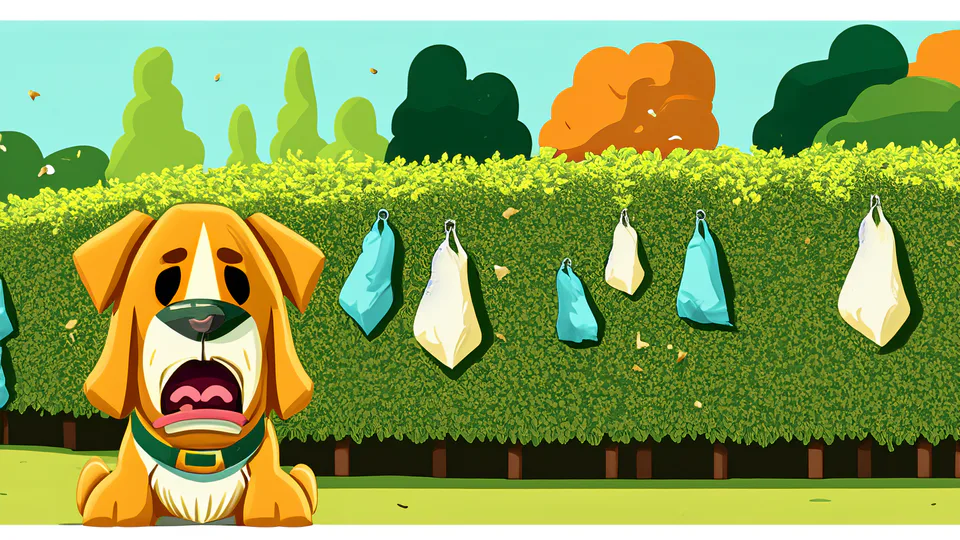
- Never leave bags hanging: Bags hanging on branches, no matter how well-intentioned, are a form of littering. They take far longer to break down than their contents and damage the natural beauty of the trail.
- Good intentions aren’t enough: It’s easy to forget, or to assume someone else will deal with those dangling bags. Responsible ownership means following through on every poop, taking it with you or ensuring it decomposes discreetly and naturally.
Where Do You Stand?
Now it’s your turn! Are you team “bag and bin” all the way? Do you sometimes “stick and flick”? Let’s continue this important discussion in the comments.