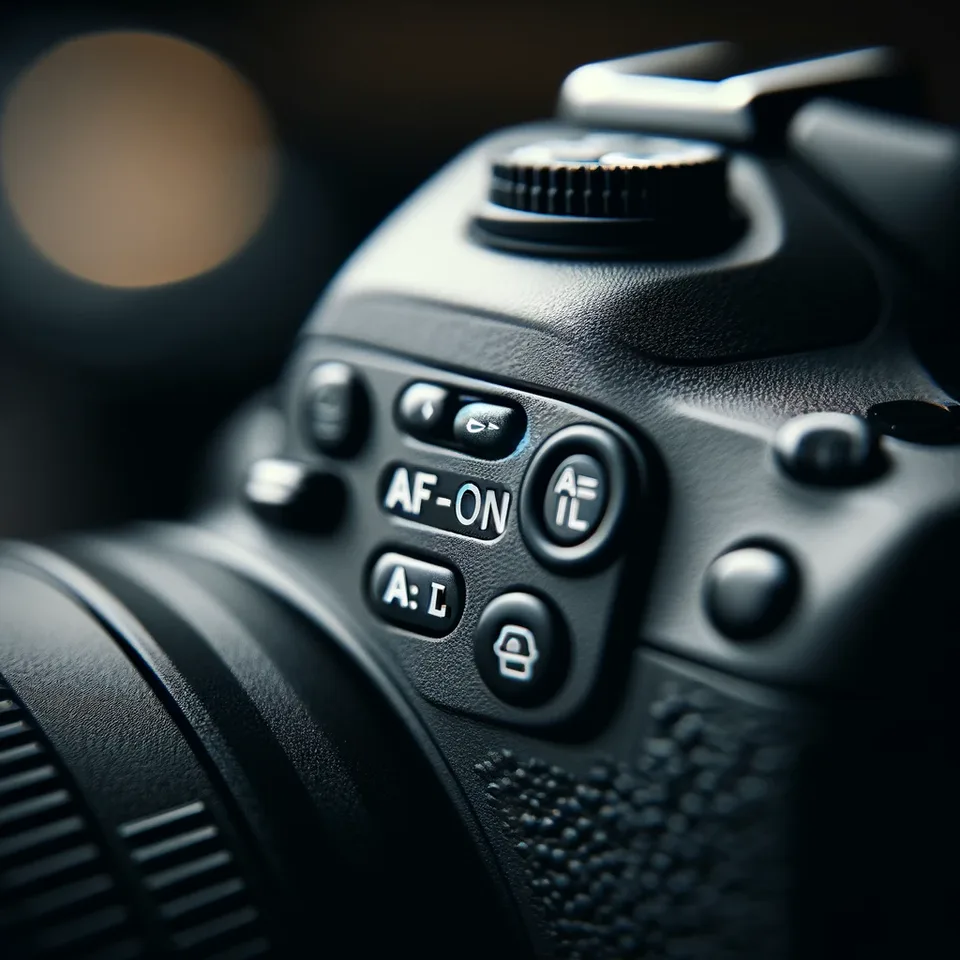
Back-button focus is a game-changer in the world of photography, yet it’s a technique often overlooked by many photographers. By the end of this post, you’ll understand what back button focus is, why it’s beneficial, and how to set it up on your camera.
What is Back-Button Focus?
Traditionally, half-pressing the shutter button activates autofocus. Back button focus separates this autofocus function from the shutter button, assigning it to a button on the back of the camera. This allows independent control over focusing and shutter release.
Advantages of Back-Button Focus
- Consistent Focus: Once you’ve achieved focus on your subject, it won’t change when you press the shutter button. This is particularly useful in dynamic shooting situations.
- Efficient Recomposing: With back button focus, you can focus on a subject, recompose your shot, and shoot without the focus shifting.
- Improved Continuous Focus: For moving subjects, back button focus allows continuous focusing without having to hold the shutter button halfway down.
Setting Up Back-Button Focus
- Camera Settings: Most DSLRs and mirrorless cameras allow you to reassign the autofocus function to a back button, often labeled as AF-ON or AE-L/AF-L. Consult your camera’s manual for specific instructions.
- Customisation: Some cameras offer customisation options for back button focus. Explore these to find what feels most comfortable for you.
Tips for Using Back-Button Focus
- Practice: Initially, back button focus might feel awkward. Practice using it in different scenarios to build muscle memory.
- Adjusting to Subjects: Experiment with both stationary and moving subjects to get a feel for how back button focus can improve your shots.
- Combining with Other Settings: Pair back button focus with appropriate aperture, ISO, and shutter speed settings for optimal results.
When to Use Back-Button Focus
- Sports and Wildlife Photography: For fast-moving subjects, back button focus enables you to keep the subject in focus as it moves.
- Portrait Photography: Lock focus on your subject’s eyes, then recompose without losing sharpness.
- Street Photography: Pre-focus on a specific distance and wait for the perfect moment to capture candid shots.
Conclusion
Back-button focus is a powerful tool in a photographer’s arsenal. It offers greater control over focusing, allowing for more consistent, sharper images. Whether you’re capturing fast-paced sports, intimate portraits, or spontaneous street scenes, mastering back button focus can significantly enhance your photography.
Remember, photography is an art of continuous learning and experimentation. Embrace back-button focus as a new skill in your journey and see how it transforms your approach to capturing those perfect moments.