A reliable thin British pancake recipe with lemon and sugar, clear timings, realistic yield and practical help for getting an even golden result.
FoodDogsLifeCCC
By Gary Burfield-Wallis·
First published
·
Updated
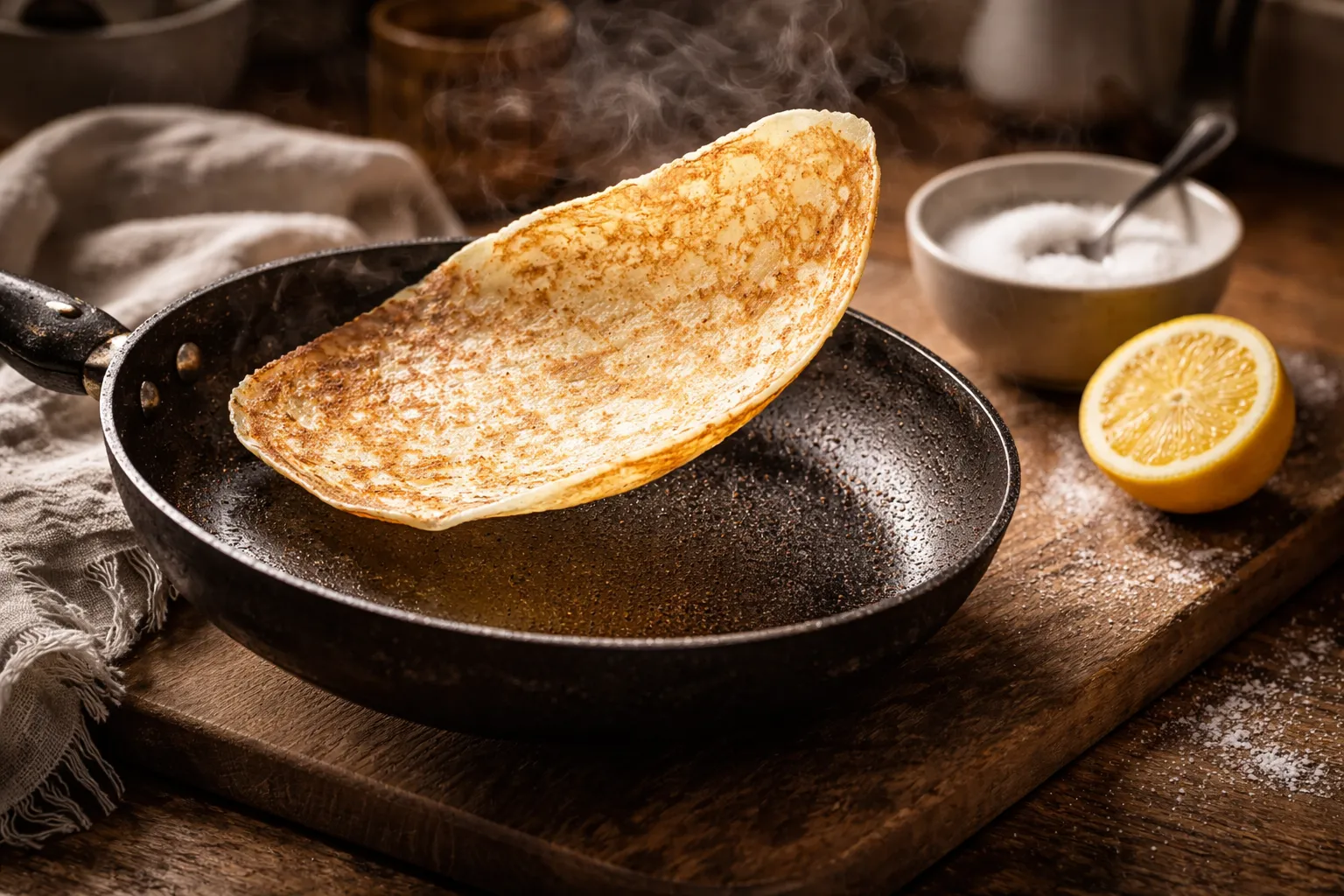
Thin British pancakes should be flexible, lightly golden and easy to roll or fold.
At a glance
Recipe summary
Prep
10 min
Cook
20 min
Rest
20 min
Total
50 min
Serves
4 (about 8–10 pancakes)
Skill
Easy
This is the flexible British pancake made for rolling, folding and the classic combination of lemon and sugar. It uses no raising agent, so the texture comes from a thin batter, a hot pan and quick cooking.
A short rest hydrates the flour and can make thin batter easier to swirl evenly.
15g1/2 oz unsalted butter melted, plus a little more for the pan
To serveTo serve lemon wedges and caster sugar
How to make it
Method
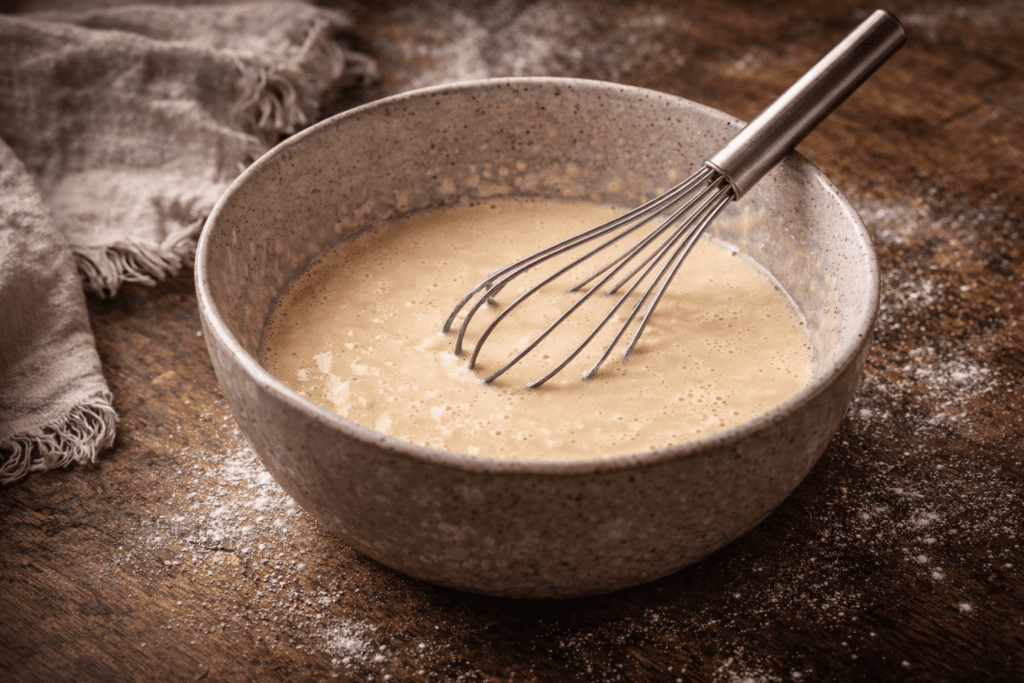
Put the 150g plain flour and pinch of salt in a mixing bowl. Make a well in the centre, add the 2 large eggs and begin whisking from the middle.
Add the 300ml milk gradually while whisking, drawing in more flour each time, until the batter is smooth.
Whisk in the 15g melted butter, then leave the batter to rest for 20 minutes.
Heat a 22cm non-stick frying pan over medium heat. Wipe it with a very thin film of butter.
Pour in about 60ml batter and immediately tilt and swirl the pan so the batter coats the base in a thin layer.
Cook for about 60–90 seconds, until the top has set and the underside is lightly golden. Turn and cook the second side for about 20–30 seconds.
Transfer to a warm plate and repeat with the remaining batter, lightly greasing the pan only when needed.
Serve warm with lemon juice and caster sugar.
Useful notes
Equipment
Mixing bowl
Whisk
Measuring jug or 60ml ladle
22cm non-stick frying pan
Flexible spatula
Substitutions
For a dairy-free version, use an unsweetened neutral plant milk and neutral oil instead of butter; flavour and browning will vary.
For savoury pancakes, leave off the lemon and sugar and use a suitable savoury filling.
Allergen notes
Contains wheat, egg and milk.
Check plant-milk labels carefully when adapting for allergies.
Storage
Cool completely, stack with baking paper between the pancakes and refrigerate in a covered container for up to 2 days. Reheat briefly in a dry frying pan or microwave until hot.
Tips
The first pancake is often the heat-setting pancake. Adjust the temperature before changing the batter.
Use only enough batter to cover the pan; too much turns a thin pancake into a heavy one.
If the batter thickens while standing, whisk in one tablespoon of milk before cooking the next pancake.