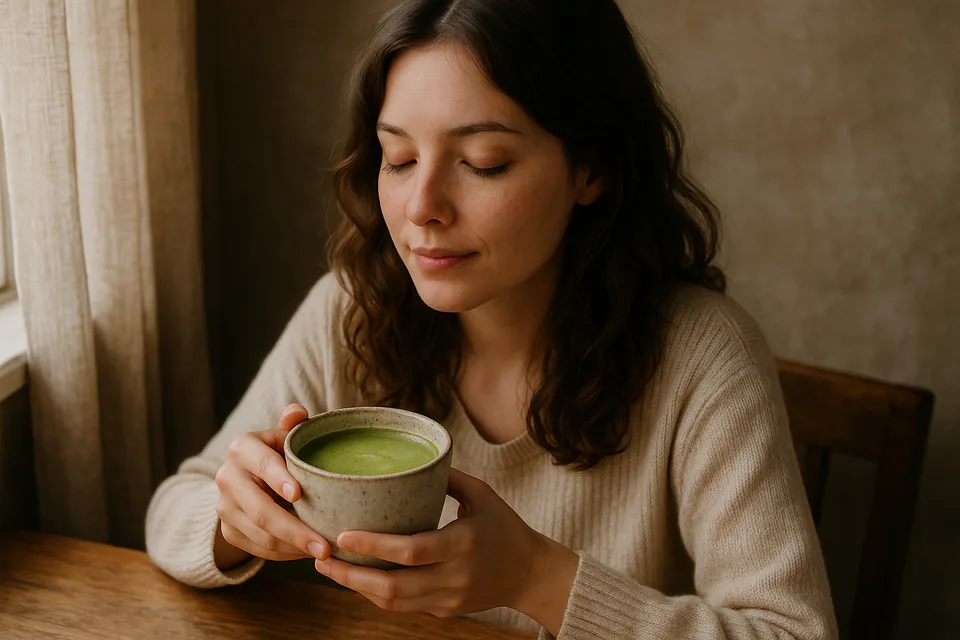
The matcha trend 2025 has quietly crept from niche Japanese tea ceremonies to the centre of Western kitchens, cafés, and Instagram feeds.. But unlike fleeting food fads, this one’s built on centuries of ritual, artistry, and balance.
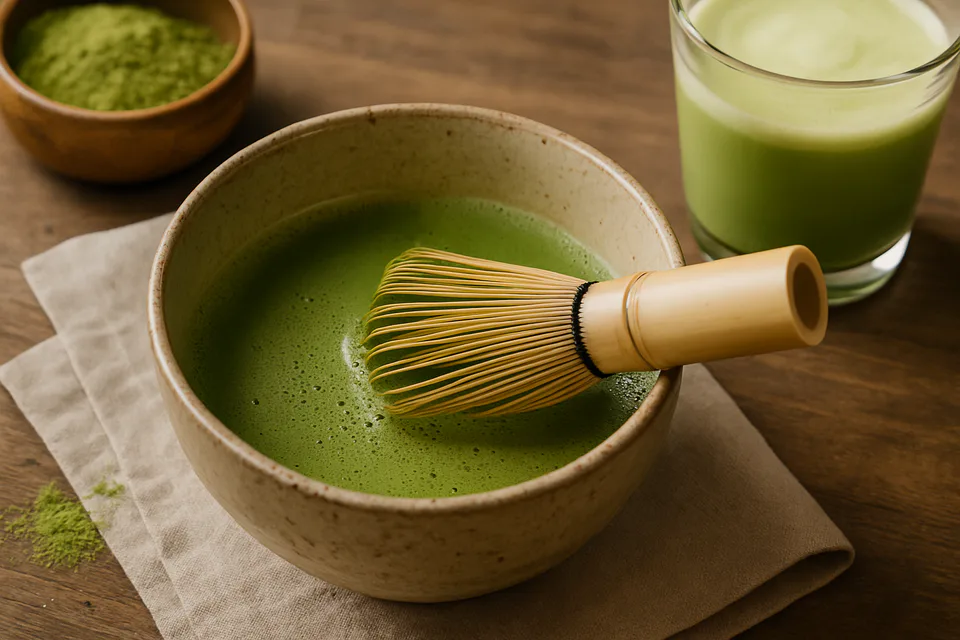
👋 It All Started With a Whisk
Chelle peered into the bowl, eyes wide.
“That’s… very green.”
Kai, never one to miss a chance to tease, grinned: “It looks like alien tea.”
Meanwhile, Dexter tilted his head, ears perked, listening to the rhythmic swish-swish of the bamboo whisk. He was sure something edible was happening — and to be fair, he wasn’t wrong.
🌿 The Roots of the Matcha Trend 2025 (Green Gold)
Before the matcha trend in 2025 became a wellness hashtag, it was the soul of Japanese tea culture. The word matcha (抹茶) literally means “powdered tea,” made by stone-grinding shade-grown tencha leaves. Its origins date back to 12th-century Buddhist monks, who discovered that whisking powdered green tea kept them alert yet calm during long meditation sessions.
That unique combination — energy without anxiety — comes from the amino acid L-theanine, which slows caffeine absorption and promotes focus. In a world of jittery espresso shots, matcha offers what many crave in 2025: mindful energy.
So perhaps it’s no surprise that UK matcha drink sales have more than doubled since 2023, with everyone from coffee shops to artisan bakers embracing its vibrant colour and ritualistic calm.
🧘 Why the Matcha Trend Speaks to 2025
We live in fast scrolls, short bursts, and half-finished coffees. But matcha demands patience. You don’t just pour and sip — you measure, sift, whisk, and watch the froth bloom.
It’s a sensory pause button, and that’s why it fits perfectly into the mindful living wave shaping modern cooking and photography.
- For the cook: it’s slow, deliberate, aromatic.
- For the photographer: it’s an explosion of green against neutral textures.
- For the soul: it’s a ritual that reclaims calm in a restless world.
☕️ The Taste Test: Earthy Elegance
Matcha’s flavour divides people at first sip. It’s grassy, umami, faintly bitter — an acquired taste that rewards those who persist. True ceremonial-grade matcha tastes fresh and vegetal, while culinary-grade works better in recipes.
Here are two ways I bring it into my kitchen:
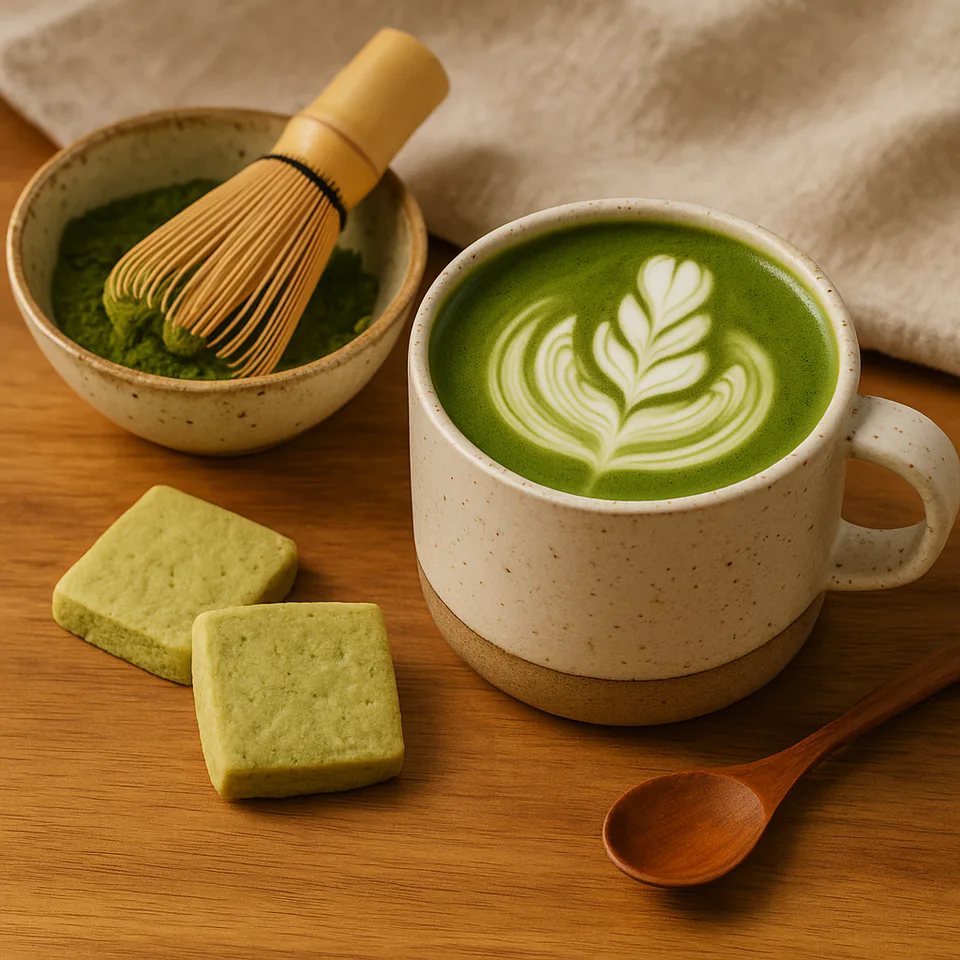
🍶 Quick Homemade Matcha Latte
Ingredients
- 1 tsp high-quality matcha powder
- 60 ml hot (not boiling) water
- 200 ml steamed milk (dairy or oat)
- ½ tsp honey or maple syrup
Method
Whisk matcha and water until smooth and frothy. Pour over steamed milk, sweeten, and serve immediately.
Tip: use a bamboo whisk for that silky layer of foam — it’s part of the magic.
🍪 Matcha Shortbread
Ingredients
- 150 g butter, softened
- 75 g caster sugar
- 200 g plain flour
- 1 tsp matcha powder
Method
Cream butter and sugar, fold in flour and matcha, and chill for 30 minutes.
Roll and cut into simple rounds, then bake at 170°C for 15 minutes — just until they firm but stay green.
They’ll look like something from a Zen garden and pair beautifully with a strong coffee or, naturally, a matcha latte.
📸 Capturing the Green: Matcha Photography Tips
Matcha is notoriously difficult to photograph. Get the lighting wrong and it either turns brown or radioactive.
Here’s what works in my studio setup:
- Natural side light only – north-facing window if you can.
- White or wooden backgrounds – avoid green or blue props.
- Reflector bounce – a sheet of white card opposite your light source keeps tones soft.
- Shoot the swirl – overhead shots of whisking matcha or slow-pour latte art highlight texture and calm movement.
When editing, resist over-saturating — let the authenticity of the green tell its story. The natural imperfection of the powder, the tiny flecks, the froth bubbles — that’s the charm.
🐾 The Dog Angle: Dexter’s Green Treats
Now, dogs and caffeine don’t mix — even a small amount of matcha can cause jitters or digestive upset. But I didn’t want Dexter missing out on the “green trend,” so I crafted a dog-safe version.
🦴 Spirulina & Spinach Dog Biscuits

- 1 ripe banana
- 1 cup oat flour
- 1 tsp spirulina or spinach powder
- 1 tbsp coconut oil
Mash, mix, shape, and bake for 15 minutes at 170°C.
They look eerily similar to matcha biscuits but are 100% safe (and Dexter-approved).
He posed beautifully beside his green “latte,” tail wagging in approval — and yes, I got the shot.
📈 Matcha and the Modern Mood
Matcha’s rise isn’t just aesthetic. It reflects something deeper — a cultural yearning for rituals in everyday life. Whether it’s a morning brew, an evening bake, or a mindful photograph, matcha bridges creativity and calm.
It’s also highly photogenic for social media: #matchamoment and #greenteaenergy have seen a 70% increase in usage this year, with UK creators leaning into “slow living” themes.
Your whisk becomes your meditation bell; your camera, a quiet witness to it.
🧠 Fun Fact: The Science Behind the Matcha Trend 2025
The unique combo of caffeine + L-theanine found in matcha has been studied to improve focus, memory, and relaxation simultaneously. Unlike coffee’s spike-and-crash, matcha keeps brain waves in an alpha state — the same rhythm found during meditation or creative flow.
So when you’re editing photos or writing recipes, sipping matcha might literally keep you in “the zone.”
🌸 Final Thoughts
Matcha isn’t just an ingredient — it’s a reminder that creativity doesn’t rush.
The slow whisk, the soft froth, the gentle focus behind the lens — it’s where cooking meets mindfulness, and photography becomes meditation.
For anyone following the matcha trend 2025, mindful brewing is key.
So next time you reach for your coffee, pause.
Grab the whisk. Breathe in that earthy scent.
Green really is the new calm. 💚