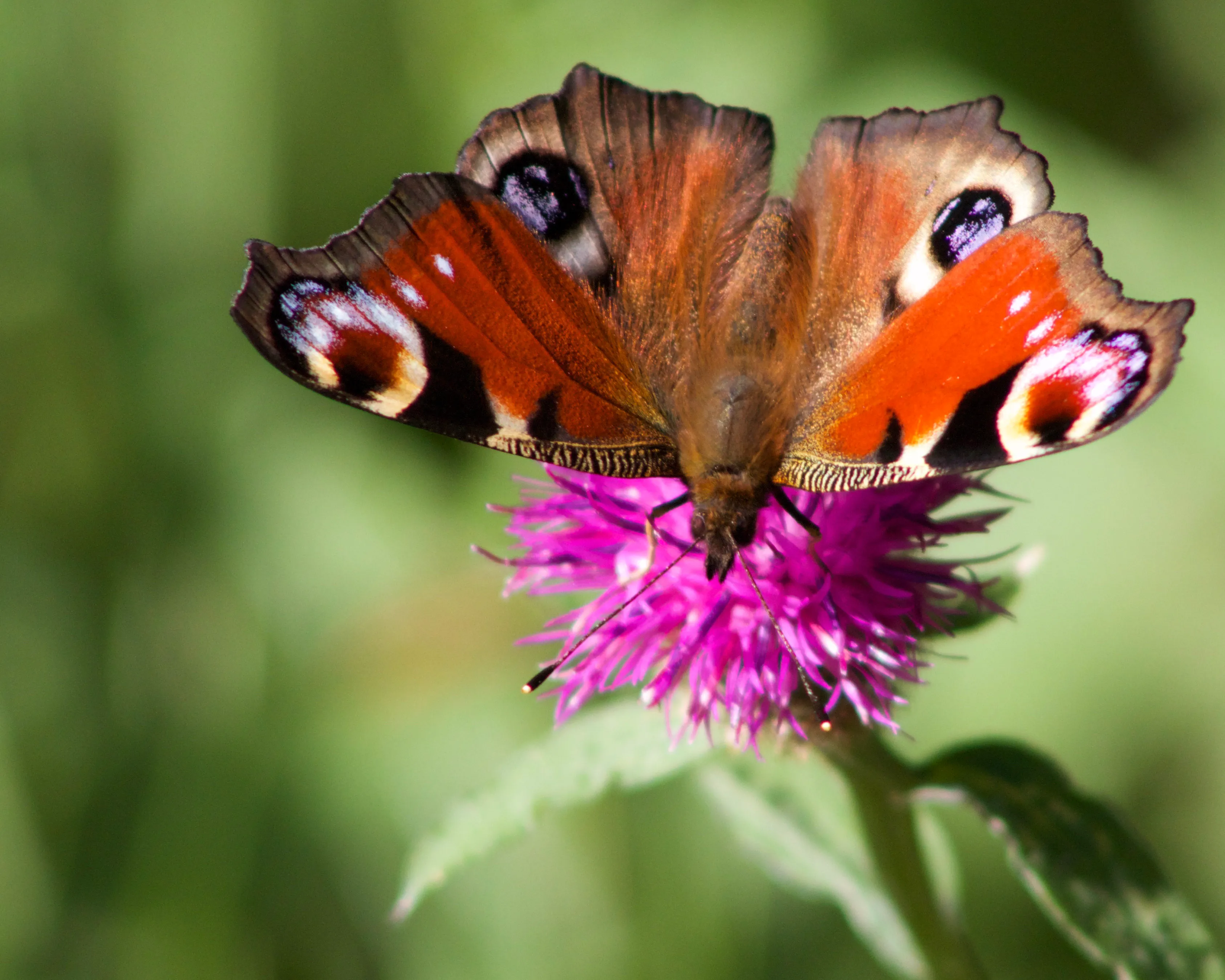
The butterfly is the obvious subject. The photograph is really about a brief agreement between colour, stillness and background.
Peacock butterflies are not visually shy. The red wings, dark edging and eye-like markings demand attention. That creates a useful problem: a strong subject can still become a weak photograph when everything around it is equally loud.
Why the thistle matters
The thistle does more than provide somewhere to land. Its purple head answers the warm colour in the wings without matching it. Its fine texture contrasts with the broader shapes of the butterfly. Together they form one subject rather than a butterfly placed on an incidental plant.
The background is doing quiet work
The green behind the butterfly contains enough variation to feel natural, but not enough detail to compete. That separation allows the outline, markings and thistle to remain clear.
Backgrounds are often treated as something to blur away. A better question is whether the background supports the subject. Here it provides the cooler colour field that lets the warmer subject move forward.
A photograph becomes calmer when every part knows whether it is the subject or the support.
The pause is part of the photograph
Small wildlife does not follow direction. The frame exists because the butterfly paused, because the angle remained useful and because the camera was ready before the moment disappeared.
That is why the image belongs at the beginning of Behind the Lens. It is not a demonstration of technical perfection. It is a reminder that noticing first and waiting well are photography skills in their own right.