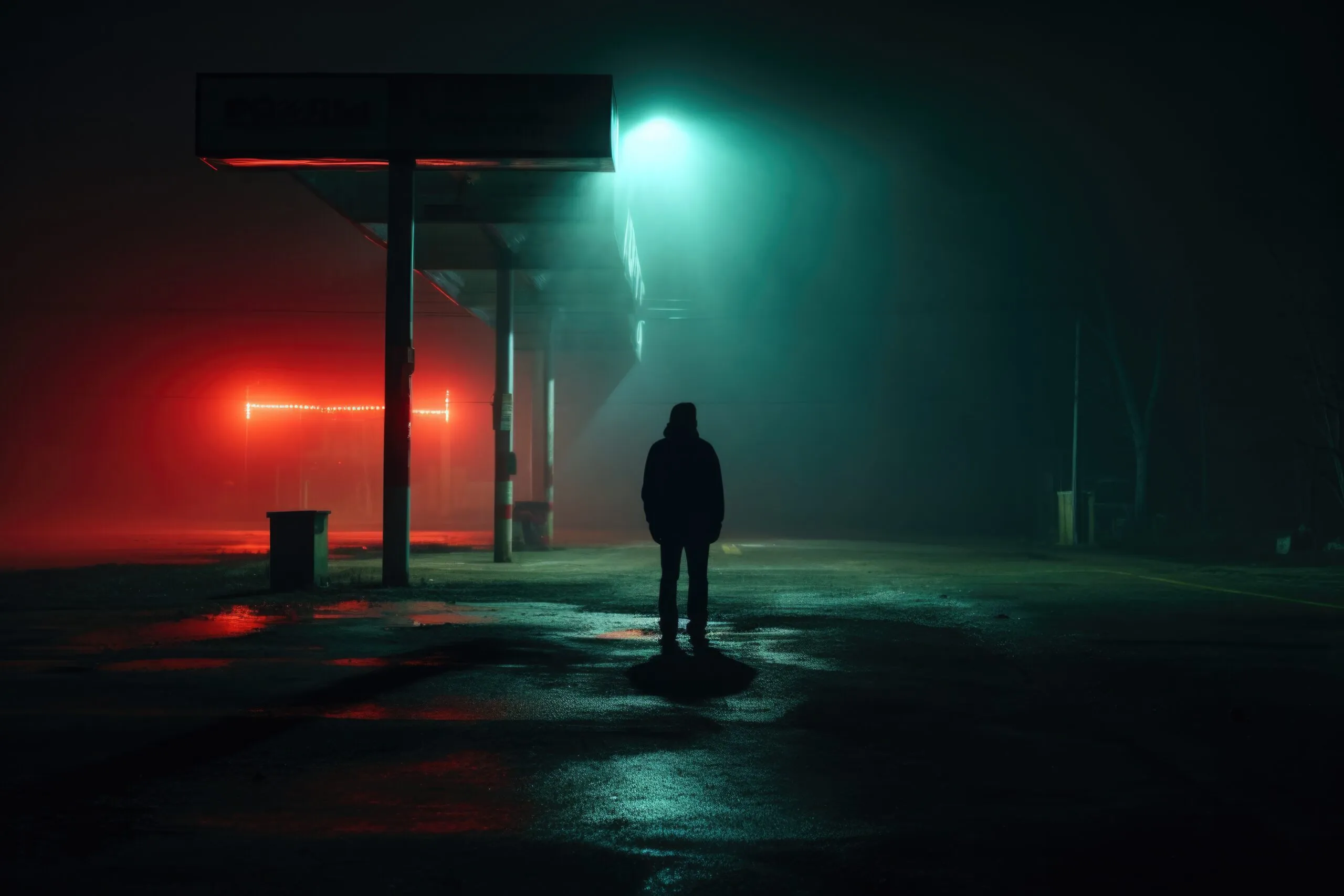
Cameras and phones are remarkably good at lifting shadow. That makes night photography easier and creates a new mistake: removing the night.
Choose the light that explains the place
Streetlights, windows, moonlight and reflected signs create separate pools of visibility. Expose for the light that describes the scene.
Protect bright sources
Lamps and signs lose colour quickly. Reduce exposure until important highlights retain shape. Darkness is not failed exposure.
Handheld or supported?
For people, dogs and changing streets, protect shutter speed and accept higher ISO. For still architecture, support the camera and wait longer.
White balance changes the story
Night contains orange streets, green fluorescent areas and blue shadow. Neutralising everything can remove atmosphere.
Night has colour. It does not have to become neutral to become accurate.
Use noise honestly
Too much noise reduction turns texture to wax. A little grain may feel more believable than a perfectly smooth file with no detail.
Try this
Make the camera’s suggested exposure, then one and two stops darker. Choose the frame that preserves the night rather than revealing the most.