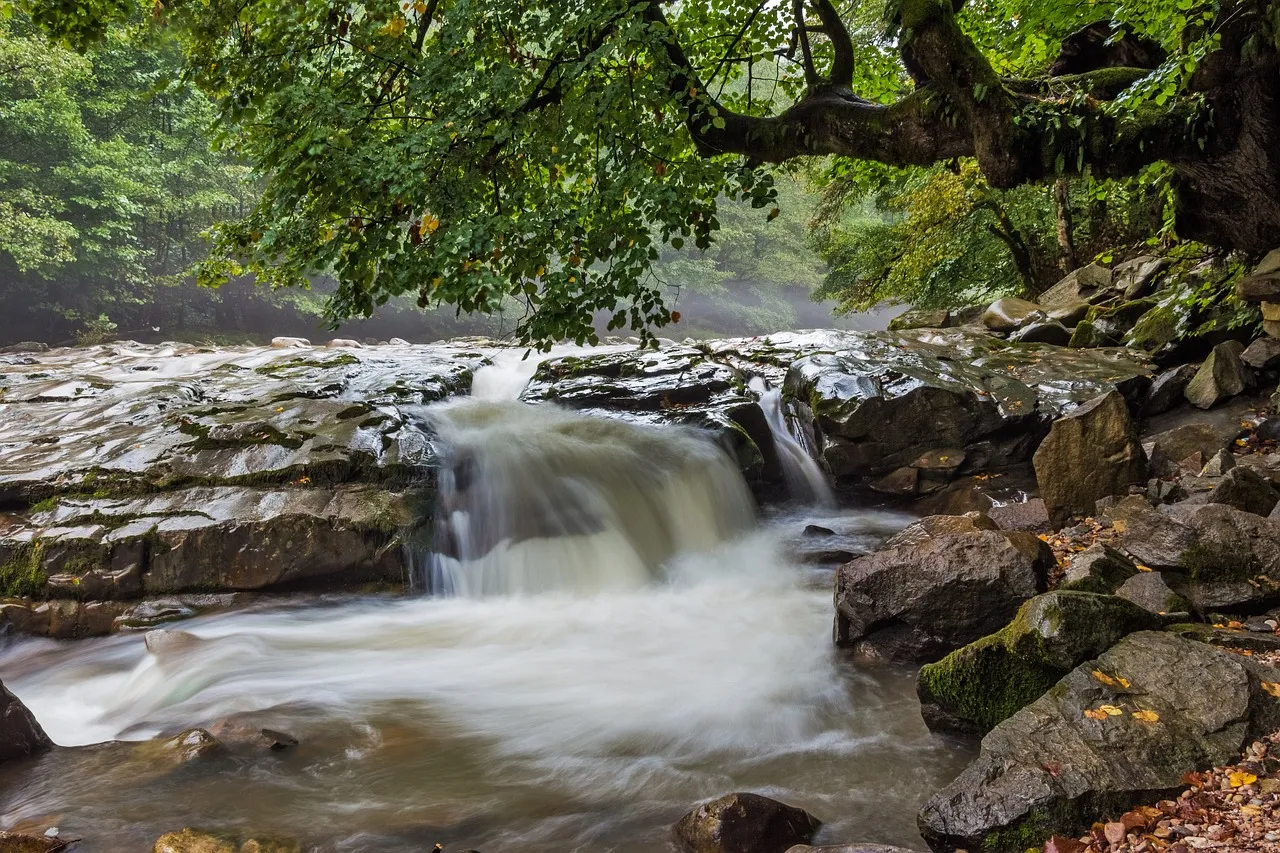
Silky waterfalls and light trails can be beautiful. The technique becomes meaningful when movement or duration tells us something a frozen instant would hide.
Decide what should move and what must not
Water flows around a fixed rock. Car lights cross a still street. Clouds move above a solid building. If everything moves, including the camera, the result is usually just blur.
Support the camera properly
Use a tripod, wall or stable surface, a timer or remote release, and check the ground. A wooden bridge can move when somebody walks past.
Begin with the amount of movement
Half a second may describe water. Several seconds may make continuous light trails. Minutes may transform clouds. The longest exposure is not automatically the strongest.
Control excess light
In daylight, a neutral-density filter may be needed. Compose and focus before fitting a very dark filter, then use manual focus.
The shutter should remain open only as long as the movement needs.
Watch highlights
Streetlights and reflections can lose shape before shadows look ready. Protect important highlights and accept deep shadow.
Try this
Photograph the same movement frozen, slightly blurred and genuinely long. Decide which result describes it best.