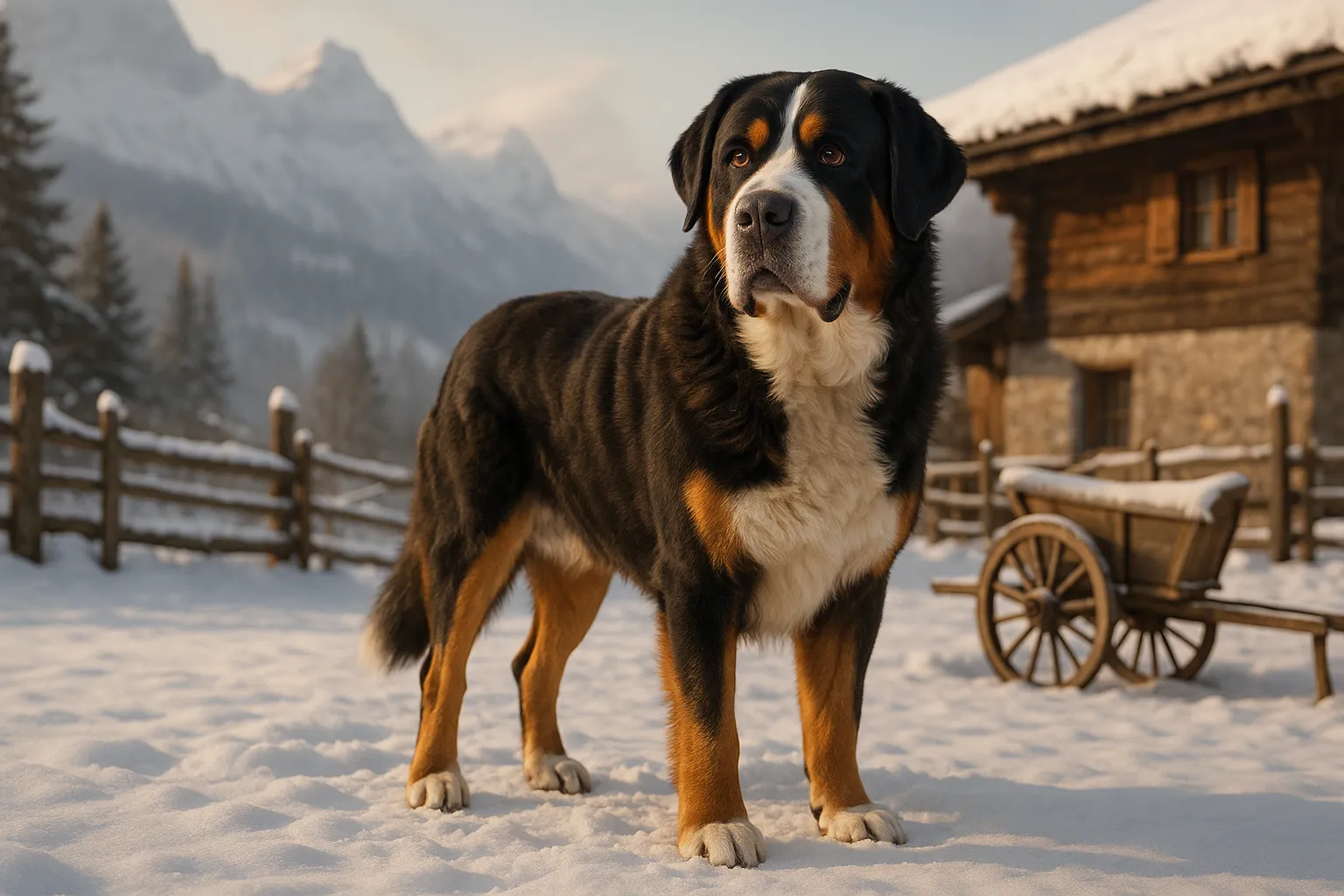
The Great Swiss Mountain Dog is a large, heavy-boned working breed developed for cattle work, guarding and pulling loads.
In the UK, the Royal Kennel Club uses Great Swiss Mountain Dog as the official breed name. The preserved WordPress URL still says “greater” because changing a useful legacy route without need would create migration risk.
What was the breed built to do?
The breed’s history involved several practical farm jobs:
- moving and managing cattle;
- guarding property;
- pulling carts and other draught work;
- working closely with people.
That background helps explain the modern dog’s size, strength, watchfulness and desire to be involved in family life.
The space question
This is a large breed suited to a large home and a substantial, securely enclosed garden.
That does not mean a garden replaces walks, training or company. It means the dog, equipment, feeding area, resting space and muddy wet-weather reality all take up room.
Before considering a puppy, think about:
- whether every adult can physically manage a powerful dog;
- safe transport in an appropriately sized vehicle;
- stairs and slippery floors;
- access to suitable walking areas;
- the cost of food, insurance and large-breed veterinary care;
- whether visitors and children can be managed calmly around a very large dog.
Exercise and maturity
The Royal Kennel Club lists exercise of up to about an hour a day as a broad breed characteristic, but that is not a prescription for every age or individual.
Puppies and adolescents need age-appropriate activity and careful management while developing. An adult needs regular exercise, training and mental engagement without assuming that endless high-impact running is automatically better.
A breeder and vet should help with individual guidance.
Training
A Great Swiss Mountain Dog is physically too strong for training to be postponed.
Useful priorities include:
- loose-lead walking;
- calm greetings;
- reliable recall foundations;
- settling on a mat;
- comfortable handling and grooming;
- waiting at doors and vehicle exits;
- leaving food or objects when asked;
- calm exposure to visitors, traffic and everyday environments.
Kind, consistent training matters. Size turns minor habits into practical problems quickly.
Coat and grooming
The breed has a dense, short double coat and sheds. Weekly grooming is a realistic baseline, with more work during heavier shedding periods.
Routine care should also include nails, ears, teeth and checking the skin and feet.
Health questions for a breeder
The current Royal Kennel Club health standard lists hip and elbow screening as best-practice tests for the breed and emphasises genetic diversity.
Ask a breeder to explain:
- the parents’ hip and elbow results;
- how they use health and pedigree information in mating decisions;
- what health issues have appeared in their lines;
- how puppies are reared and socialised;
- what support they provide after collection.
A registration certificate is not the same thing as a complete health assessment.
Who might suit this breed?
A well-researched Great Swiss Mountain Dog may suit someone who:
- wants a large, involved family companion;
- has the space and budget for a giant working breed;
- enjoys steady daily training;
- can manage strength without relying on force;
- accepts shedding and substantial practical care;
- is prepared to choose a breeder slowly and carefully.
It is a poor impulse choice for someone mainly attracted by the tricolour appearance.
Continue through the Dog Life hub.