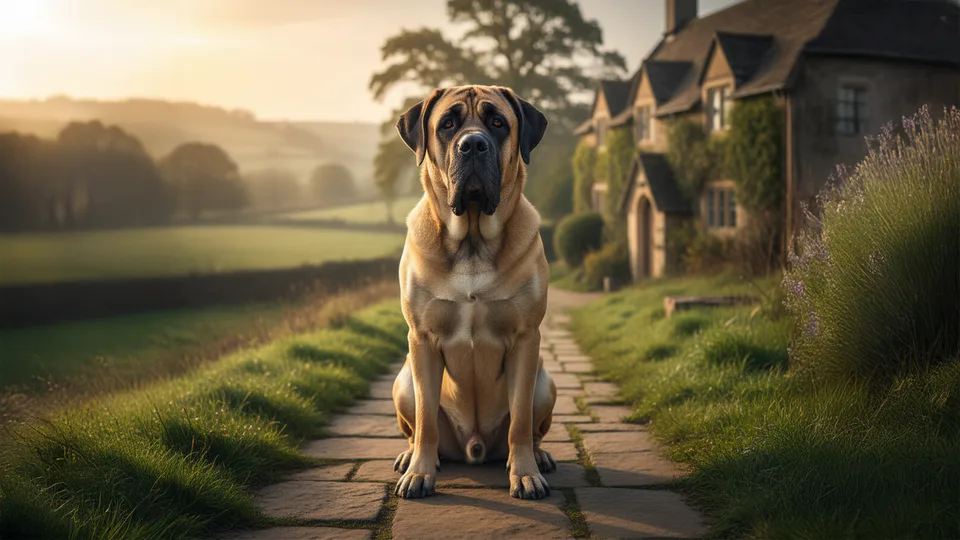
There’s a certain hush that follows an English Mastiff when it walks into a room — not out of fear, but quiet awe. This English Mastiff breed guide explores Britain’s living monument to loyalty and calm power — a dog whose history is carved deep into the island’s past.
🏰 A Legacy of Strength and Steadfastness
Few breeds carry history as heavily as the English Mastiff. Centuries ago, they stood guard at castles and accompanied soldiers on campaign. Roman records mention their bravery; medieval tales celebrate their devotion. Yet despite their size, the modern Mastiff’s heart is far larger than its frame suggests.
Behind those soulful eyes lies a temperament forged for companionship, not combat. They are protectors by instinct, not aggression — preferring watchful patience over unnecessary force. For families, that means a dog both steady and serene, one who meets chaos with quiet dignity.
Few breeds carry such heritage — the English Mastiff breed guide reminds us how courage evolved into calm companionship.
English Mastiff Breed Guide – A True Gentle Giant
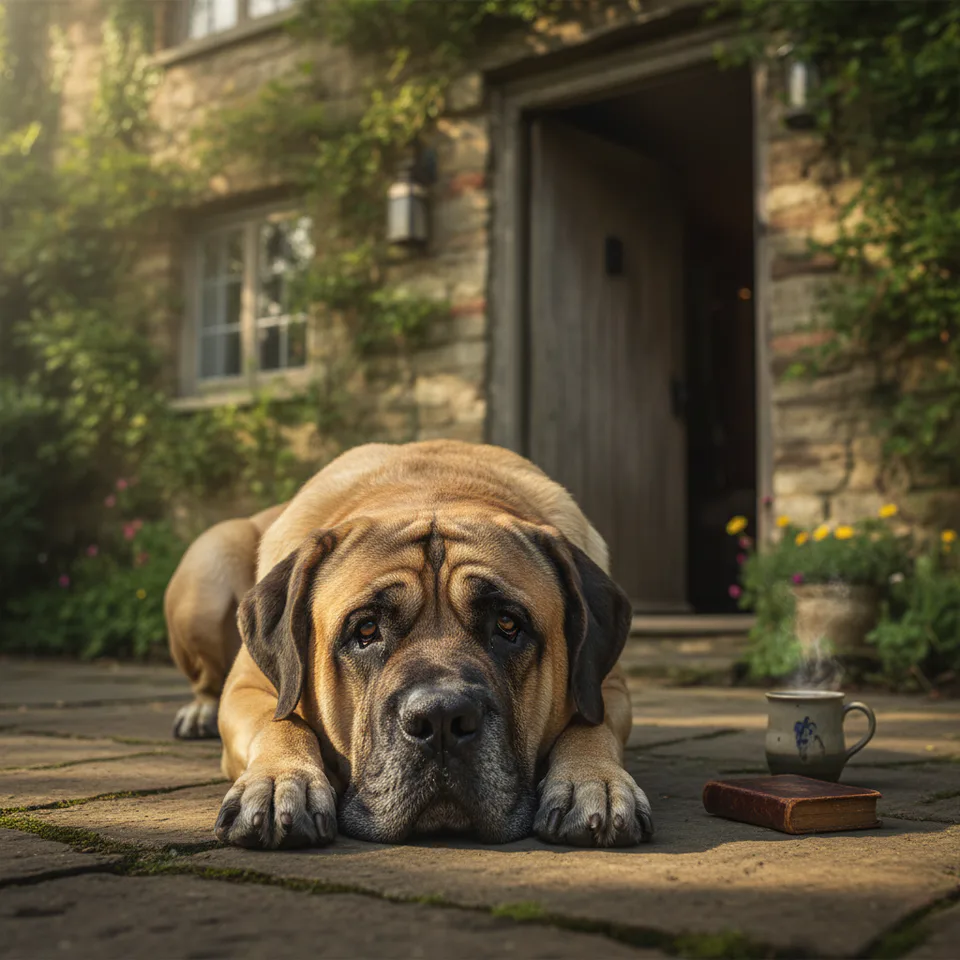
Standing up to 80 cm tall and weighing as much as a full-grown human, the English Mastiff could easily intimidate. But beneath the grand stature lies a personality defined by gentleness. These dogs thrive on calm connection — the soft pat on the head, the quiet walk at your side, the reassurance of presence.
They are famously good with children, often adopting the role of patient nanny. But remember: their strength means they should never be left unsupervised with toddlers — not out of malice, but sheer mass.
For all their might, they’re sensitive souls. Harsh training methods or loud voices can wound their confidence. Positive reinforcement, affection, and consistency earn their loyalty for life.
🍖 Feeding the Giant
In this English Mastiff breed guide, nutrition plays a key role — from balanced diets to supplements that support large-breed health.
The English Mastiff’s appetite matches its size, but quality matters more than quantity. A balanced, protein-rich diet that supports joint health is essential — large breeds are prone to hip and elbow issues if fed incorrectly or over-exercised too young.
Slow, steady growth keeps them strong and sound. Many owners add glucosamine or omega-3 supplements, and your vet can tailor advice to your dog’s specific needs.
🛋 Living With a Legend
Despite their size, Mastiffs are often homebodies. They’re happiest stretched out across the sofa, snoring softly while you cook, write, or photobomb your food shots. They need daily walks, but moderation is key. Over-exertion can strain growing joints, especially in puppies.
And yes, there will be drool. Towels are part of the décor.
📸 Photographing the English Mastiff – Tips for Capturing Britain’s Gentle Giant

Capturing the Mastiff’s essence means showing scale and softness.
- Light: Use side lighting to sculpt their massive frame without harsh contrast.
- Angle: Get low — eye level conveys intimacy and gentleness.
- Props: Rustic surroundings suit them best: stone paths, old doors, fields at dawn.
- Moment: Their gaze — deep, calm, ancient — tells its own story.
❤️ The CCC Takeaway – English Mastiff Breed Guide
The English Mastiff breed guide shows that true guardianship isn’t about might, but the serenity that strength allows.
For those who share their lives with one, every slow wag, every sigh beside the hearth, is a lesson in peace. They may be giants, but their gift is gentle presence — the kind that steadies hearts and softens homes.
The Kennel Club – English Mastiff Breed Information