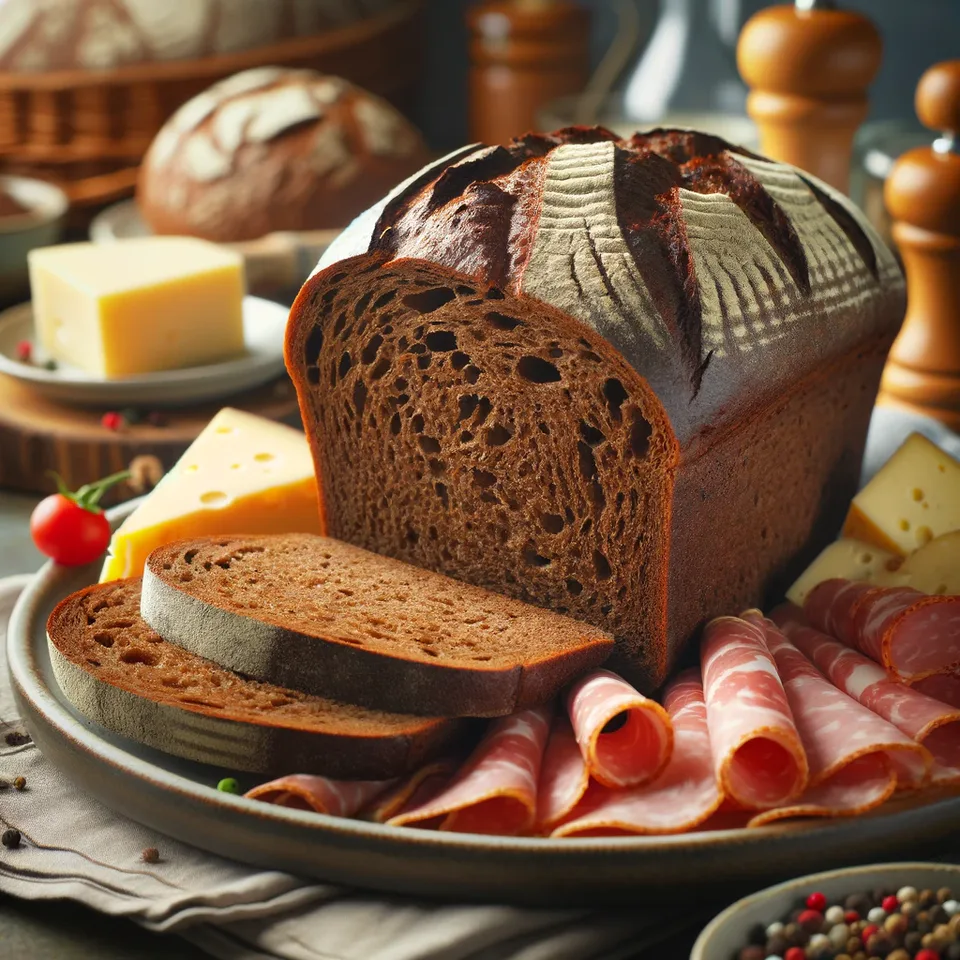
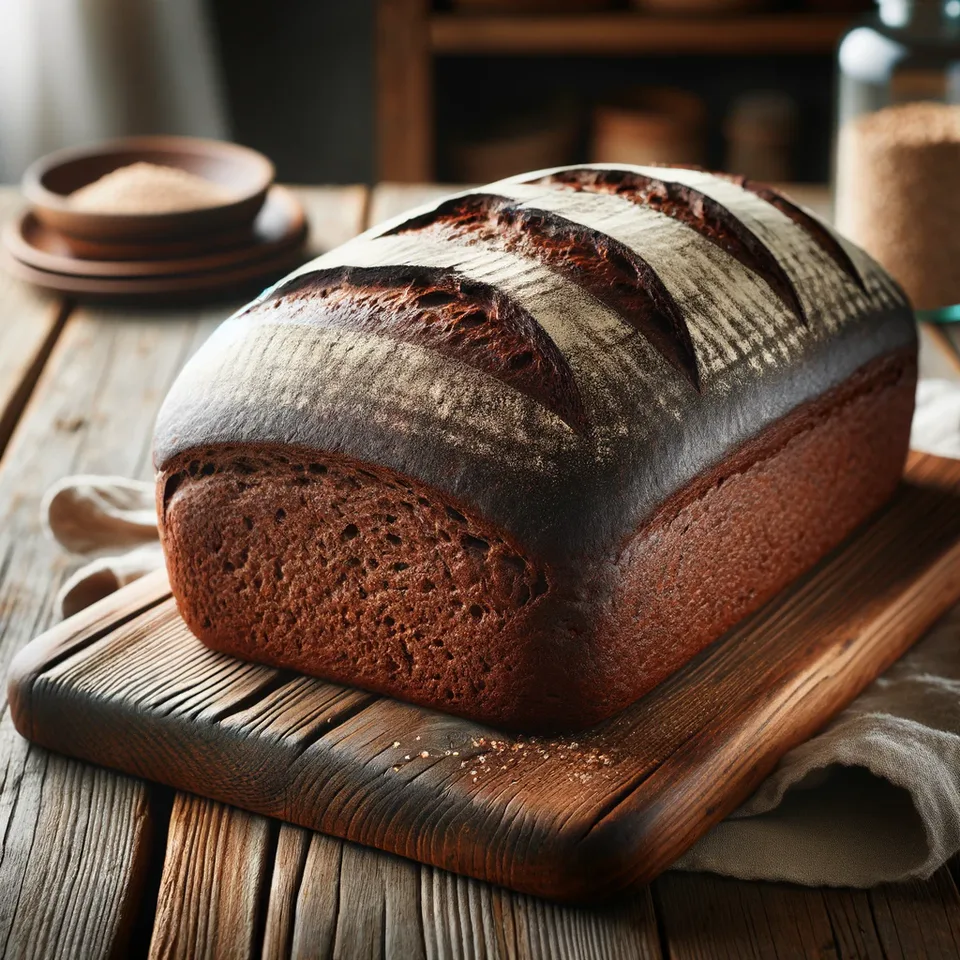
A dense, dark rye loaf with soaked rye berries and molasses, slowly baked for deep flavour and a moist crumb.
FoodDogsLifeCCC
By Gary Burfield-Wallis·
First published
·
Updated
At a glance
Recipe summary
Prep
30 min
Cook
5 hr
Rest
12 hr 30 min
Total
18 hr
Serves
1 loaf
Skill
Advanced
This is a slow-baked rye loaf rather than a quick everyday bread. The soaked grain and long covered bake create the characteristic dark, close texture.
What you need
Ingredients
MetricUSIngredient
480 g4 cups rye flour
170 g1 cup whole rye berries
10 g2 tsp fine salt
5 g1 tsp active dry yeast
15 ml1 tbsp molasses
As neededAs needed warm water For the dough; add gradually until sticky but manageable.
As neededAs needed cold water For soaking the rye berries overnight.
How to make it
Method
Cover the 170 g rye berries generously with cold water and soak overnight.
Drain the berries. Mix the rye flour, salt and yeast in a large bowl.
Add the molasses and soaked berries, then gradually work in warm water until a thick, sticky dough forms.
Cover and leave to rise in a warm place for about 2 hours. Rye dough will not expand as dramatically as white bread dough.
Grease and line a loaf tin. Transfer the dough to the tin, smooth the top with wet hands and leave to prove for 1 hour.
Heat the oven to 150°C / 130°C fan / 300°F. Cover the tin tightly with foil or a lid.
Bake for 4 to 6 hours until the loaf is firm and dark. Check periodically that it is not drying excessively.
Cool completely, then wrap and leave until the following day before slicing thinly.
Useful notes
Equipment
Large mixing bowl
Sieve
900 g / 2 lb loaf tin with foil or lid
Baking paper
Wire rack
Substitutions
Use cracked rye in place of whole rye berries.
Use dark treacle instead of molasses.
Add caraway seeds for a more aromatic loaf.
Allergen notes
Contains rye gluten.
Check molasses or treacle labels for additional allergens if relevant.
Storage
Wrap tightly and keep in a cool place for up to 5 days. The flavour improves after a day. Freeze sliced for up to 3 months.
Tips
Do not expect a light, airy rise from a predominantly rye dough.
Bake slowly and keep the tin covered to retain moisture.
Wait until the next day before slicing for the cleanest texture.