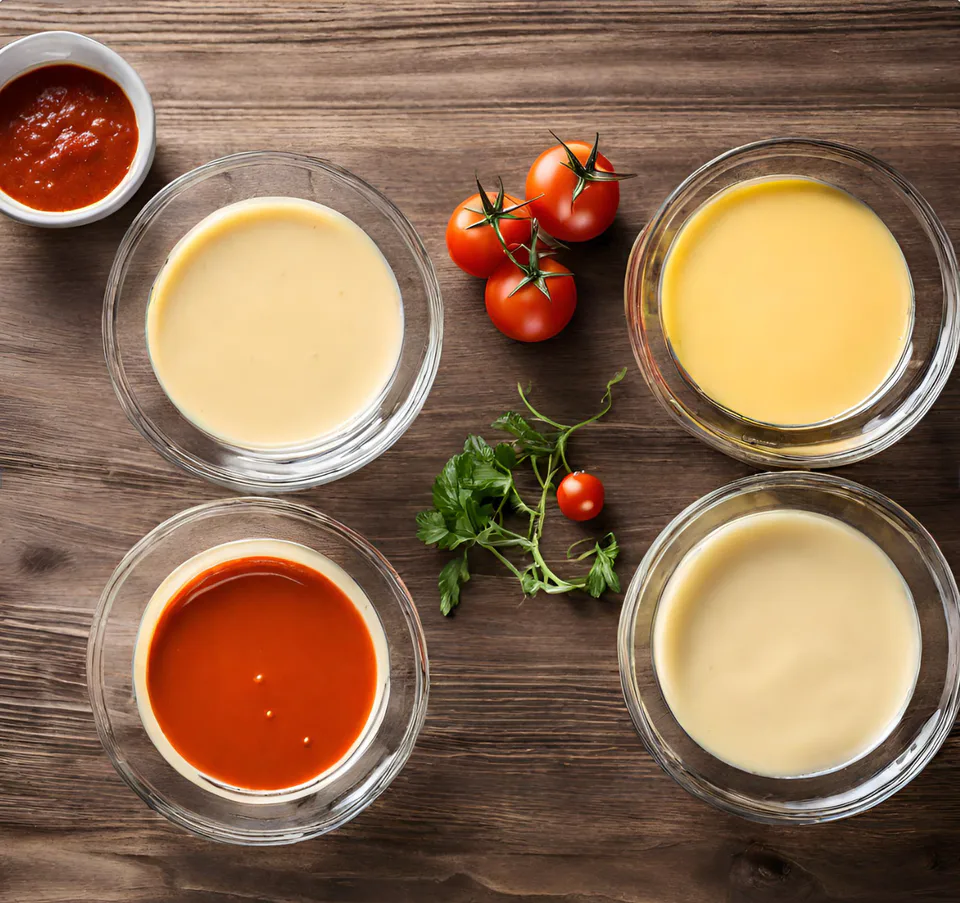
In the vibrant world of culinary arts, there exists a foundational quintet that lays the flavour-filled groundwork for countless dishes—the illustrious 5 mother sauces. These sauces, like culinary maestros, have shaped the landscape of gastronomy. But how did they earn the endearing title of “mother sauces,” and what’s the tale behind their origin? Let’s embark on a delectable journey through time and flavours to uncover the rich history woven into the essence of these sauces.
The Birth of the Mother Sauces: A Historical Prelude
In the captivating realm of 19th-century French cuisine, a period marked by the resurgence of gastronomic excellence, the towering figure of Marie-Antoine Carême took center stage. Heralded as the “King of Chefs and the Chef of Kings,” Carême’s brilliance extended far beyond his culinary mastery to the systematic organisation of foundational sauces. With deliberate finesse, he classified and codified these sauces, giving rise to what we now affectionately know as the 5 Mother Sauces. Carême’s culinary legacy not only graced palates but became the bedrock of classical French cooking, an enduring testament to his profound impact on the culinary landscape.
1. Béchamel Sauce: The Velvety Comforter
- Origin: Named after Louis XIV’s steward, Louis Béchamel, this sauce emerged as a creamy liaison of milk, butter, and flour.
- Role: The comforting embrace of Béchamel forms the base for creamy delights like macaroni and cheese.
2. Velouté Sauce: The Elegant Velvet
- Origin: Born from the refinement of basic sauces, Velouté, meaning “velvet” in French, achieved sophistication with a roux and a light stock.
- Role: Its subtle elegance shines in poultry and seafood dishes, providing a velvety canvas for culinary creativity.
3. Espagnole Sauce: The Bold Adventurer
- Origin: Espagnole, or Brown Sauce, takes inspiration from Spanish flavours, enriching the culinary landscape with tomatoes, brown stock, and brown roux.
- Role: As the hearty adventurer, it forms the robust base for stews and hearty meat dishes.
4. Sauce Tomate: The Mediterranean Muse
- Origin: Hailing from the sun-soaked Mediterranean, Sauce Tomate emerged as a vibrant symphony of tomatoes, vegetables, and herbs.
- Role: With its lively personality, it brightens pasta dishes, pizzas, and Mediterranean-inspired creations.
5. Hollandaise Sauce: The Butter-Infused Elegance
- Origin: Originating in the Netherlands, this emulsion of egg yolks and butter received a French makeover, becoming the velvety Hollandaise we know today.
- Role: Its buttery richness crowns eggs Benedict and elevates vegetables and seafood to gourmet heights.
Why the Term “Mother Sauces”?
The endearing term “mother sauces” is not a mere linguistic flourish; it signifies the sauces’ pivotal role as the foundation for an endless array of derivative sauces. Much like a family tree, these sauces birth numerous offspring, adapting and evolving to suit diverse culinary needs.
Mother Sauces: The Legacy Lives On: Modern Applications
As culinary landscapes evolve, so do the applications of the mother sauces. Chefs around the globe continue to draw inspiration from these foundational concoctions, infusing them with contemporary twists. The essence of Béchamel, Velouté, Espagnole, Sauce Tomate, and Hollandaise lives on, creating a culinary legacy that transcends time.
In the enchanting world of culinary storytelling, the 5 mother sauces remain iconic matriarchs, weaving a tapestry of flavours that stand the test of time. Let their rich history and versatile charm inspire your culinary adventures, as you become the maestro of your kitchen symphony.