Soft Bread Rolls with clear ingredients, a practical method and useful kitchen notes.
FoodDogsLifeCCC
By Gary Burfield-Wallis·
First published
·
Updated
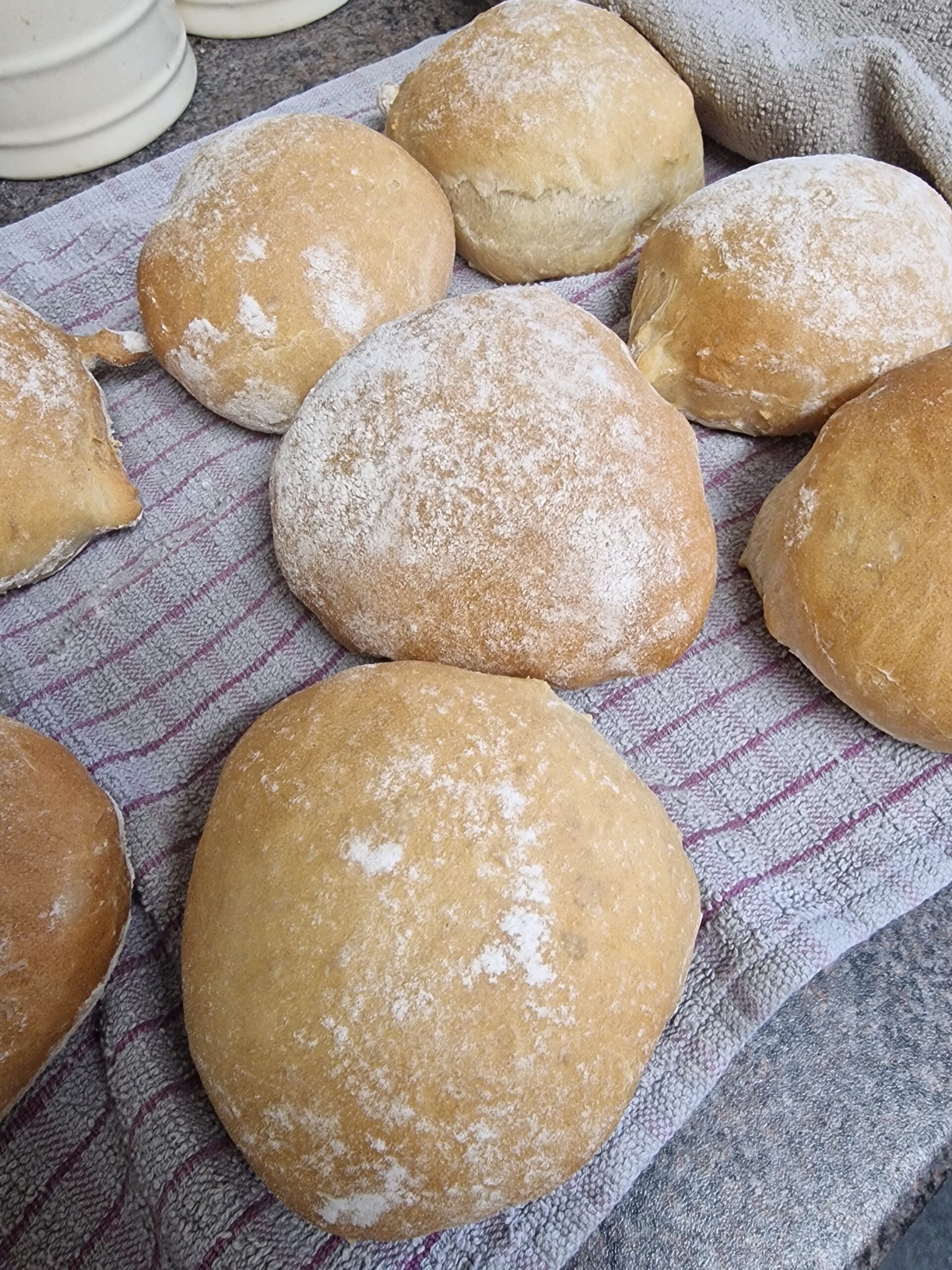
Soft bread rolls cooling beneath a clean tea towel.
At a glance
Recipe summary
Prep
30 min
Cook
20 min
Rest
2 hr
Total
2 hr 50 min
Serves
9 large, 12 smaller or 24 mini rolls
Skill
Moderate
This recipe makes 9 large rolls, 12 smaller rolls or 24 mini dinner rolls. The dough is deliberately soft and sticky, producing a lighter texture than a stiff, heavily floured dough.
About the dough
The dough uses roughly 70% liquid to flour. That means it can feel awkward at first, particularly when kneading by hand. Resist the temptation to keep adding flour: work through the sticky stage until the dough becomes smoother and more elastic.
Prove by size, not by the clock
Room temperature changes how quickly yeast works. The first rise is complete when the dough has approximately doubled, whether that takes an hour or longer. Use the same visual judgement during the second prove rather than relying on a fixed time.
What you need
Ingredients
MetricUSIngredient
600 g1 lb 5 oz strong bread flour
120 ml1/2 cup hot water
300 ml1 1/4 cups cold semi-skimmed milk Mix with the hot water; the combined liquid should be about 35–37°C.
1 1/2 tsp1 1/2 tsp salt
2 tbsp2 tbsp cooking oil
7 g1/4 oz fast-action dried yeast
As neededAs needed flour for shaping and finishing
OptionalOptional sesame seeds, poppy seeds or another topping
How to make it
Method
Mix the hot water and cold milk. Check that the combined liquid is warm rather than hot, ideally about 35–37°C.
Put the flour into a large mixing bowl. Mix in the salt, then mix in the yeast. Add the oil and warm liquid and stir until roughly combined.
Using a dough hook, mix on low speed for 5 minutes, rest the dough for a few minutes, then mix for another 5 minutes. For hand kneading, work the sticky dough for about 10 minutes and avoid adding large amounts of extra flour.
Bring the dough into a ball with as little extra flour as possible. Put it in a lightly oiled bowl, cover and leave it until doubled in size.
Knock the air out of the risen dough, turn it onto a lightly floured surface and work it briefly into a ball.
Divide into 9 pieces for large rolls, 12 for smaller rolls or 24 for mini dinner rolls. Flatten each piece, fold the edges into the centre to create surface tension, then turn it over and press gently into a smooth disc.
Place the rolls on a floured baking tray. Dust with flour, or brush lightly with water and add seeds. Leave to prove again until visibly well risen.
When the rolls are about halfway through the second rise, heat the oven to 180°C conventional or 160°C fan.
Bake large or smaller rolls for about 20 minutes, or mini rolls for about 15 minutes. The bases should sound hollow when tapped.
For a softer crust, wrap the hot rolls in a clean tea towel as soon as they leave the oven, then cool before storing.
Useful notes
Equipment
Large mixing bowl
Stand mixer with dough hook, or space for hand kneading
Baking tray
Clean tea towel
Allergen notes
Contains wheat and milk.
Seed toppings may introduce additional allergens.
Storage
Cool completely before storing in an airtight bag or container. Freeze well wrapped, then defrost at room temperature and refresh briefly in a warm oven if wanted.